What Is Stalemate in Chess?
Stalemate is one of the easiest chess rules to misunderstand. A player has no legal move, but the king is not in check. The surprising result? The game ends in a draw.
Quick Answer
A stalemate happens when the player whose turn it is has no legal move, but their king is not in check. The game immediately ends in a draw.
What Is Stalemate?
Imagine it is Black's turn. Black's king has nowhere legal to go, and Black has no other piece that can make a legal move.
However, the king is not being attacked. Because there is no legal move available, the position is a stalemate.
Under the Laws of Chess, the game ends immediately as a draw when the player to move has no legal move and their king is not in check.
See a Stalemate Position
This real chess diagram shows a simple example of stalemate. Black is to move, but the black king has no legal move. At the same time, the king is not in check.
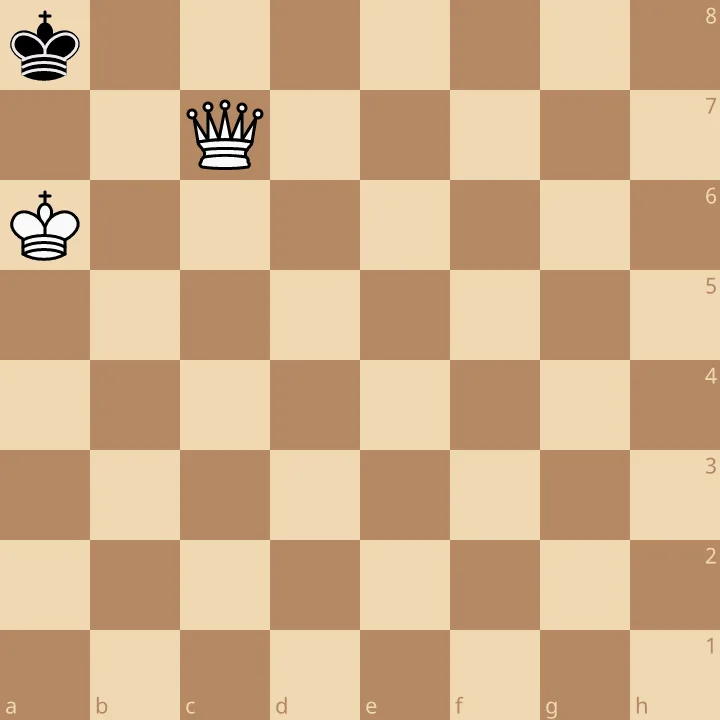
Black to move — but Black cannot make a legal move.
The black king is not in check, so this position is stalemate rather than checkmate.
Diagram: Tamago915, Wikimedia Commons. Licensed under CC BY-SA.
Stalemate vs Checkmate
This is the most important difference to remember.
Stalemate
The player has no legal move, but the king is not in check.
Checkmate
The king is in check and there is no legal way to escape.
How Can You Spot a Stalemate?
Before making your final move in a winning position, quickly check whether your opponent will still have a legal move.
Check whose turn it is. Stalemate only matters when the player to move has no legal move.
Check the king. Is the king currently being attacked?
Look for every legal move. If there is at least one legal move, it is not stalemate.
No legal move + no check? The position is stalemate and the game is drawn.
Why Beginners Should Know About Stalemate
Stalemate often appears when one player has a large material advantage and is trying to force checkmate. A careless move can accidentally remove every legal move without actually checking the king.
That means a winning position can suddenly become a draw. Learning to recognize stalemate helps beginners finish winning positions more carefully.
Stalemate or Checkmate?
You are about to checkmate your opponent. Before making the final move, you notice that the opponent's king has very few available squares.
Ask yourself: "After my move, is the king actually in check?"
If the answer is no and the opponent has no legal move, you have created a stalemate instead of checkmate.
Think: No move + No check = DrawKeep Learning Chess
Stalemate is one of several important concepts beginners should understand before moving into more advanced chess strategy. Continue learning with these Brainiac Chess guides.
Want to Learn Chess Step by Step?
Build strong chess fundamentals through structured lessons, practical exercises and guidance from experienced coaches.
Book Your Free Demo Right Now →