What Is a Hanging Piece in Chess?
Learn how to spot pieces that can be captured and build the habit of checking whether your pieces are safe before making a move.
What Is a Hanging Piece in Chess?
A hanging piece in chess is a piece that is vulnerable to being captured because it is undefended or insufficiently defended.
In simple terms, if your opponent can capture one of your pieces and you cannot respond adequately, that piece may be hanging.
A vulnerable piece that can be captured profitably because it is undefended or not adequately protected.
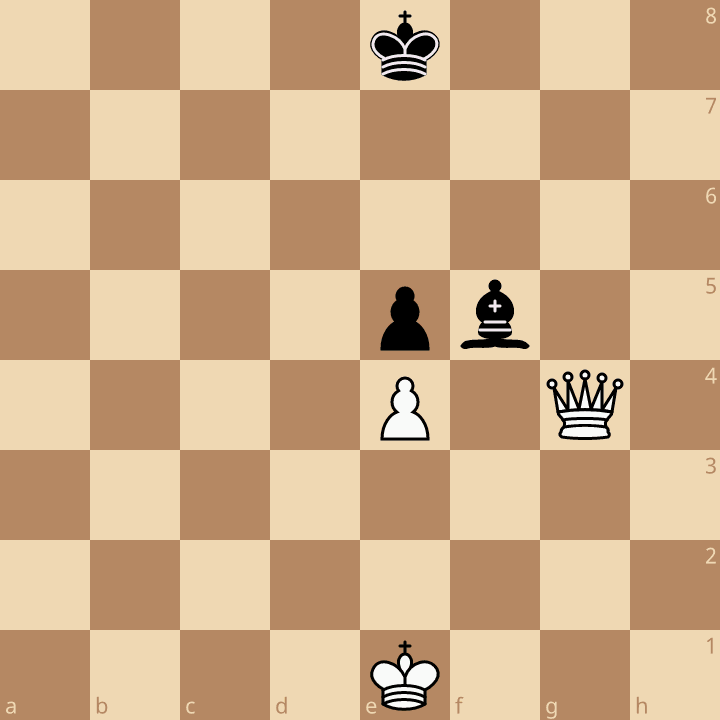
Can You Spot the Hanging Piece?
Look at the highlighted queen. It is exposed to capture because it is not adequately protected.
The 3 Things You Need to Understand
Attacked
An opponent's piece can capture the piece on its current square.
Defended
One or more of your pieces can protect it from being captured.
Vulnerable
If the piece can be taken profitably, you may have a hanging piece.
Hanging Piece vs. Undefended Piece
These terms are closely related, but they are not always exactly the same. An undefended piece is not automatically hanging.
Not Protected
A piece may have no defender but still be safe for the moment if the opponent cannot exploit it.
Vulnerable to Capture
The piece can be captured or tactically exploited in a way that benefits the opponent.
How Does a Piece Become Hanging?
Sometimes a piece becomes hanging because you simply forget to protect it. Other times, a piece becomes vulnerable after one of your pieces moves.
Your Piece Is Safe
Your queen, rook, bishop, or knight has enough protection.
You Move a Defender
You move another piece without noticing that it was protecting the target.
The Piece Becomes Vulnerable
Your opponent notices the weakness and can capture or attack the piece.
How Do You Spot a Hanging Piece?
You don't need complicated calculations to start spotting hanging pieces. Build a simple board-scanning habit.
Your 5-Second Piece Safety Scan
Before making an important move, quickly ask these questions.
“Before you move your piece, check what your opponent can capture.”
⚡ 30-Second Challenge
Your opponent has just attacked your knight. You are thinking about moving the knight.
But before moving it, what should you check?
Don't automatically react to an attack. First scan the whole board. Your opponent may have left another piece hanging.
Practical Tip for Beginners
After every opponent move, pause for a few seconds and scan the board before deciding what to do.
Ask yourself: “What changed after that move?”
This simple habit can help you notice newly attacked, undefended, or hanging pieces much faster.
The Key Lesson
Spotting a hanging piece is one of the simplest tactical skills a beginner can develop.
Don't just look for your own threats. Learn to notice which of your opponent's pieces are vulnerable too.
Good board awareness can save your pieces — and help you win your opponent's.
Continue Learning Chess
Build your chess knowledge one quick lesson at a time.
Want to Improve Your Chess?
Learn chess step by step with structured lessons, regular practice, and expert guidance from Brainiac Chess Academy.
BOOK YOUR FREE DEMO →