What Is a Blunder in Chess?
One careless move can lose material, create danger, or completely change the game. Learn how to recognize a chess blunder and avoid one before it happens.
What Is a Blunder in Chess?
A blunder in chess is a serious mistake that can cause you to lose material, allow checkmate, or turn a good position into a bad one.
In simple words, a blunder is a move that seriously hurts your position.
A serious chess mistake that can change the course of the game.
What Can a Blunder Look Like?
A player may make a seemingly harmless move without noticing the danger created by that move.
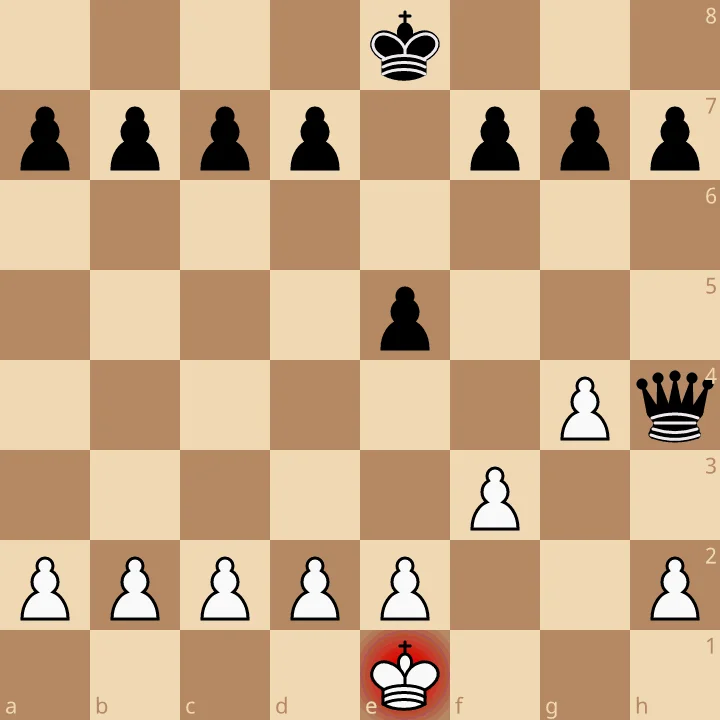
Image: Wikimedia Commons, CC BY-SA 4.0.
How Does a Blunder Happen?
Imagine your opponent is attacking your rook. Instead of responding to the threat, you make another move because you see an attacking idea.
A Piece Is Threatened
Your opponent is attacking your rook, queen, or another valuable piece.
You Ignore the Threat
You play your planned move without checking what your opponent can do.
You Lose Material
Your opponent captures the piece or creates an even bigger tactical threat.
Blunder vs. Mistake: What's the Difference?
Chess players make different types of inaccurate moves. A blunder is usually much more serious than a small inaccuracy.
| Type of Move | Typical Effect |
|---|---|
| Inaccuracy | Slightly worse than the best move |
| Mistake | Noticeably weakens your position |
| Blunder | Serious loss of material, position, or game |
Why Do Chess Players Blunder?
Moving Too Quickly
You see a move you like and play it without checking the position.
Ignoring Your Opponent
You focus on your own plan and forget to look for your opponent's threats.
Hanging a Piece
A queen, rook, bishop, knight, or pawn is left undefended or poorly defended.
Missing a Tactic
You overlook a fork, pin, skewer, discovered attack, check, or capture.
Playing While Tired
Fatigue can make calculation and concentration much harder.
Not Checking the Final Position
You calculate your move but don't check what the board looks like afterward.
The Simple Anti-Blunder Rule
Before playing your move, don't only ask what you want to do. Ask what your opponent can do after your move.
“Don't just ask what you want to play. Ask what your opponent can do next.”
⚡ 30-Second Blunder Challenge
Your opponent's queen is attacking your rook. You have a strong-looking attacking move available.
What should you do first?
Before executing your plan, check whether you are leaving something valuable hanging.
Your 5-Second Blunder Check
Before every important move, quickly ask yourself:
♔ Is my king safe?
Check whether your move creates a check or mating threat.
♜ Is any piece hanging?
Look for undefended or poorly defended pieces.
⚔ What can my opponent capture?
Look for immediate captures after your move.
♛ What is my opponent threatening?
Never ignore your opponent's most dangerous idea.
Continue Learning Chess
Build your chess fundamentals one quick lesson at a time.
Want to Blunder Less and Play Better?
Build stronger chess habits with structured lessons, regular practice, and expert guidance from Brainiac Chess Academy.
BOOK YOUR FREE DEMO →