How to Improve Chess Rating Faster

If you are reading this, you likely know the exact frustration of being stuck at the same Elo level. You play hours of chess every week, you watch YouTube tutorials, and you solve random tactical puzzles, yet your rating barely moves. The truth is, knowing how to improve chess rating effectively is not about blindly playing more games; it is about adopting a structured, professional training strategy.
As FIDE-rated educators and professional coaches, we see talented players hit this plateau all the time. They possess the raw passion for the game, but they lack a clear roadmap. The fastest way to gain Elo is to stop treating chess improvement as a guessing game and start treating it as a measurable discipline.
In this comprehensive guide, we will walk you through exactly what holds players back, how to build a winning chess practice routine, and which chess training tips actually yield results over the board. Whether you are aiming to cross 1200, 1500, or 2000+, these actionable steps will accelerate your progress and transform your understanding of the game.
Why Most Chess Players Stop Improving
Before we add new habits to your routine, we must eliminate the bad ones. Many players plateau not because they aren't trying, but because their effort is placed in the wrong areas. Here are the most common reasons your rating has stagnated:
- Playing Without Analyzing: Jumping immediately into a new game after a loss means you carry the exact same flaws into the next match. If you do not learn from your mistakes, you are doomed to repeat them.
- Memorizing Openings Only: Beginners often waste hundreds of hours memorizing deep opening theory. When the opponent deviates on move 5, the memorization becomes useless, exposing a lack of fundamental middlegame understanding.
- Lack of Tactical Training: Chess, especially below the 2000 level, is heavily tactical. If you drop pieces or miss simple forks, no amount of positional mastery will save your game.
- Inconsistent Practice: Studying chess for five hours on a Sunday and doing nothing the rest of the week is far less effective than practicing for 45 minutes every single day.
- Playing Too Many Blitz Games: Fast time controls rely on intuition and reflexes, not deep calculation. Playing 3-minute blitz reinforces bad habits and superficial thinking.
- No Structured Improvement Plan: Moving randomly from a YouTube video to a Twitch stream creates scattered knowledge instead of a cohesive skill set.
How to Improve Chess Rating with a Structured Training Plan
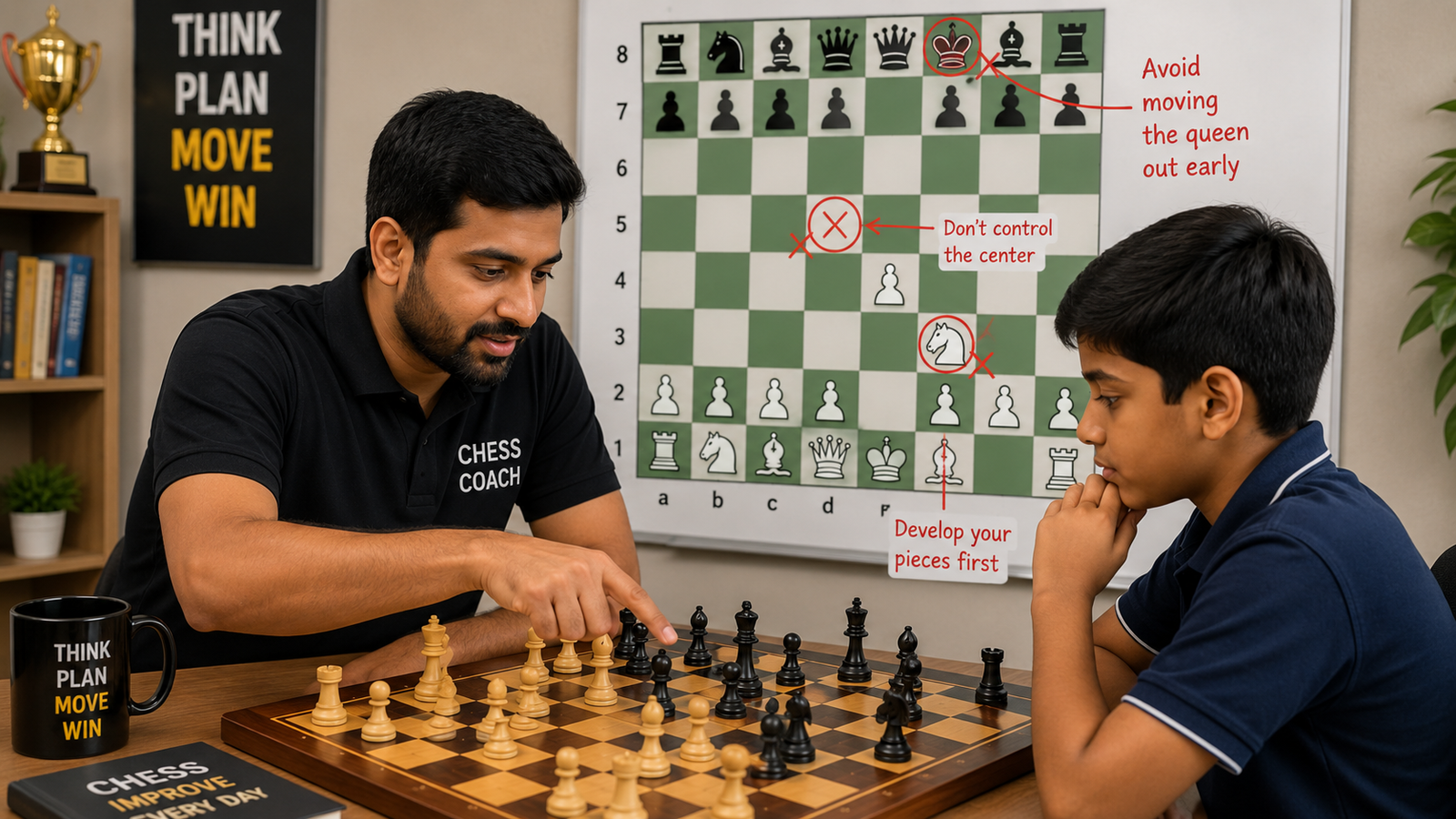
Consistency is the secret weapon of Grandmasters. To improve rapidly, you need a balanced diet of tactics, strategy, endgames, and analysis. A well-rounded chess practice routine ensures that all your "chess muscles" are being developed simultaneously.
Below is a realistic, structured weekly improvement roadmap that balances playing with studying. You can adjust the hours based on your availability, but the ratios should remain similar.
| Training Area | Frequency | Focus / Activity |
|---|---|---|
| Tactics & Puzzles | Daily (20-30 mins) | Pattern recognition, calculation, mating nets. Do not guess; calculate to the end. |
| Practice Games | 3-4 Days/Week | Play longer time controls (Rapid 15+10 or Classical). Focus on deep calculation. |
| Game Analysis | After Every Game | Identify key mistakes before turning on the engine. Find where the evaluation changed. |
| Endgames | 2 Days/Week | Master basic mates, king and pawn endgames, and rook endgames. |
| Openings | 1 Day/Week | Focus on opening principles and pawn structures, not just rote memorization. |
Best Chess Training Tips That Actually Work
If you want to know how to improve chess rating without wasting time, you need to apply training methods proven by top FIDE professionals. Let us break down the core pillars of chess improvement.
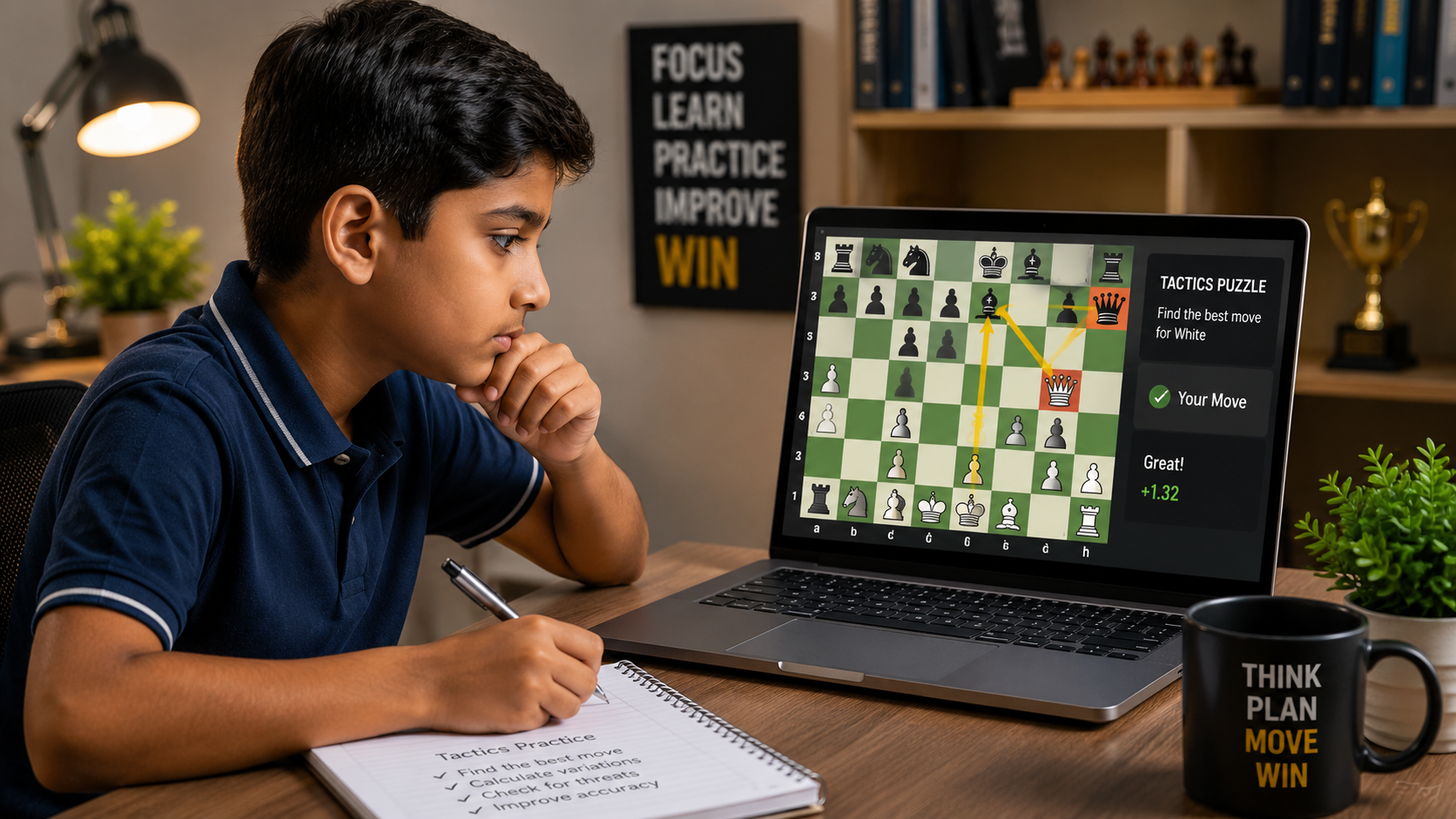
Solve Tactical Puzzles Every Day
Why it works: Tactical vision is the foundation of chess. Daily puzzle-solving builds pattern recognition, allowing you to spot pins, forks, and skewers instantly during a real game.
Common Mistake: Playing "guess the move" on puzzle rush. Instead, treat every puzzle like a real tournament game. Calculate the entire variation in your head before moving the first piece.
Practical Example: Set a goal to solve 15 to 20 tactical puzzles daily where you spend at least 1-2 minutes deeply calculating each position.
Analyze Every Game You Play
Why it works: Your own games are your best coach. Analyzing your matches highlights recurring weaknesses, such as missing opponent's threats or mismanaging the clock.
Common Mistake: Immediately clicking the "Game Review" button and letting the AI do the thinking. You must analyze with your own brain first, note down your thoughts, and then use the engine to verify.
Practical Example: Take a recent loss. Identify the critical moment you felt confused. Write down three alternate plans you could have tried before checking the computer's top line.
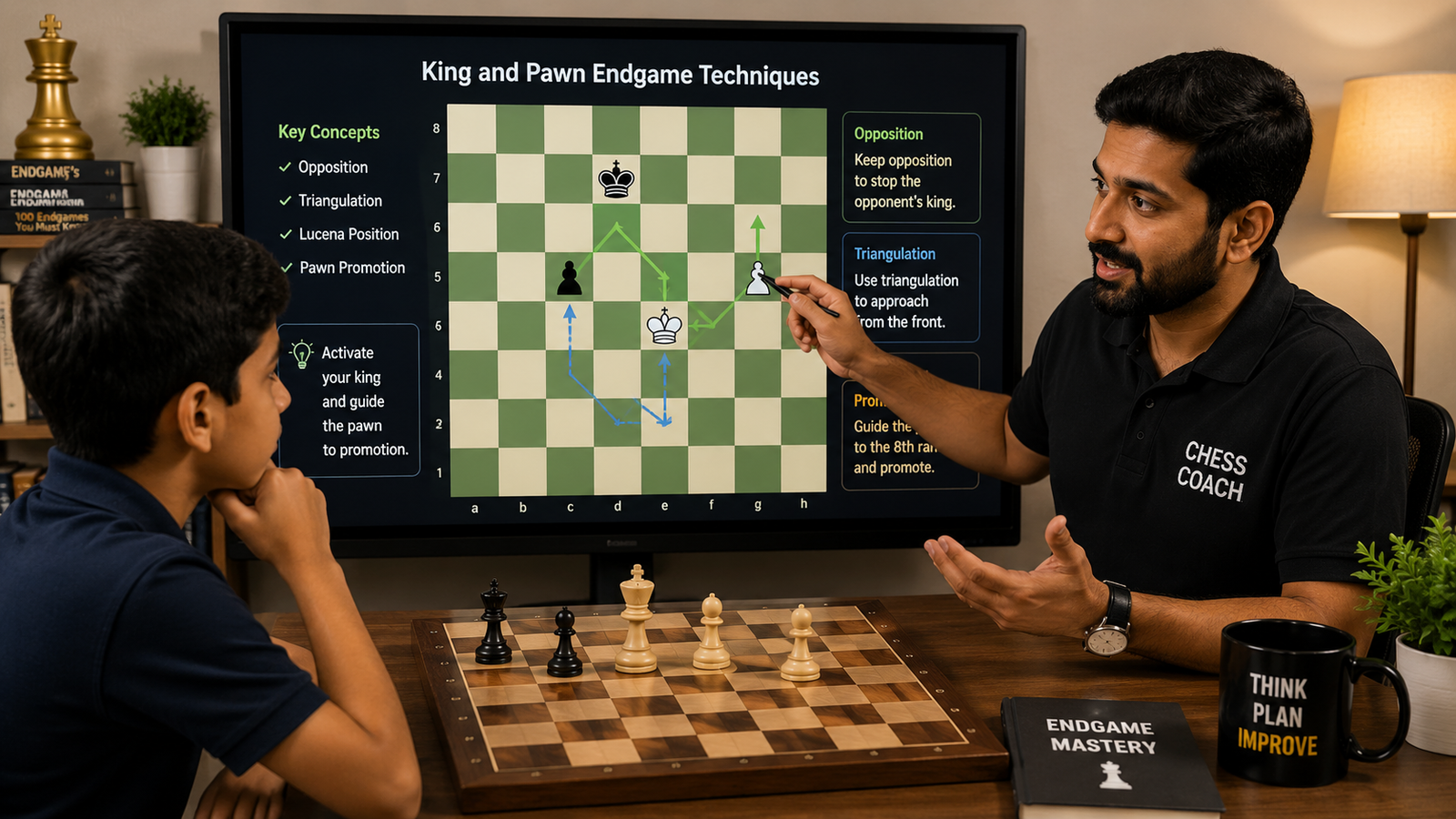
Study Basic Endgames
Why it works: Endgames teach you the maximum potential of individual pieces. A player who understands endgames will confidently trade down into winning positions, while opponents will blunder out of fear.
Common Mistake: Believing endgames are boring and skipping them for opening traps.
Practical Example: Dedicate this week to mastering the Philidor and Lucena positions in Rook endgames. It will easily save you 50-100 rating points over the next month.
Learn Opening Ideas Instead of Memorizing Moves
Why it works: Understanding the pawn structures and typical middlegame plans of an opening prepares you for when your opponent inevitably plays a sub-optimal move.
Common Mistake: Trying to memorize 15 moves deep into a complex theory when you are rated 1000.
Practical Example: If you play the Italian Game, learn why you put the Bishop on c4 (to target f7) and typical plans (like the c3-d4 pawn push), rather than just raw move orders.
Play Longer Time Controls
Why it works: Rapid (15+10) or Classical games force you to sit on your hands, evaluate the whole board, and formulate long-term plans.
Common Mistake: Grinding 3-minute blitz for 4 hours and wondering why calculation skills aren't improving.
Practical Example: Replace 10 blitz games with 2 Rapid games. Use your time. If you finish a 15-minute game with 12 minutes left on your clock, you are playing too fast.
Review Games with a Coach
Why it works: A computer can tell you a move was a blunder, but an experienced human coach can tell you why your thought process led to that blunder. They provide the psychological and strategic context engines lack.
Common Mistake: Relying solely on AI evaluations to understand positional nuances.
How to Improve Chess Skills Faster
Gaining Elo is a byproduct of improving core competencies. When you focus on how to improve chess skills, the rating follows naturally. The key areas you must refine include:
- Pattern Recognition: Built through thousands of tactical puzzles. This allows you to "feel" danger or opportunity on the board.
- Calculation: The ability to see 3, 4, or 5 moves ahead accurately without losing track of the board state in your mind.
- Positional Understanding: Knowing how to evaluate pawn structures, outpost squares, and piece activity when there are no immediate tactics available.
- Time Management: Learning not to spend 10 minutes on an obvious opening move, nor blitzing out a critical middlegame decision.
- Tournament Preparation: For serious players, advanced chess training involves physical stamina, psychological readiness, and opponent-specific preparation.
Common Mistakes That Prevent Rating Improvement
Even with the best chess training tips, certain pitfalls can derail your progress. Avoid these common traps:
- Playing Only Blitz: Moving too fast ruins calculation depth.
- Ignoring Endgames: You will draw winning games and lose drawn games if you don't know endgame technique.
- Changing Openings Too Often: Hopping from one opening to another every time you lose prevents you from gaining deep mastery of one system.
- Not Reviewing Losses: The ego hurts, but reviewing losses is where 90% of your improvement comes from.
- Watching Videos Without Practicing: Passive learning feels productive, but chess is an active skill. Watching a Grandmaster explain an endgame is useless if you do not set up a board and play it out yourself.
How Many Hours Should You Practice?
Finding the right balance depends on your current level and goals. You do not need to study 40 hours a week unless you are pursuing a Grandmaster title. Here is a realistic breakdown for different levels of dedication:
| Player Level | Recommended Daily Time | Primary Focus |
|---|---|---|
| Beginner (Under 1000) | 30 - 45 Minutes | Basic principles, not hanging pieces, simple 1-move tactics. |
| Intermediate (1000 - 1600) | 1 - 1.5 Hours | Deep tactical calculation, basic endgames, positional basics. |
| Tournament Player (1600+) | 2+ Hours | Opening preparation, deep game analysis, complex positional play. |
How Professional Coaching Helps Players Improve Faster
Self-study will only take you so far. Eventually, every player hits a wall where their own biases prevent them from seeing their fundamental weaknesses. This is where professional intervention becomes crucial.
A structured elite chess classes program provides a customized curriculum tailored to your specific playing style. Coaches offer personalized feedback, rigorous game analysis, and regular assessments to track your progress objectively. Instead of wandering through the vast sea of chess information online, a coach curates exactly what you need to learn right now to reach your next rating milestone.
Why Choose Brainiac Chess Academy?
At Brainiac Chess Academy, we are committed to turning chess enthusiasts into formidable competitors. We don't just teach moves; we teach you how to think. Located conveniently in Sector 7, Janata Market, Vashi, Navi Mumbai, Maharashtra, we offer a comprehensive environment for genuine chess growth.
Our academy stands out because we provide:
- Experienced Coaches: Learn directly from titled players and seasoned tournament veterans.
- Personalized Training: We recognize that every player learns differently, customizing our approach for maximum impact.
- Online Coaching & Offline Coaching: Flexible formats that perfectly fit your schedule and learning preferences.
- Tournament Preparation: We guide students through the psychological and technical rigors of competitive play.
- Small Batch Sizes: Ensuring every student gets the individual attention required for advanced improvement.
- Regular Performance Tracking: We measure your Elo growth, tactical accuracy, and opening mastery with data-driven feedback.
Our advanced chess classes are designed to be the ultimate training ground for champions, giving you the tools to consistently outplay your opponents.
Book Your Free Demo Class
Ready to improve your chess rating with expert guidance?
Brainiac Chess Academy provides structured coaching, personalized training plans, and regular game analysis to help students progress faster.
📞 WhatsApp / Call: +91 9324829329
👉 Book Your Free Demo Right Now
Frequently Asked Questions
How long does it take to improve chess rating?
Is solving puzzles enough?
Should I play blitz every day?
How important is game analysis?
Do I need a chess coach?
Which openings should I learn?
How often should I practice?
Can online coaching increase my rating?
Conclusion
Learning how to improve chess rating is a marathon, not a sprint. The grandmasters you admire did not reach the top by finding a magical opening trick; they got there through relentless calculation practice, deep game analysis, and mastering fundamental endgames. Stop chasing quick wins in blitz, and start embracing a structured chess practice routine.
Remember, improvement requires patience and the right environment. By applying the actionable strategies in this guide, resolving to learn from your losses, and committing to consistent study, your Elo will undoubtedly climb.
If you are ready to stop plateauing and start winning, let the experts at Brainiac Chess Academy build your personalized roadmap to success. Stop guessing your next move, and start playing with precision. Visit the Brainiac Chess Academy homepage and book your free demo class today!