Online Chess Classes in Canada: Learn Chess from Home
A practical, structured guide for families in Canada looking to help their children build critical thinking, patience, and strategic confidence through expert live virtual coaching.
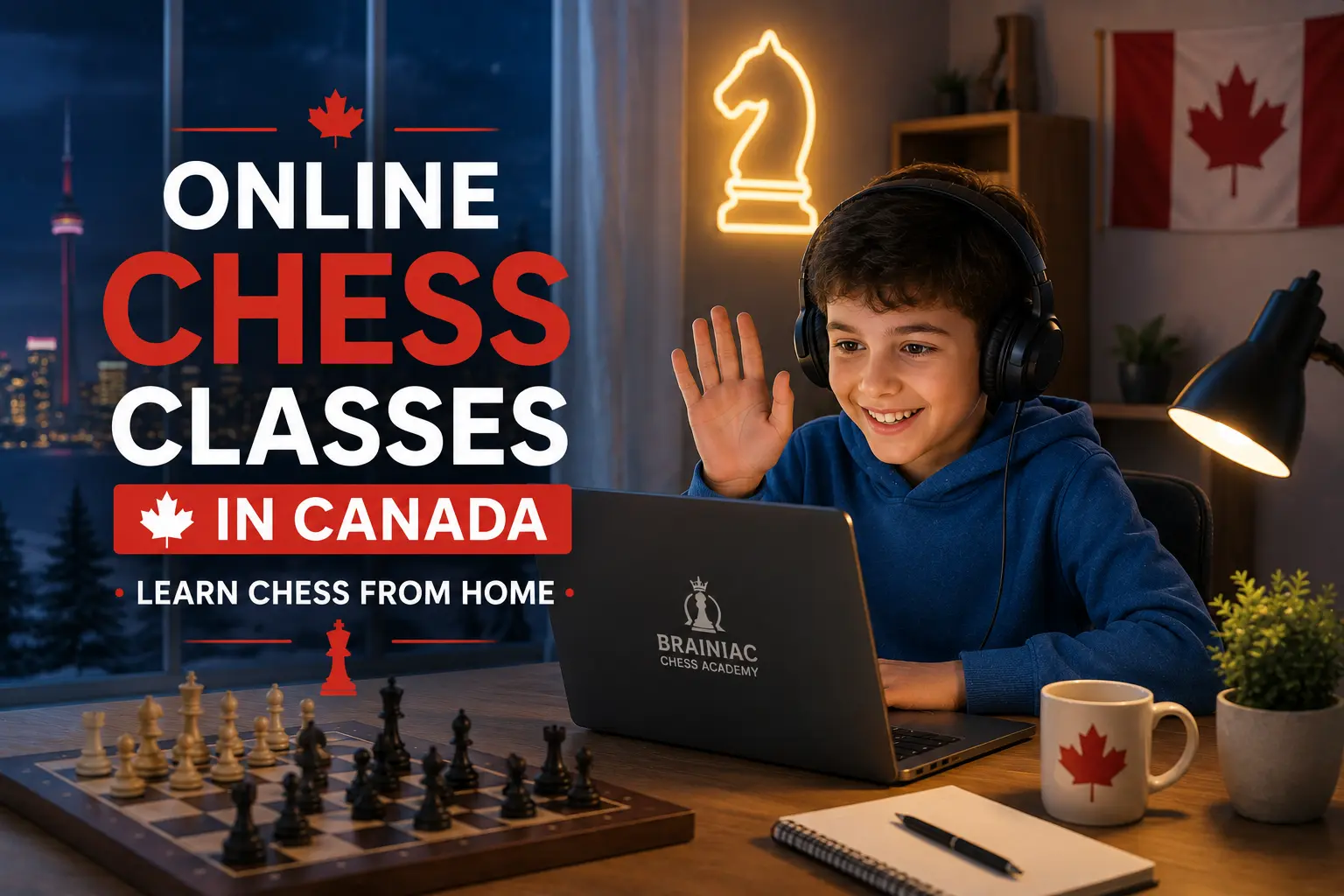
For parents across Canada, organizing a weekly family schedule requires constant balancing. Between school dismissals, heavy homework loads, ice hockey practices, swimming lessons, music sessions, and seasonal weather shifts, adding another after-school activity can feel overwhelming. Yet, many Canadian parents actively look for constructive intellectual activities that strengthen their child's focus, analytical thinking, and spatial reasoning. Enrolling in online chess classes in Canada has emerged as a realistic, highly convenient solution that delivers structured mental training directly to your living room or study desk.
Virtual learning removes the daily pressure of driving through heavy traffic or commuting in freezing winter conditions to reach a distant community hall. However, mastering chess involves much more than placing a child in front of a pre-recorded video or an automated tablet application. Real progress relies on live interaction with a patient coach who can explain tactical concepts, highlight positional mistakes as they occur, and build confidence through constructive feedback. By combining live video mentorship with digital interactive boards, structured online coaching fits smoothly into busy Canadian family routines.
Quick Answer
Enrolling in online chess classes in Canada offers children a structured, highly effective way to learn chess without adding commuting stress to your family routine. Live virtual instruction provides real-time coach feedback, interactive digital board exercises, organized tactical practice, and flexible evening or weekend scheduling tailored to Canadian time zones.
What Are Online Chess Classes in Canada?
Modern online chess training is fundamentally different from passive video tutorials or basic gaming apps. A structured virtual classroom creates an engaging, interactive environment where students connect live with an experienced coach over video while working together on a shared digital board. Instructors highlight key squares, demonstrate strategic concepts, and guide students through multi-step tactical puzzles in real time.
During a typical online lesson, children do not simply watch a lecture. They actively explain their ideas out loud, calculate candidate moves, and play supervised practice matches with peers in their batch. Coaches monitor these practice games live, stepping in to explain tactical blunders, point out missed defensive resources, or praise creative pawn structures. Outside of live class hours, students complete targeted puzzle assignments and receive personalized game reviews, ensuring steady, measurable improvement.
Why Are Online Chess Classes Useful for Families in Canada?
Canadian families manage dynamic routines that change with the seasons. Autumn and winter bring packed schedules filled with indoor sports, school projects, and early dark evenings. Driving across town during peak traffic or harsh winter weather just for a one-hour physical class often eats up two full hours of valuable evening time. Learning from home converts that travel time back into family time or homework completion.
Furthermore, Canada’s vast geography means that high-quality, specialized chess academies may not always be located nearby, especially outside major metro centers. Online learning levels the playing field, allowing a student in a smaller community or suburban neighborhood to receive the exact same high-caliber mentorship as a student living near a city center. Additionally, online classes allow parents to quietly observe how their child responds to instruction, handles competitive wins and losses, and develops independent problem-solving habits.
Who Can Join Online Chess Coaching in Canada?
Online chess coaching is adaptable across age groups, skill levels, and learning objectives. Because digital platforms allow coaches to adjust lesson pace instantly, every student receives training appropriate for their stage of development.
Beginners
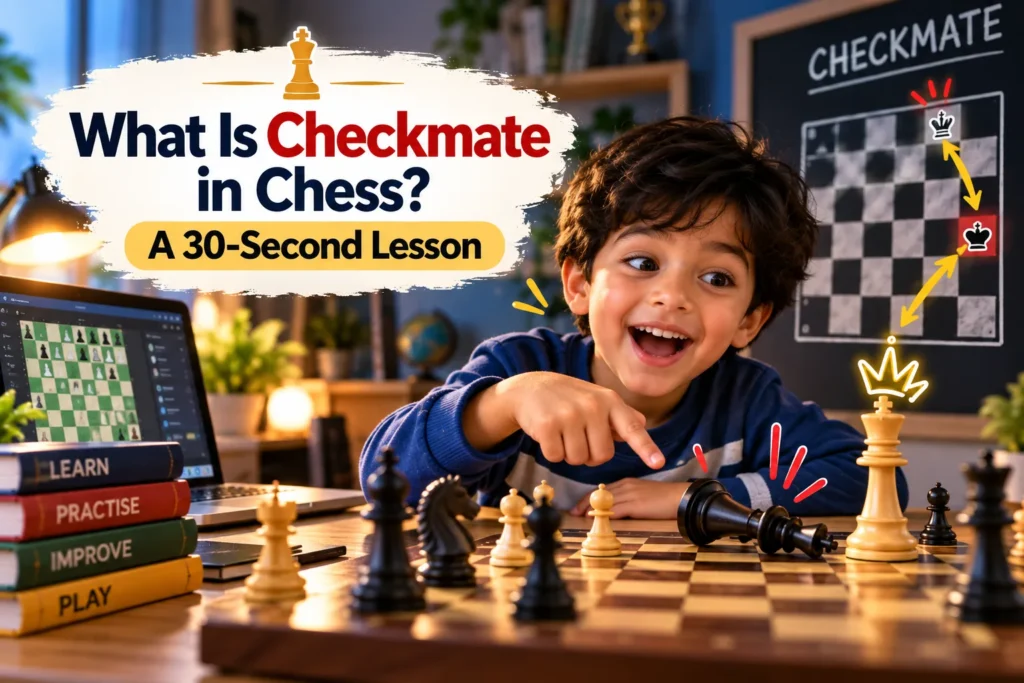
Chess lessons for beginners focus on establishing clear core habits. Learning without structured guidance often leads to common mistakes, like rushing moves or ignoring piece defense. Beginner-friendly coaching introduces board coordinates, piece movement rules, basic checkmating mechanics, and safety principles in an encouraging environment.
Chess Classes for Kids
Young learners excel when abstract concepts are turned into active challenges. Virtual academies keep children engaged through interactive puzzles, fun pattern-matching exercises, and minigames. As kids realize that patient calculation helps them win pieces and solve board challenges, their attention span naturally grows.
School Students
Elementary, middle, and high school students often use chess as a rewarding mental break from standard schoolwork. The structured problem-solving taught in chess complements STEM subjects by reinforcing logic, geometry, spatial calculation, and probability evaluation.
Intermediate Players
Once a student understands fundamental checkmates, advancement requires deeper strategic instruction. Intermediate training focuses on opening principles, middle-game tactics like forks and pins, pawn structure analysis, and basic endgame techniques. Live game reviews help intermediate players fix recurring tactical oversights.
Tournament-Focused Players
Students preparing for competitive rated events require specialized training. Advanced instruction covers opening repertoire building, deep calculation trees, endgame precision, and match clock management. Virtual platforms make it easy for tournament players to upload their recorded match files for detailed engine and coach analysis.
Adults Learning Chess
Chess is equally rewarding for adult learners. Working professionals and parents often take up chess to sharpen cognitive agility, build strategic focus, or enjoy an engaging intellectual hobby. Flexible evening batches make it simple to fit regular coaching around work commitments.
What Can Children Learn Through Online Chess Training in Canada?
A comprehensive chess curriculum goes well beyond teaching basic piece movements. Through progressive, level-based instruction, students build an extensive toolkit of mental skills and strategic concepts that transfer directly into everyday learning habits.
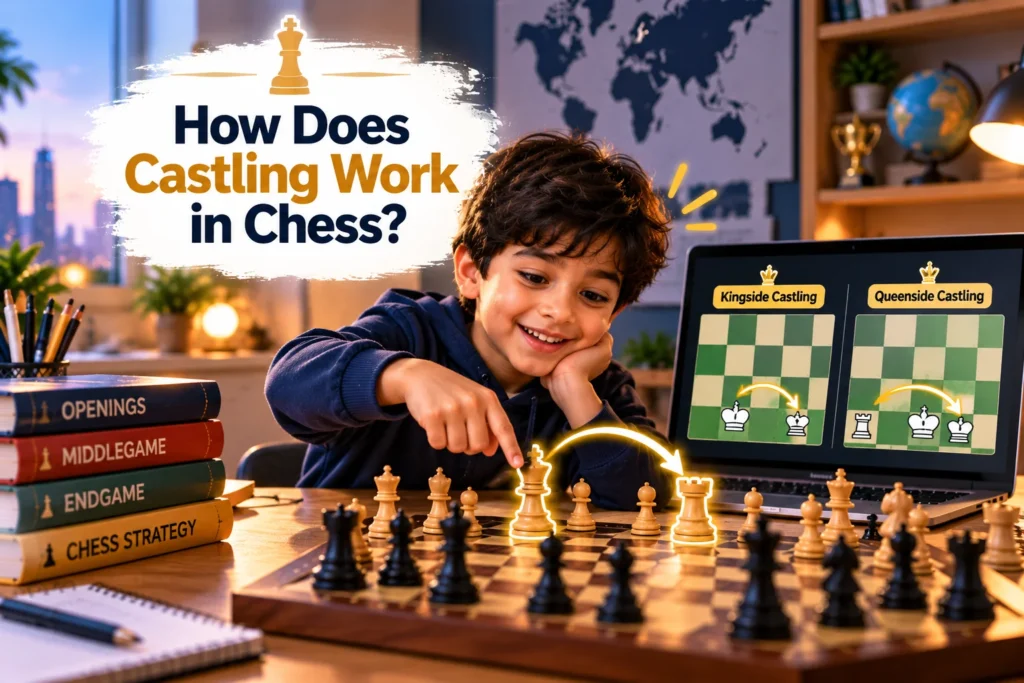
- Chess Fundamentals & Board Vision: Master board notation, piece values, rapid development, and king safety through castling.
- Core Opening Principles: Learn how to claim central control, avoid moving the same piece twice early on, and protect key pieces against early attacks.
- Tactical Pattern Recognition: Practice identifying and executing forks, pins, skewers, discovered attacks, and double checks.
- Calculation & Visualization: Train the mind to picture moves in advance, calculating consequences before touching a piece.
- Positional Strategy: Evaluate pawn chains, create passed pawns, target weak enemy squares, and improve passive pieces.
- Endgame Execution: Learn essential checkmating patterns with rooks, queens, and pawns, building confidence in converting winning positions.
- Resilience & Decision-Making: Develop emotional composure when facing complex situations, learning to analyze losses constructively rather than feeling discouraged.
What Should Parents Look for in an Online Chess Academy?
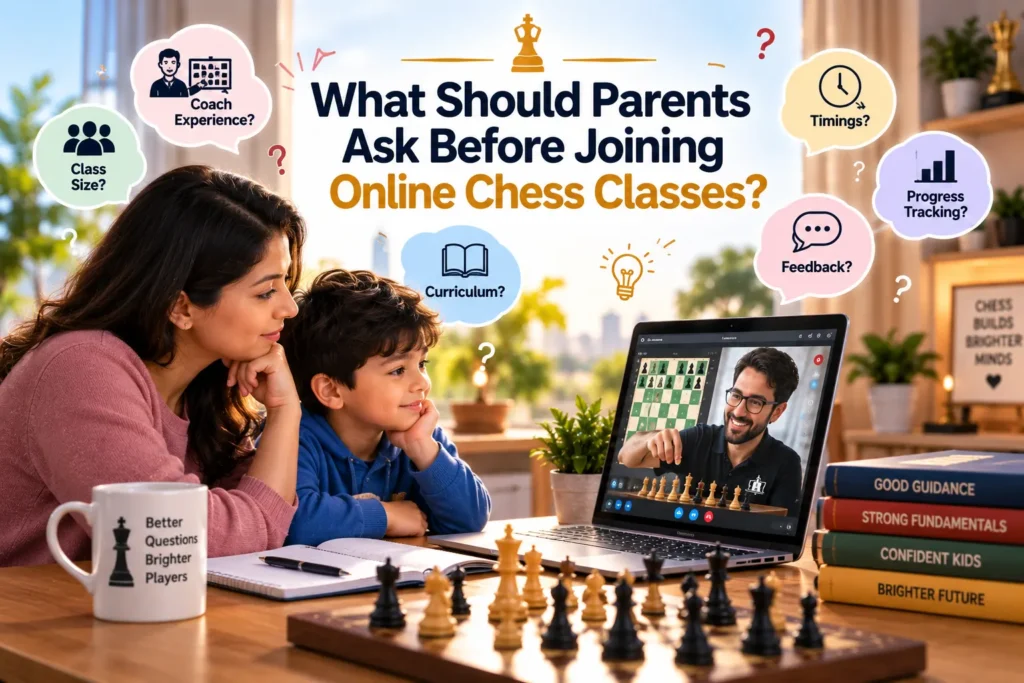
Choosing the right virtual chess academy requires evaluating teaching methodology, batch structure, and student support. To help you choose wisely, use this practical evaluation checklist:
- Qualified, Patient Instructors: A great coach must combine strong chess knowledge with clear, child-friendly communication. Look for mentors who foster curiosity and explain complex moves simply.
- Structured, Level-Based Syllabus: Ensure the academy follows a step-by-step curriculum that builds systematically, rather than hosting informal, unguided play sessions.
- Small Interactive Batches: Avoid large, webinar-style classes. Ensure batch sizes remain small (ideally 4 to 8 students) so your child gets personalized attention and speaking time.
- Live Match Analysis: True growth occurs when coaches review a student's actual played games to highlight smart decisions and uncover hidden tactical mistakes.
- Supervised Practice Sessions: Confirm that the program includes dedicated practice sessions where students apply new ideas against peers under direct coach supervision.
- Clear Progress Tracking: Look for academies that provide regular progress updates, detailing tactical growth, attendance, and specific focus areas.
- Demo Class Availability: A trial class lets you evaluate the platform, observe student-teacher interaction, and confirm that your child feels comfortable before committing.
Online Chess Classes vs Local Chess Classes in Canada
To help you determine which format fits your lifestyle, here is a balanced comparison between physical local clubs and live virtual instruction:
| Evaluation Factor | Online Chess Classes | Local Offline Chess Classes |
|---|---|---|
| Travel & Commute | Zero travel required. Students join directly from home, avoiding winter roads. | Requires driving to a physical location during busy weekday evening hours. |
| Scheduling Flexibility | High flexibility with multiple evening and weekend slots across time zones. | Fixed center hours with limited makeup options for missed classes. |
| Coach Accessibility | Connect with expert international coaches regardless of local availability. | Restricted to instructors who teach within driving distance of your home. |
| Digital Tools & Archiving | Games are saved automatically for thorough coach and engine analysis. | Requires manual scorebook notation, which younger beginners can find difficult. |
| Learning Environment | Quiet, familiar study space with minimal external noise or distractions. | Social classroom setting with tactile physical boards and pieces. |
| Parental Visibility | Parents can easily listen in to check coaching quality and engagement. | Parents typically wait in waiting rooms or parking lots during class. |
| Tournament Readiness | Combines online puzzle databases with digital match analysis. | Offers direct experience pressing physical clocks and moving physical pieces. |
Pros and Cons of Online Chess Classes
Selecting the best educational path requires looking at both benefits and practical considerations.
Advantages
- Saves Time: Eliminates back-and-forth commuting, keeping family evenings relaxed.
- Access to Expert Mentors: Allows students to learn from dedicated international coaches regardless of zip code.
- Automatic Game Logging: Digital chessboards record every move instantly for precise post-game review.
- Comfortable Environment: Children learn effectively in a familiar home setting without weather interruptions.
- Flexible Routine: Classes fit around changing sports seasons, holidays, and school projects.
Things Parents Should Consider
- Internet Dependency: Requires a reliable home internet connection and device setup.
- Screen Time Management: Adds structured screen time that parents must balance with physical recreation.
- Initial Parent Support: Younger beginners may need slight help logging in for their first few sessions.
- Tactile Differences: Screen clicks differ from handling real wooden pieces at a physical board.
When searching for online chess training in Canada, prioritize coaching quality, batch size, and systematic feedback over finding the cheapest fee. A small-group lesson with an attentive coach who analyzes your child's specific games creates far greater progress than hours of unguided online playing against random opponents. Focus on building solid calculation habits early.
How Should Canadian Families Choose Chess Class Timings?
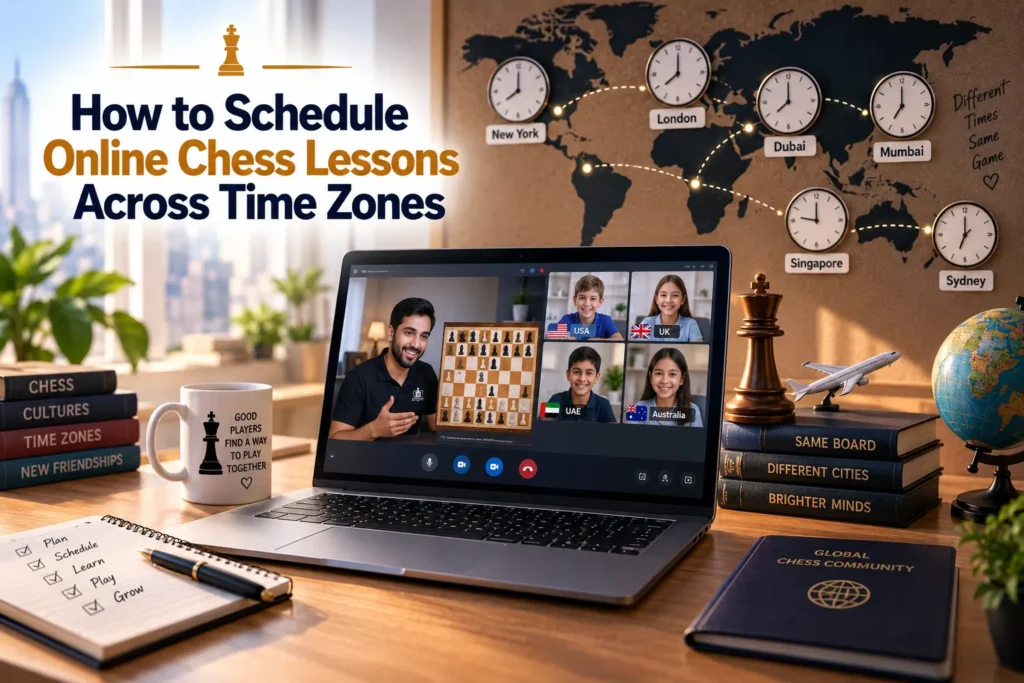
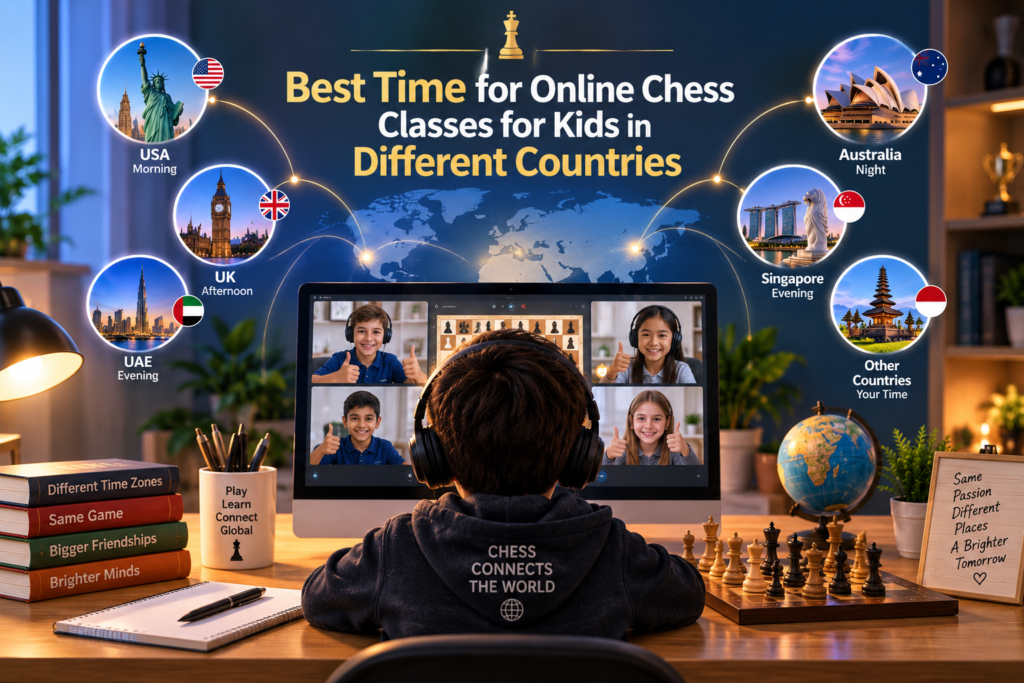
Canada spans multiple time zones, including Eastern (EST), Central (CST), Mountain (MST), and Pacific (PST). When enrolling in an online academy, selecting a time slot that fits comfortably into your local routine is essential to avoid burnout.
Look for academies that offer diverse batch schedules designed to align with Canadian after-school hours (typically 4:30 PM to 7:30 PM local time) or weekend mornings. Always confirm batch times in your specific time zone before enrolling, ensuring the schedule leaves plenty of room for dinner, homework, and rest.
How Much Should Children Practice Chess at Home?
Consistent, daily practice yields far better results than occasional, marathon study sessions. Here is a recommended daily home practice guide based on student experience levels:
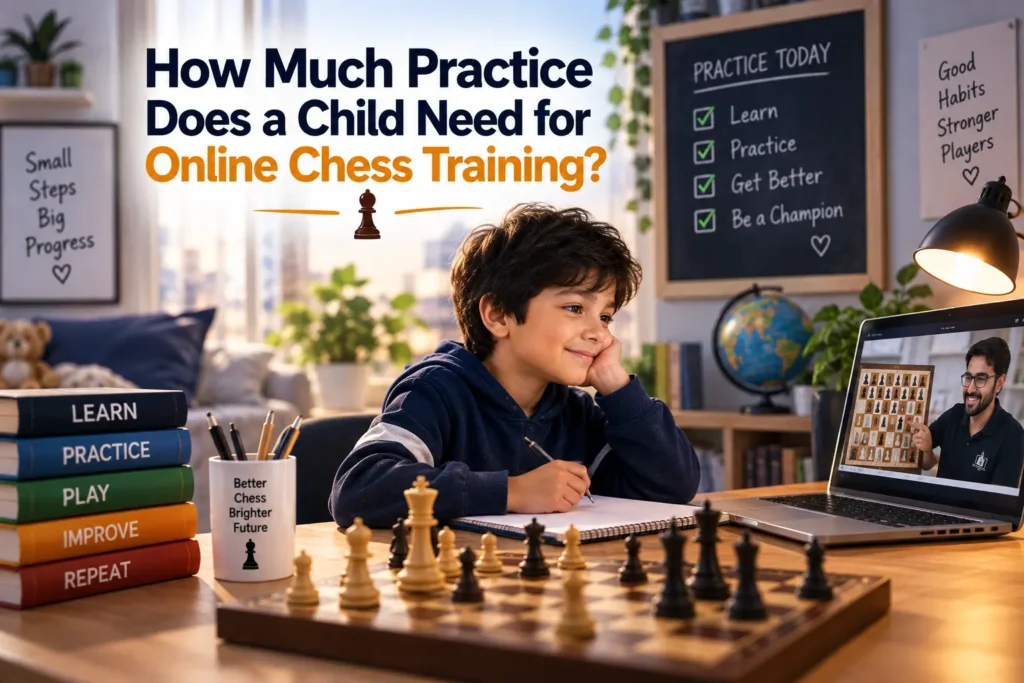
- Beginners (Ages 5–8): 15 to 30 minutes daily. Focus on solving basic tactical puzzles, reviewing piece rules, and playing short practice matches.
- Intermediate Learners: 30 to 45 minutes daily. Focus on tactical puzzle sets, reviewing class notes, analyzing played games, and competing in timed matches.
- Tournament-Focused Students: 45 to 60+ minutes daily. Focus on opening preparation, deep calculation drills, computer engine verification, and rated tournament games under coach guidance.
Can Online Chess Coaching Help Children Prepare for Tournaments?
Yes, structured online coaching provides exceptional preparation for over-the-board tournament play. Online platforms allow coaches to analyze a student's complete match history, pin-point recurring calculation mistakes, and build custom opening lines tailored to their style.
Practicing online against varied opponents helps young players get comfortable with match clocks, spatial evaluation, and high-pressure tactical calculation. Combining live virtual mentorship with official rated events recognized by chess federations or FIDE builds both tactical sharpness and emotional resilience.
Can Students Across Canada Learn Chess Online?
Online chess coaching removes geographic barriers entirely. Whether your family resides in major urban centers like Toronto, Vancouver, Calgary, Ottawa, or Montreal, or in smaller suburban towns, virtual learning delivers top-tier chess instruction directly to your home.
Instead of relying strictly on local availability, students across all Canadian provinces can connect with specialized coaches, participate in structured international batches, and progress at their own pace without traveling long distances.
Can a Canadian Student Learn Chess From an International Academy?
Yes. International online chess academies offer families access to experienced coaches, rich curriculums, and diverse learning communities. Studying with an international academy exposes children to varied playing styles and high-level training methods.
However, parents should verify key details before enrolling. Confirm that the academy offers live, interactive classes (not pre-recorded sessions), clear communication in English, flexible batch times matching Canadian time zones, and a free trial lesson to test compatibility.
Why Consider Brainiac Chess Academy for Online Chess Coaching?
If you are exploring quality online chess coaching in Canada for your child, Brainiac Chess Academy offers a structured, student-focused curriculum designed for steady development. The academy provides live virtual instruction, small interactive batches, personalized feedback, and comprehensive tournament preparation for players of all levels.
It is important to note factually that Brainiac Chess Academy is physically located in Sector 7, Janata Market, Vashi, Navi Mumbai, Maharashtra, India. While its physical coaching center is situated in Navi Mumbai, the academy operates a fully international online training platform, delivering live interactive chess classes to students living in Canada and around the world.
Brainiac Chess Academy emphasizes disciplined calculation, tactical pattern recognition, opening fundamentals, and positive sportsmanship. By keeping batch sizes small, instructors ensure every student gets individual attention, regular game analysis, and continuous encouragement. Whether your child is moving their first pawn or aiming for competitive ratings, Brainiac Chess Academy delivers dedicated guidance every step of the way.
Frequently Asked Questions About Online Chess Classes in Canada
1. Are online chess classes good for children in Canada?
Yes, online chess classes are very effective for children in Canada. They offer structured instruction from experienced coaches without adding travel stress or extra commuting time during busy school weeks and cold winter months.
2. What age can a child start online chess lessons?
Most children can begin structured online chess lessons around age 5 or 6. At this stage, interactive boards and visual puzzles keep lessons engaging while developing core attention and logic skills.
3. Are online chess classes suitable for beginners?
Yes, online classes work wonderfully for beginners. Instructors guide students step-by-step through board setup, piece movements, basic tactics, and fundamental checkmates in a supportive, step-by-step format.
4. How do live online chess classes work?
Live classes run via video conferencing alongside a shared interactive chessboard. The coach explains concepts, solves tactical puzzles with the class, and monitors supervised practice games between students in real time.
5. How often should children attend chess classes?
Attending 1 or 2 live classes per week is recommended for steady progress. Pairing weekly classes with 15 to 30 minutes of daily home practice ensures strong retention and skill development.
6. Can online chess coaching help with tournament preparation?
Yes. Specialized online coaching covers opening preparation, deep calculation, endgame strategies, and digital match reviews, equipping students with the tools needed for competitive rated events.
7. How should parents choose an online chess academy?
Parents should select an academy offering experienced coaches, small batch sizes, a structured level-based syllabus, regular game analysis, progress tracking, and batch times aligned with their local time zone.
8. Can students in Canada join Brainiac Chess Academy online?
Yes. Although Brainiac Chess Academy is physically based in Vashi, Navi Mumbai, India, its online chess coaching programs are specifically designed to welcome and support international students residing across Canada.
Book Your Free Demo Class
Looking for structured, expert-led chess classes for kids in Canada? Brainiac Chess Academy provides live virtual training that helps students build focus, logic, and strategic confidence right from home.
Physical Academy Location:
Sector 7, Janata Market, Vashi, Navi Mumbai, Maharashtra, India
Phone / WhatsApp: +91 93248 29329
Book Your Free Demo Right NowConclusion
Fostering patience, logical focus, and strategic thinking in your child does not have to mean adding stressful travel to your daily schedule. Enrolling in online chess classes in Canada offers young learners an engaging, structured platform to develop deep intellectual skills under expert guidance right from home. With live interactive lessons, small batch sizes, and steady practice routines, children build critical problem-solving habits that support both schoolwork and personal confidence. If you want to introduce your child to structured chess training, book a free demo class with Brainiac Chess Academy today to take the first step.