







 Online Chess · Parent Guide
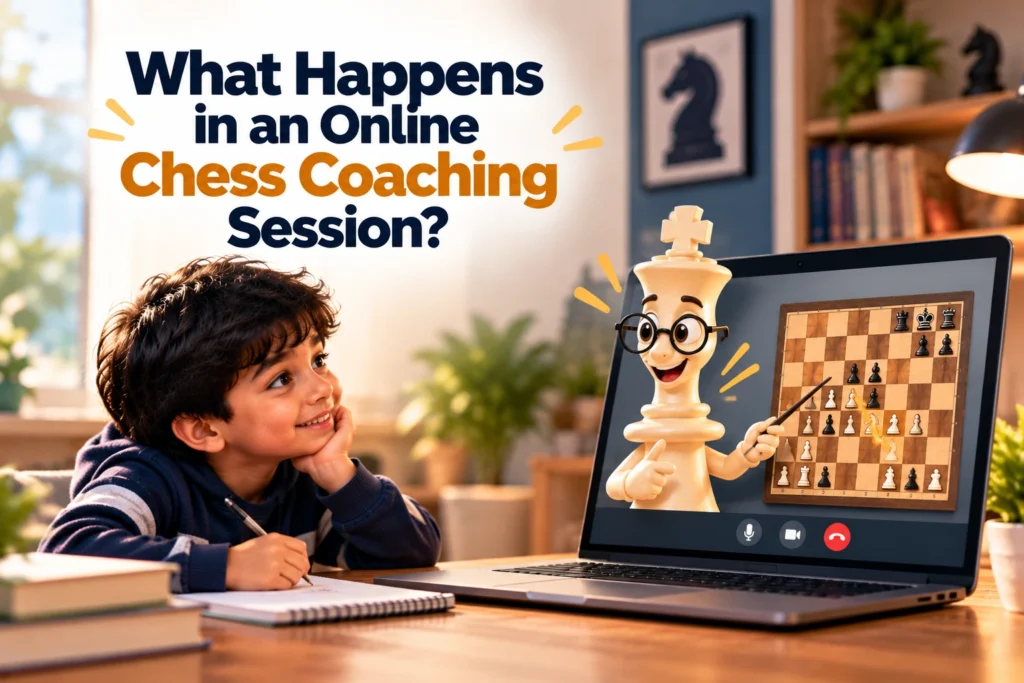
What Happens in an Online Chess Coaching Session?
If your child is about to join an online chess class, you may be wondering what actually happens during the lesson. Will the coach explain moves while your child watches, or will your child get opportunities to solve puzzles, play positions and ask questions?
A well-planned Online Chess Coaching Session should give students opportunities to think, make decisions, practise and learn from their mistakes. The exact format depends on the student's level, the teaching approach and whether the class is private or group-based.
In this guide, we explain the typical stages of an online chess lesson, what children may practise, how feedback can help and what parents can look for when evaluating a coaching programme.
Quick Answer: What Happens During an Online Chess Lesson?
An Online Chess Coaching Session commonly includes a short warm-up, a review of previous learning, instruction on a specific chess concept, guided practice and a brief recap. Depending on the programme, students may also review a game or receive practice tasks for the next lesson.
The purpose is to help the student apply ideas on the board rather than only memorise chess information. Lesson length and activities vary between academies and coaching formats.
What You'll Learn in This Guide
- How a typical online chess lesson is structured.
- What students do during live instruction and guided practice.
- How lessons can differ for beginners and experienced players.
- What technology and preparation may be needed.
- How parents can evaluate the teaching experience.
- What to ask before booking a demo lesson.
How Does an Online Chess Coaching Session Work?
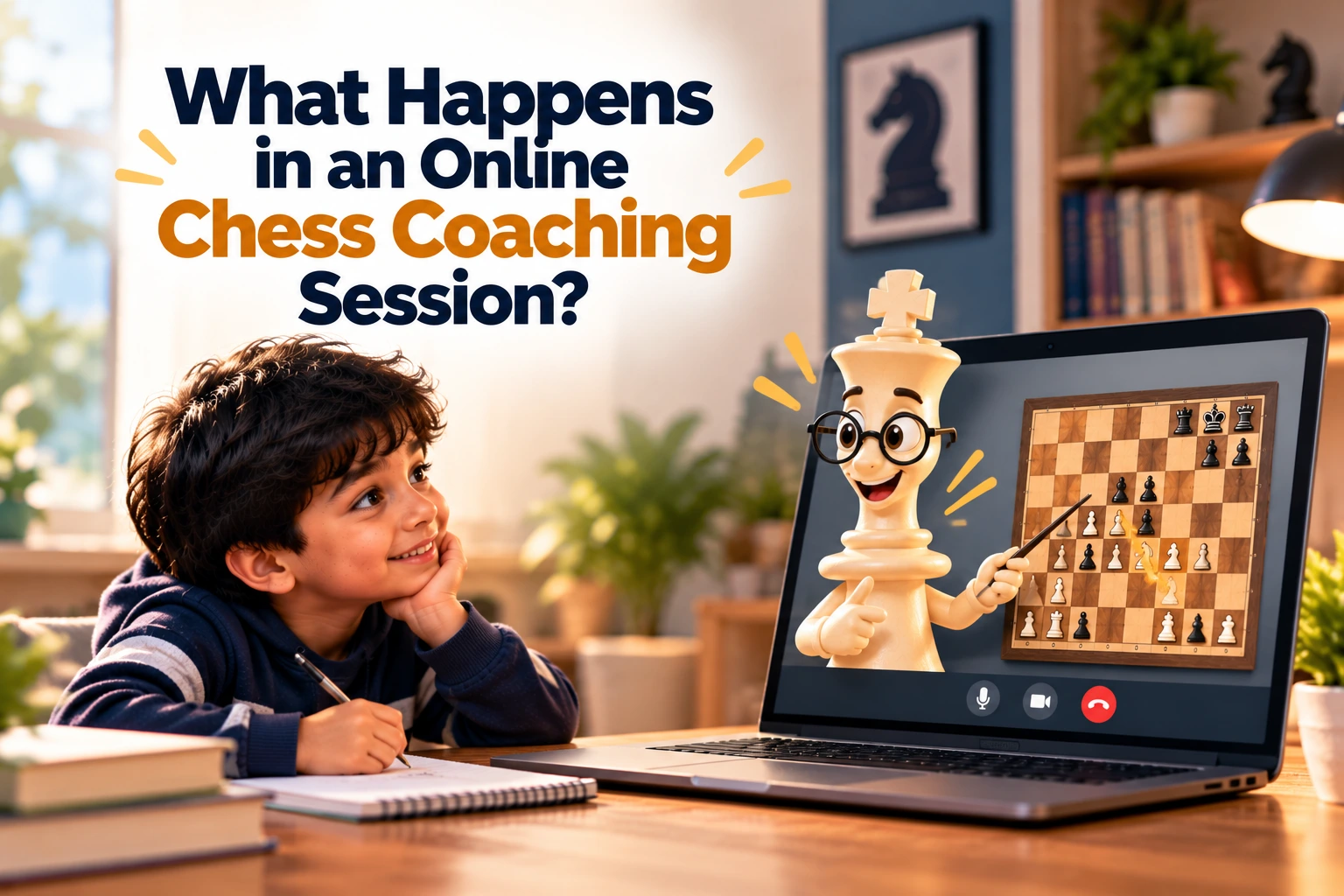
An online chess lesson usually takes place through a video call, a digital chessboard or another learning platform selected by the coach. The student and coach can discuss positions, explore possible moves and work through chess exercises together.
Rather than following exactly the same material in every class, a coach may adjust the lesson to the student's current knowledge, recurring mistakes and learning goals. The following stages illustrate one possible lesson structure; they are not a fixed timetable used by every academy.
A Short Warm-Up
The coach may begin with a simple chess puzzle, a question about a previous topic or a position that encourages the student to start thinking about the board.
This gives the student an opportunity to settle into the lesson and helps the coach understand how comfortably they recognise the position or apply a familiar idea.
Reviewing Previous Learning
In a continuing course, the coach may revisit a concept from the previous class or discuss a position from a recent game. The aim is to check what the student remembers and identify anything that needs more practice.
In a first lesson, the coach may instead ask about the student's experience, familiarity with chess rules and personal goals.
Learning a New Chess Concept
The main part of an online chess training session focuses on a suitable concept. For beginners, this could be piece movement, checkmate, board awareness or a basic tactic. More experienced students may work on calculation, positional play, openings or endgames.
A useful lesson gives the student time to examine positions and explain their ideas. The coach can ask questions such as, "What is your opponent threatening?" or "What happens if you choose this move?"
Solving Puzzles and Practising Moves
Students may solve tactical puzzles, analyse sample positions or play through a position with the coach. These activities allow them to apply the idea introduced during the lesson.
For example, after learning about a fork, a student might identify positions in which one piece can attack two targets. The coach can discuss the student's reasoning and help correct misunderstandings.
Playing or Reviewing a Chess Game
Depending on the lesson plan, the student may play a short game or review a position from a previous game. The coach can help them recognise missed opportunities, unsafe moves or better alternatives.
The goal is not simply to label a move as good or bad. It is to help the student understand the reason behind a decision and consider what they might do differently next time.
Feedback and the Next Practice Goal
At the end of the lesson, the coach may summarise the main concept, answer remaining questions and suggest a manageable activity to practise before the next class.
Depending on the academy's process, feedback may be shared directly with the student or communicated to parents. Ask the provider what follow-up support is actually included.
What Does an Online Chess Lesson Format Look Like?
The online chess lesson format can vary according to the student's age, skill level, class size and programme. Here is an illustrative example of how a 45-minute lesson might be organised.
| Lesson Stage | Illustrative Time | Purpose |
|---|---|---|
| Warm-up | 5 minutes | Start thinking about a chess position. |
| Review | 5 minutes | Reconnect with previous learning. |
| Core concept | 15 minutes | Understand one relevant chess idea. |
| Guided practice | 15 minutes | Apply the idea through positions or exercises. |
| Recap | 5 minutes | Review key learning and next steps. |
This is an example, not Brainiac's confirmed timetable. Actual session lengths, lesson stages and activity times depend on the programme.
What Happens in an Online Chess Class for Kids?
A chess class for kids online should be appropriate to the child's current understanding and attention span. Children who are new to chess may need more demonstrations and simple exercises, while experienced students may be ready for deeper analysis.
For complete beginners
- Learning how the pieces move and how the board is organised.
- Understanding check, checkmate and basic rules.
- Practising simple tactics and safe piece movement.
- Developing the habit of checking the opponent's threats.
For developing players
- Recognising common tactics such as forks and pins.
- Improving opening principles and piece development.
- Reviewing mistakes from completed games.
- Practising calculation and making more considered decisions.
For more experienced players
- Analysing complex positions and candidate moves.
- Studying pawn structures, positional plans and endgames.
- Reviewing tournament games and recurring weaknesses.
- Working towards specific training goals.
These are examples of topics that may be covered, not a guarantee that every class includes all of them. The coach should choose material that fits the student's current level.
What Makes Live Chess Coaching Sessions Interactive?
A live chess coaching session gives students the opportunity to respond, ask questions and test their ideas while instruction is taking place. The exact tools depend on the provider, but a digital chessboard can make it easier to demonstrate and discuss different positions.
- Move demonstrations: The coach can show how a position changes after a move.
- Guided questions: Students can explain why they prefer one move over another.
- Practice positions: Students can test an idea instead of only hearing an explanation.
- Immediate clarification: Students can ask questions when a concept is confusing.
- Game discussion: Selected moves can be reviewed to explore alternative decisions.
Live coaching versus recorded videos
Recorded lessons can be useful for revision and independent study. Live instruction adds the opportunity to ask questions, receive feedback and discuss the student's decisions as they happen. The best choice depends on the learner's needs and preferred way of studying.
What Do You Need Before an Online Chess Training Session?
Getting ready for a lesson is usually straightforward. Confirm the requirements with the academy before the first class.
- A suitable device: A laptop or desktop may provide a more comfortable view of the chessboard. A tablet may also work if supported.
- A reliable internet connection: This helps the student communicate with the coach and use the learning platform.
- Headphones or speakers: Clear audio makes it easier to follow explanations.
- A quiet learning space: Fewer distractions can help the student concentrate.
- Lesson access details: Keep the class link, login details and any instructions provided by the academy ready.
- A notebook if useful: Students may write down a key idea or practice task, although this is not always necessary.
A physical chessboard may be helpful for additional practice at home, but some online lessons use a digital board for the entire session. Ask whether any specific equipment or software is required.
How Can Parents Tell Whether a Chess Lesson Is Useful?
Parents do not need to be experienced chess players to evaluate the learning experience. Focus on whether the programme has a clear purpose and gives your child opportunities to participate.
- Does the coach explain concepts in language your child can understand?
- Does your child get opportunities to solve positions and ask questions?
- Is the lesson appropriate for your child's current skill level?
- Does the coach explain mistakes constructively?
- Can the academy describe what the student is working towards?
- Is there a clear way to discuss progress or ask follow-up questions?
Parent tip: After class, ask your child to explain one idea they learned or one position they found interesting. You do not need to test them or expect them to remember everything. A short conversation can help you understand what caught their attention.
What Should You Ask Before Booking a Demo Class?
A demo is an opportunity to understand the teaching approach and whether the programme suits your child. Before booking, consider asking:
- Is the session live, and will my child interact with the coach?
- How is the lesson adapted to my child's current chess level?
- Will the student have opportunities to practise on a chessboard?
- What class formats and schedules are currently available?
- What feedback or progress information is provided to parents?
- What are the fees and the terms for regular classes?
- What equipment or platform should my child use?
Frequently Asked Questions
1. How long does an online chess coaching session last?
Session lengths vary by academy, student age and class format. Ask the provider how long each lesson lasts and whether the quoted duration includes practice, review and feedback.
2. Is an online chess lesson suitable for a complete beginner?
It can be suitable if the coach teaches the basics clearly and uses exercises appropriate to the student's level. Ask how beginners are introduced to the board, piece movement and fundamental rules.
3. Are online chess lessons live or recorded?
Providers may offer live lessons, recorded courses or a combination. Confirm the format before enrolling. Live lessons generally allow students to ask questions and discuss moves with the coach in real time.
4. What is the difference between private and group chess sessions?
Private lessons focus on one student, while group sessions share the coach's attention among multiple learners. The right format depends on the student's learning needs, comfort level, schedule and budget.
5. Do children need a physical chessboard for online coaching?
Not necessarily. Many online lessons use a digital chessboard. A physical board can provide extra practice away from the screen, but requirements vary by programme.
6. How can parents track progress after chess lessons?
Ask about the concepts being covered, feedback on games, practice activities and periodic reviews. Progress may also appear in better board awareness, more thoughtful decisions and fewer recurring mistakes. The pace differs for each learner.
7. Can students living abroad attend online chess coaching?
Online coaching can connect students with academies in other countries. Families should confirm available schedules, time-zone compatibility, payment arrangements and the class format before booking.
Explore More Chess Learning Resources
If you are comparing learning options for your child, these Brainiac Chess Academy resources may help you decide what to explore next.
Conclusion
An Online Chess Coaching Session can combine instruction, guided practice, discussion and feedback in a structured learning experience. The specific activities depend on the child's current level and the academy's teaching approach.
Before enrolling, find out how the class works, what the student will practise, how feedback is provided and whether the schedule suits your family. These questions can help you choose an online chess lesson with realistic expectations.
Ready to Explore Online Chess Coaching?
Want to understand which learning option may suit your child? Contact Brainiac Chess Academy to ask about available programmes, class formats, schedules and demo-class options.
ASK ABOUT ONLINE CHESS CLASSES →Lesson duration, class formats, schedules and included features vary by programme. Confirm current details directly with the academy.