




How Children Abroad Can Learn Chess Online From Home?
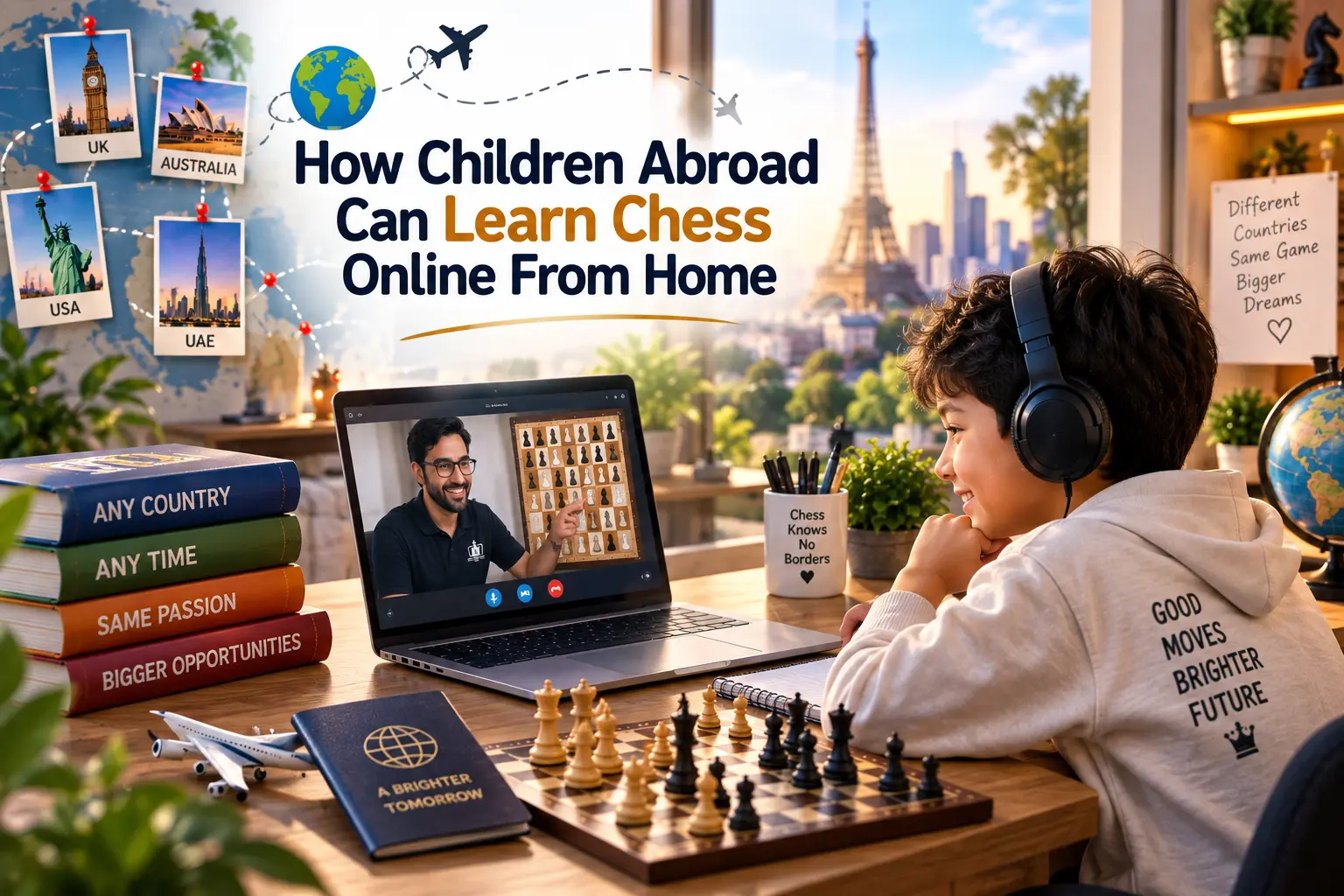
Children living outside India can learn chess from home through live online coaching, digital chessboards, guided practice and regular feedback. This guide explains what the experience can look like, what parents need to prepare, and how families can build a practical home-learning setup.
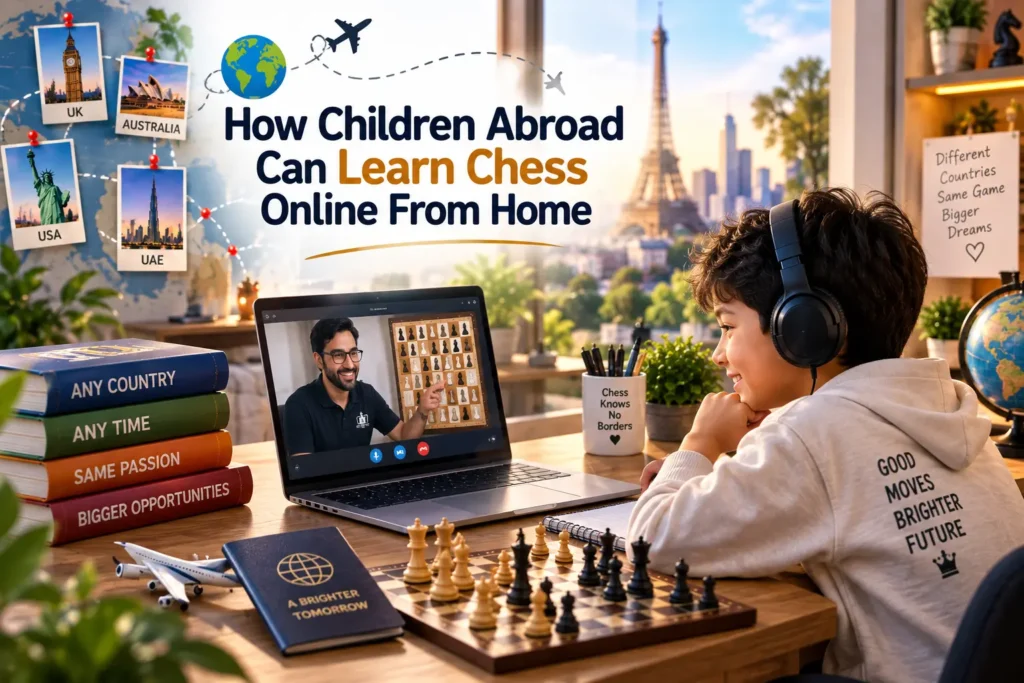
For families living abroad, finding a convenient way for a child to continue learning chess can sometimes mean balancing school, extracurricular activities, travel and family schedules. Learn Chess Online From Home programs offer one practical option: the child can attend a live lesson from home while interacting with a coach through video communication and a digital chessboard.
The experience is not simply about joining a video call. Effective online chess learning usually combines live instruction with independent practice, homework, game review and feedback. The exact process can vary between academies, coaches and age groups, but the underlying learning journey can remain quite straightforward.
Can Children Living Abroad Learn Chess Online From Home?
Yes. Children can learn chess from home using a suitable laptop, tablet or computer, a stable internet connection, video communication and a digital chessboard. The experience depends on the child's age, chess level, coach, class schedule, technology setup and the family's ability to support regular practice.
Can Children Abroad Really Learn Chess Online From Home?
Yes, provided the child has an appropriate learning setup and the online program is organised around actual teaching rather than simply sending chess material to the student.
In a live online lesson, the coach and child can communicate through video or audio while working on a digital chessboard. The coach can demonstrate a position, ask the child to find a move, discuss the reasoning, and then move into practice exercises.
Between lessons, the child can play practice games, solve puzzles, complete assigned tasks and revisit positions from the class. The coach can then use feedback from these activities to identify areas that need more attention.
A typical home-learning cycle may look like this:
Live Coaching
The child learns a concept directly from the coach.
Independent Practice
The child applies the concept through positions or games.
Homework
Short tasks reinforce the lesson when appropriate.
Feedback
Mistakes and difficult positions can be reviewed.
Progress Review
The next lessons can build on what the child needs to work on.
Tournament Preparation
When relevant, training can include game and tournament preparation.
Physical distance between the coach and student therefore does not remove the basic teaching process. The important question is whether the technology, teaching method, communication and practice routine work well for the individual child.
How Does Learning Chess From Home Work for a Child?
The exact process differs between online chess academies, but parents can generally expect several stages before and after the first lesson.
| Stage | What May Happen | What Parents Should Look For |
|---|---|---|
| 1. Enquiry | The family shares the child's age, experience, goals and availability. | Clear communication about the program and expectations. |
| 2. Demo or Assessment | The child may attend a trial class or level assessment. | The child should have an opportunity to interact with the coach. |
| 3. Level Identification | The academy determines an appropriate starting level. | The program should reflect the child's current knowledge rather than age alone. |
| 4. Course Selection | The family chooses a suitable class structure or schedule. | Parents should understand class frequency, format and practice expectations. |
| 5. Live Lesson | The coach teaches through a digital board and communication platform. | The child should have opportunities to answer and participate. |
| 6. Practice | The child applies lesson concepts independently. | Practice should be manageable rather than excessive. |
| 7. Homework | The child may receive puzzles, positions or review tasks. | Tasks should be relevant to the child's level. |
| 8. Feedback | Games, puzzles or questions can provide information about progress. | Feedback should help identify what to practise next. |
| 9. Progress Review | The learning plan can be adjusted as the child develops. | Parents should understand what the child is learning and where support is needed. |
Families comparing providers may also find it useful to understand how to choose an online chess academy for your child, especially when comparing curriculum, coaching structure, feedback and communication.
What Does a Child Need to Learn Chess From Home?
The technology required for home-based chess learning is usually straightforward, although the exact requirements depend on the academy and platform.
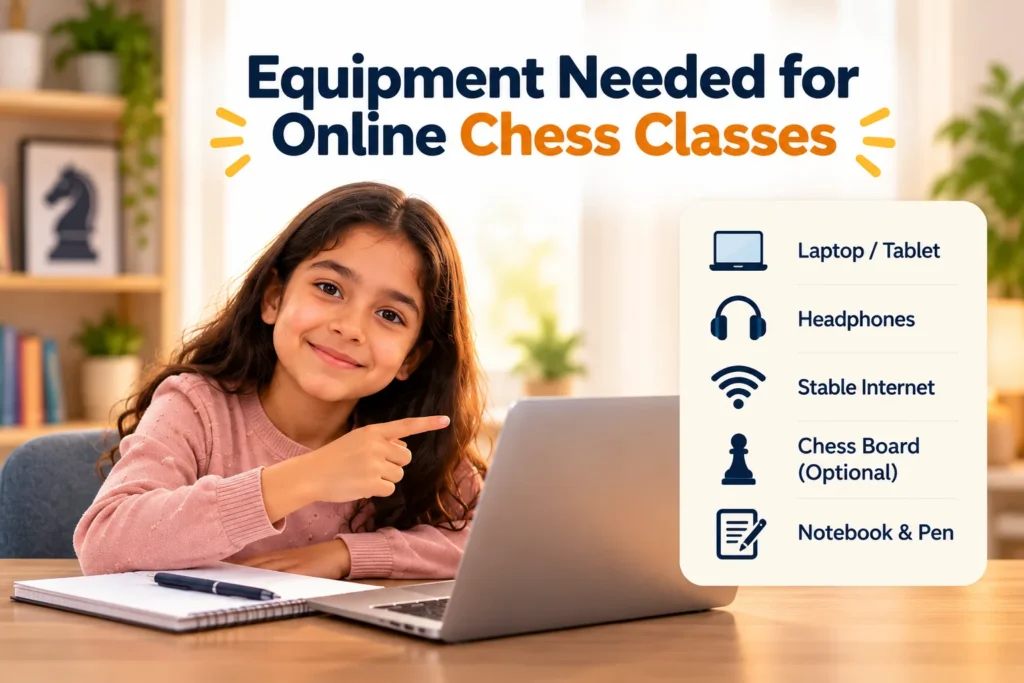
Online Chess Learning Checklist
- Laptop, tablet or desktop: A device with a comfortable screen for viewing the digital board.
- Stable internet: A reliable connection helps reduce interruptions during live lessons.
- Camera and microphone: These may be required when the class involves video or voice interaction.
- Online chess platform: The academy may use its own platform or another chess-learning system.
- Digital chessboard: This allows the coach and child to analyse positions together.
- Quiet learning space: A dedicated area can reduce distractions during the lesson.
- Physical chessboard: Optional, but useful for children who also enjoy moving physical pieces.
- Notebook or digital notes: Useful for recording key ideas, homework or questions for the next class.
Parents do not necessarily need to purchase specialist equipment. Before buying anything, check the academy's technical requirements and the platform being used.
For younger children, the home learning environment can be just as important as the online class itself. A quiet space, stable internet connection and minimal distractions can make it easier for the child to participate comfortably and stay engaged.
What Happens During a Live Online Chess Lesson?
A live online lesson should involve active participation rather than the child simply watching the coach explain chess positions. The exact structure and duration vary between programs, but a lesson may include several of the following stages.
- Review the previous lesson: The coach checks whether the child remembers the earlier concept.
- Introduce a new concept: A new tactical, positional, opening or endgame idea is explained according to the child's level.
- Demonstrate on the digital board: Positions are shown visually so the child can follow the idea.
- Ask questions: The child is encouraged to find moves or explain what they notice.
- Solve positions together: The coach can guide the child through practical examples.
- Practice: The child applies the concept through exercises or game situations.
- Review mistakes: Incorrect answers can become learning opportunities.
- Assign practice: Depending on the program, the child may receive puzzles, homework or a game-review task.
The strongest part of a live lesson is not necessarily the amount of information covered. For a child, being asked to think, answer, explain and make decisions can be more useful than simply watching a long demonstration.
Can Beginners Learn Chess Online From Home?
Yes. Beginners can start learning chess online from home when the lessons are structured around their current understanding and the coach explains concepts at an appropriate pace.
Early Online Chess Lessons for Kids may introduce the game in a logical sequence rather than expecting the child to memorise a large amount of information immediately.
Depending on age and level, early lessons may cover:
- How the chessboard is arranged.
- How each piece moves.
- Capturing and protecting pieces.
- The meaning of check.
- How checkmate works.
- Basic castling rules.
- Simple tactical ideas.
- Opening principles such as developing pieces and controlling useful squares.
- Basic endgame positions.
For a beginner, the goal is to build understanding gradually. Parents should not expect a child to remember every rule or concept after one lesson. Repetition and practical use are normal parts of learning chess.
A Singapore-based family, for example, may be exploring online chess classes in Singapore specifically for a child starting from the basics. The same beginner principles can apply regardless of the child's country.
How Should Children Practice Chess Between Online Classes?
Live coaching gives direction, but children also need opportunities to use what they have learned. This is where Online Chess Training for Kids connects with independent home practice.
Depending on the child's level, between-class practice can include:
- Tactical puzzles.
- Practice games.
- Reviewing the previous lesson.
- Analysing one or two important game positions.
- Basic opening practice.
- Simple endgame exercises.
- Short calculation exercises.
The child does not need to complete every activity every day. A practical home routine can rotate different activities throughout the week. This makes it easier to fit chess around school and other commitments.
Parents looking for home-based coaching in Canada can explore online chess classes in Canada while considering how the child's independent practice will fit around the family's existing schedule.
Consistency does not mean forcing a child to practise every day. A manageable routine that the child can follow around school and family life is generally easier to maintain than a demanding schedule that quickly becomes stressful.
How Do International Time Zones Affect Learning From Home?
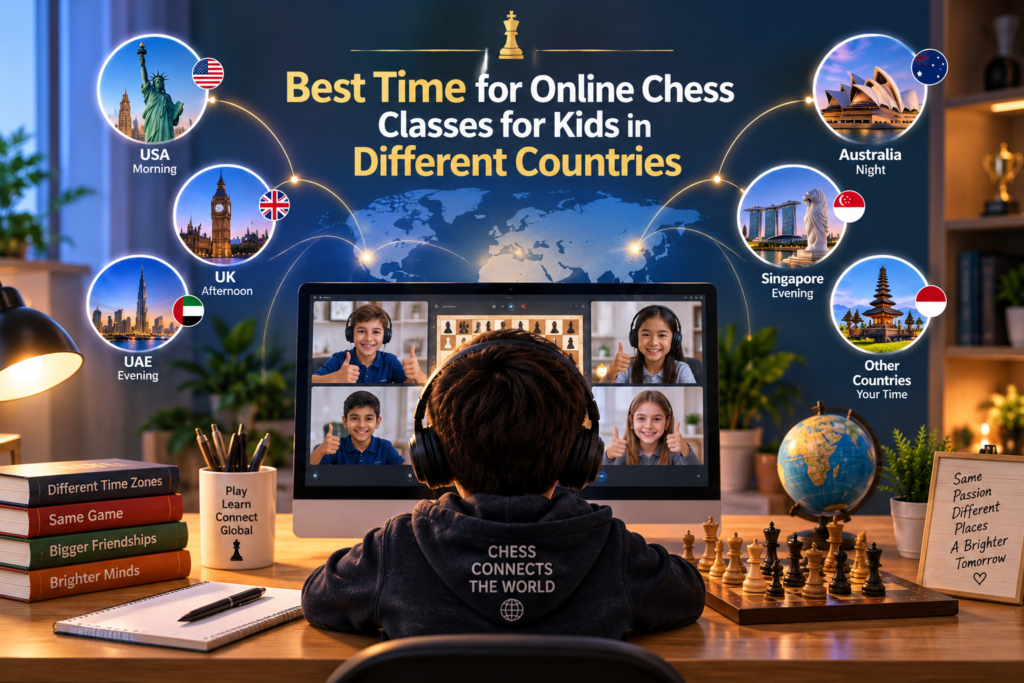
When the coach and student live in different countries, the class time needs to work for both sides. Parents should confirm the final lesson time using the child's own local time rather than relying only on the coach's stated time.
Factors that can affect scheduling include:
- The child's local school hours.
- The coach's available teaching hours.
- Family routines and after-school activities.
- Weekend availability.
- Seasonal daylight-saving changes in some countries.
- Changes to school or holiday schedules.
For families in the UK, for instance, online chess classes in the UK should be planned using the child's current UK local time, particularly when seasonal clock changes affect the difference between countries.
Parents should also save the class time in their own calendar and confirm any changes directly with the academy. A clear schedule prevents avoidable confusion when the coach and student are in different time zones.
How Can Parents Support a Child's Online Chess Learning at Home?
Parents do not need to become chess coaches to support home-based learning. Their main role is often to create the conditions in which the child can participate consistently.
- Create a consistent learning space: Keep the device, headphones and other class items easy to access.
- Help younger children join on time: Younger students may need assistance opening the class or checking the microphone.
- Reduce distractions: Keep unnecessary notifications, television and unrelated devices away during the lesson.
- Support a regular practice routine: Encourage the child to complete relevant practice without turning it into a daily argument.
- Encourage game review: Ask what the child learned from a game rather than focusing only on whether they won.
- Communicate useful information with the coach: Share relevant changes in school workload, availability or learning concerns.
- Avoid making every game a performance test: Children need opportunities to make mistakes while learning.
- Encourage independence: As children become comfortable with the platform, allow them to manage more of their own chess routine.
The goal is support, not constant supervision. As a child becomes familiar with online chess learning, parents can gradually move from technical assistance to simply checking that the routine is working.
Can Children Living Abroad Prepare for Chess Tournaments Online?
Online coaching can be one part of tournament preparation for a child living abroad. A coach can work with the child on relevant chess positions and help them review games without requiring the family to travel to a physical coaching centre.
Depending on the child's level and tournament goals, preparation may include:
- Tactical preparation.
- Opening concepts and relevant variations.
- Practice games.
- Analysis of previous games.
- Endgame revision.
- Time-management practice.
- Reviewing mistakes from earlier tournaments.
Online coaching is still only one component of preparation. The actual tournament environment, playing experience, preparation outside lessons and the child's individual circumstances also matter. No coaching format can guarantee a particular tournament result.
What Are the Benefits of Learning Chess From Home?
Home-based chess learning can be practical for families who have limited access to suitable local coaching or prefer an online format. Its usefulness depends on the child's needs and the quality of the learning setup.
Practical Benefits
- No regular commuting: The child can attend a lesson from home.
- Convenient scheduling: Families can look for lesson times that fit their routine.
- International accessibility: Families abroad can access online coaching from an academy based in another country.
- Digital practice: The same online environment can support lessons, games and analysis.
- Easy communication: Parents and coaches can communicate remotely when needed.
- Continuity: Online learning can remain possible during travel or relocation when internet access is available.
What Still Matters
- The child needs a suitable device and internet connection.
- The learning environment should minimise distractions.
- Children still need independent practice between lessons.
- Parents may need to support younger students technically.
- The class schedule has to fit the child's local routine.
- The teaching format should suit the child's age and learning style.
Learning Chess From Home vs Learning at a Physical Chess Academy
Neither format is automatically suitable for every child. The better choice depends on the family's location, schedule, learning preferences, available coaching and the child's ability to participate comfortably.
| Factor | Learning From Home | Physical Chess Academy |
|---|---|---|
| Travel | No regular travel to the coaching location. | Requires travel to and from the academy. |
| Scheduling | Can provide useful options for families with suitable online timings. | Usually depends on the academy's local class schedule. |
| Coach Interaction | Live interaction through online communication and digital boards. | Face-to-face interaction in the same physical space. |
| Digital Tools | Digital boards, online games and screen-based analysis are naturally integrated. | May use physical boards and may also incorporate digital tools. |
| Practice | Easy access to online practice from the same home setup. | Physical games and in-person practice can be convenient. |
| Parent Involvement | Younger children may need help with devices and joining lessons. | Parents may mainly handle transportation and scheduling. |
| Flexibility | Can be useful for families living far from suitable coaching. | May work well for families with a convenient local academy. |
| Learning Environment | Comfortable home environment, but distractions need to be managed. | Dedicated physical classroom with other students. |
| Potential Challenges | Internet issues, screen fatigue and technical problems. | Travel time, fixed location and local availability. |
What Challenges Should Parents Consider?
Online learning is not completely friction-free. Parents should understand the practical challenges before choosing a home-based chess program.
Common Challenges
- Internet problems: Connection issues can interrupt a live lesson.
- Screen fatigue: Long periods of screen use may become tiring for some children.
- Technical support: Younger children may need help with devices or software.
- Home distractions: Noise and interruptions can affect attention.
- Time-zone differences: International families need to confirm class timings carefully.
- Scheduling conflicts: School, sports and family activities may overlap with lessons.
- Independent practice: The child still needs to practise between classes.
- Communication quality: The child should be able to hear and interact with the coach comfortably.
How Parents Can Reduce These Problems
- Test the internet and device before the first lesson.
- Keep the class environment quiet and organised.
- Use headphones when appropriate.
- Save the lesson schedule in the family calendar.
- Keep the child's chess platform login information accessible.
- Ask the academy about technical requirements beforehand.
- Keep independent practice realistic.
- Inform the coach if school workload temporarily increases.
How Children in Different Countries Can Learn Chess From Home
The basic online learning process can be similar across countries, but each family still needs to consider its own local routine. These country-specific differences are mainly about practical scheduling and family circumstances, not different chess-learning principles.
USA
Families in the USA may need to consider different US time zones when arranging live lessons. Parents should confirm the child's final class time in their own local time.
Canada
Canadian families can have different local times depending on their region, so the child's school schedule and local clock should be used when planning online learning.
UK
UK families should account for local UK time and seasonal clock changes when coordinating international online coaching.
UAE
Home-based online learning can be convenient for families in the UAE who are balancing school, extracurricular activities and family schedules.
Australia
Australian families should consider their specific local region because Australian time zones differ across the country when coordinating international lessons.
Singapore
Families in Singapore should use Singapore local time when arranging lessons and build practice around the child's school and extracurricular schedule.
Parents in the USA who are specifically comparing home-based options can explore online chess classes in the USA for more country-specific context.
Families in the UAE can also explore online chess classes in the UAE when considering how online coaching can fit into a child's home learning routine.
Australian families researching remote coaching can use online chess classes in Australia as a more location-specific resource alongside this broader home-learning guide.
Online Chess Learning Checklist for Parents
Before starting an online chess program, parents can use this checklist to make sure the basic home setup is ready.
- Stable internet connection
- Suitable laptop, tablet or desktop
- Quiet learning space
- Class timing confirmed in the child's local time
- Child knows how to join the class
- Digital chessboard or required platform ready
- Regular but realistic practice schedule
- Homework or practice tasks reviewed
- Coach feedback considered
- Progress checked periodically
Pros and Potential Challenges of Learning Chess Online From Home
Pros of Learning Chess Online From Home
- Convenient home-based learning.
- No regular commuting to a coaching centre.
- Access to structured coaching across geographical boundaries.
- Flexible scheduling when suitable class timings are available.
- Easy connection between live lessons and digital practice.
- Useful option for families living abroad or relocating frequently.
Potential Challenges
- Dependence on a stable internet connection.
- Additional screen time.
- Distractions at home.
- Younger children may need technical assistance.
- International time-zone differences can complicate scheduling.
- Children still need regular independent practice.
People Also Ask About Learning Chess From Home
Can children learn chess effectively from home?
Yes. With live coaching, a suitable digital board, regular practice and useful feedback, children can learn chess from home. The setup should match the child's age and learning needs.
Can kids learn chess online from another country?
Yes. Online coaching allows a child to participate remotely, provided the class timing, internet connection, technology and communication arrangements work for the family.
What equipment does a child need for online chess lessons?
Most programs require a suitable internet-connected device and access to the relevant online chess or communication platform. A camera, microphone and physical board may be useful depending on the class format.
Are online chess classes suitable for beginners?
They can be suitable for beginners when the lessons start with fundamentals such as board setup, piece movement, check, checkmate, basic tactics and simple chess principles.
How can parents support online chess learning at home?
Parents can provide a quiet learning space, help younger children with technology, maintain a realistic routine and encourage the child to review lessons and practise without creating unnecessary pressure.
Frequently Asked Questions
Can children living abroad learn chess online from home?
Yes. Children can participate in live online chess lessons from home using an internet-connected device, communication tools and a digital chessboard. Regular practice and feedback can support the learning process between lessons.
What does a child need for online chess lessons?
Requirements vary between academies, but a suitable laptop, tablet or desktop, stable internet connection and access to the required chess platform are commonly useful. A camera, microphone and physical chessboard may also be helpful.
Are online chess classes suitable for beginners?
Yes. Beginners can learn fundamentals such as board setup, piece movement, captures, check, checkmate, castling, basic tactics, opening principles and simple endgames through appropriately structured lessons.
How do online chess coaches teach children remotely?
Coaches can combine video or audio communication with digital chessboards, demonstrations, questions, exercises, practice positions and game analysis. The exact lesson structure varies between academies.
How much practice should children do between online classes?
Practice should depend on the child's age, level, goals and school workload. A manageable combination of puzzles, games, lesson review and occasional analysis can help reinforce coaching without requiring excessively long sessions.
Can children prepare for tournaments through online coaching?
Online coaching can support tournament preparation through tactical work, opening review, practice games, game analysis, endgame revision and time-management exercises. It is one part of preparation and cannot guarantee a tournament result.
How do international time zones affect online chess lessons?
The coach and child may be in different time zones, so parents should confirm the class time in the child's local time. School hours, family routines and seasonal clock changes can also affect scheduling.
How should parents choose an online chess academy?
Parents can compare the academy's teaching structure, coach interaction, curriculum, class format, feedback process, practice expectations, scheduling options and suitability for the child's current level.
Conclusion: How Can Children Abroad Learn Chess From Home?
Children living abroad can Learn Chess Online From Home through a combination of live coaching, digital chess tools, independent practice, homework, game review and coach feedback. The technology makes it possible to connect a child and coach remotely, but the learning experience still depends on practical factors such as the child's age, level, schedule, home environment and consistency.
For parents, the most useful approach is to think beyond the live class. A successful home-learning setup includes the right device, a suitable learning space, clear communication, realistic practice and periodic progress review.
International families also need to consider local school schedules and time differences. The same online program may fit two families very differently depending on where they live and what their weekly routines look like.
Online chess is therefore best viewed as a complete learning process rather than simply a video lesson. When coaching, practice and feedback are connected, children can continue learning chess from home even when their coach and family live in different countries.
Ready to Help Your Child Learn Chess From Home?
If your family lives abroad and you are exploring home-based chess coaching, Brainiac Chess Academy can help you understand the available online learning format and discuss a suitable schedule for your child. Brainiac Chess Academy is based in Vashi, Navi Mumbai, India, and provides online chess coaching internationally.
Book Your Free Demo Right Now WhatsApp Us