

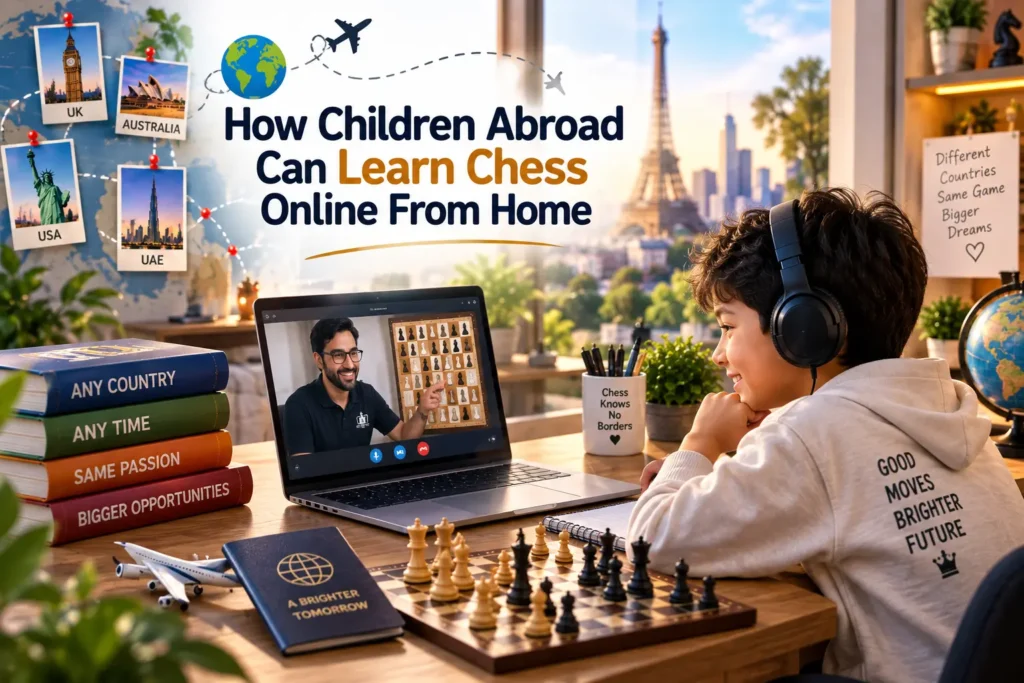





Online Chess Classes After School for Kids Living Abroad
Finding the right after-school activity can be difficult when a child already has school, homework, sports, music, family time and other commitments. Online Chess Classes After School for Kids can provide a structured way to learn chess from home without adding travel to the family's schedule. The key is choosing a class time, format and learning approach that genuinely fits the child's routine.
Online chess classes after school can fit international children's routines because they remove travel time and allow live coaching from home. The right program should match the child's local time zone, school schedule, energy level and learning needs while leaving enough time for homework, play and rest.
For families living outside India, choosing an extracurricular activity often involves more than finding a good teacher. Parents have to consider school schedules, homework, transportation, sports, music lessons, family commitments and the child's own energy after a full school day. Chess can be included in that routine, but the way the class is scheduled matters.
This is where After School Chess Classes Online can be useful. A child can finish school, have a snack, take a short break and join a live chess lesson from home instead of travelling to a physical location.
For international families, however, convenience should not be the only consideration. A class needs appropriate timing, live interaction, structured instruction, suitable practice and clear communication with parents. This guide explains what to consider before choosing Online Chess Classes After School for Kids, particularly when the child lives in a different country from the academy.
Why Online Chess Classes After School Work Well for Kids Living Abroad
After-school learning works best when it fits naturally into the child's existing routine. Online chess can remove one practical barrier: travel. A child can finish school, have a snack, take a short break and join a live chess lesson from home.
This does not automatically make online learning better than face-to-face coaching. Some children learn particularly well in person, while others are comfortable using a digital chess board and video communication. Parents should therefore consider the child's learning style alongside convenience.
For children living abroad, online chess may offer several practical advantages:
- No academy travel: The lesson can take place from a familiar home environment.
- Predictable routine: A recurring class can become part of the weekly schedule.
- Live interaction: Children can ask questions and receive guidance during the lesson.
- Structured learning: A planned curriculum can provide continuity from one lesson to another.
- Parent visibility: Parents can more easily understand what the child is learning and what practice is expected.
The important question is not simply whether an online class is convenient. It is whether the complete learning experience works for the child.
How Chess Can Fit Into a Child's After-School Routine
There is no single after-school routine that works for every family. A younger child may need considerable downtime after school, while an older child may be comfortable moving directly from homework into an extracurricular class.
A simple example could look like this:
This is only an example. A family may prefer chess before homework, on selected weekdays, or during a weekend slot. What matters is avoiding an overloaded schedule. If a child is consistently tired when the lesson begins, changing the timing may be more useful than simply adding more practice.
Parents considering Chess Classes for Kids Abroad should therefore look at the complete weekly routine rather than choosing a class based only on an available time slot.
What Should Parents Consider When Choosing After-School Chess Timing?
Class timing is one of the most important practical questions for an international family. Parents should compare the proposed class time with the child's actual local routine.
- When does school normally finish?
- How much time does the child need to settle down after school?
- Does the child need a snack or rest before the lesson?
- When is homework normally completed?
- Are there sports, music or other extracurricular activities?
- Is the child more focused earlier or later in the afternoon?
- Does the coach offer a recurring time that works in the child's local time zone?
- Would a weekday or weekend schedule be easier to maintain?
- Can the family maintain the same schedule consistently?
- Could daylight-saving changes affect the recurring class time?
A slightly less convenient time that the child can attend consistently may be more practical than a theoretically ideal slot that frequently clashes with other commitments.
How Time Zones Affect Online Chess Classes for Children Abroad
International online chess requires both the parent and academy to be clear about time zones. A class that appears to be a convenient afternoon time for the coach may fall during dinner, homework or another activity for the child.
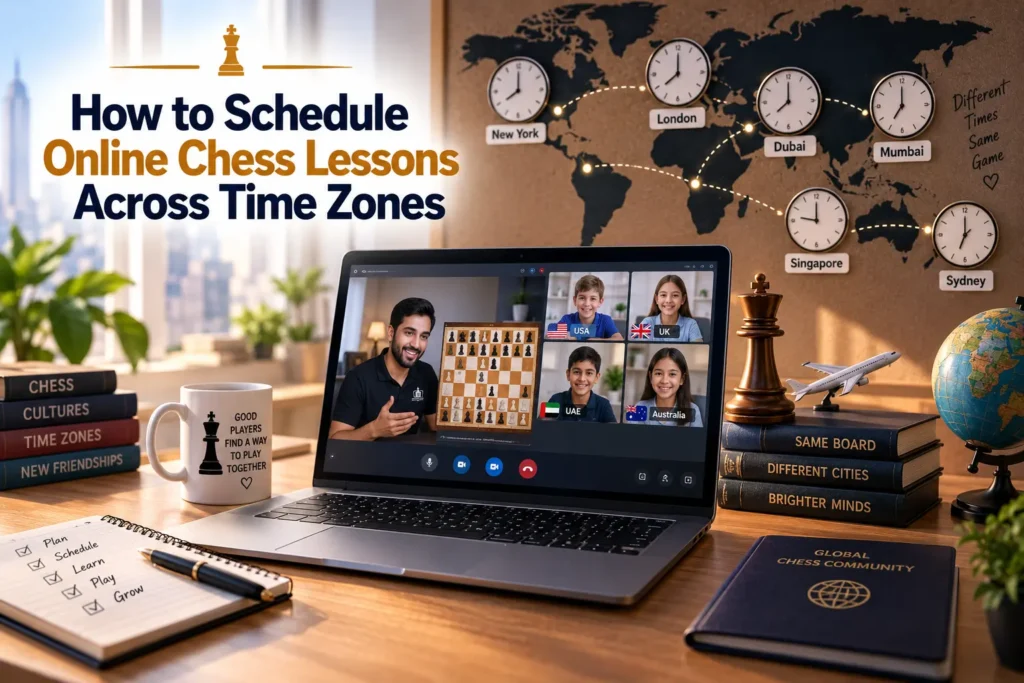
Parents should confirm the recurring class time in the child's local time zone. Calendar invitations can help, but families should still check the displayed time before the first lesson and whenever a seasonal clock change may affect the schedule.
This is particularly important for countries with multiple time zones. The USA, Canada and Australia do not operate on one nationwide clock, so simply saying "7 PM in Australia" or "5 PM in the USA" is incomplete without identifying the relevant local time zone.
For an international family, confirm the recurring lesson in the child's local time zone and save it in the family's calendar. Recheck the displayed time when daylight-saving changes occur in the relevant location. This simple step can prevent missed or unexpectedly timed lessons.
| Country / Region | Scheduling Consideration |
|---|---|
| USA | Confirm the child's specific local time zone because the country spans multiple time zones. |
| Canada | Use the child's actual local time zone rather than assuming one national time. |
| UK | Check the recurring local time and account for seasonal clock changes when relevant. |
| UAE | Compare the academy's available slots with the child's after-school and evening routine. |
| Australia | Identify the child's specific local time zone because Australia has multiple time zones. |
| Singapore | Confirm the live class time against the child's established after-school activities. |
What Happens During an Online After-School Chess Class?
A live lesson should have a clear learning purpose rather than simply giving children time to play random games. The exact structure varies by coach, age group, level and curriculum, but a well-organized online chess lesson may include:
- Warm-up: A short puzzle, question or position to activate the child's thinking.
- Concept explanation: The coach introduces a chess idea appropriate to the student's level.
- Digital board demonstration: The coach explains positions and moves visually.
- Guided practice: The child attempts positions while receiving guidance.
- Tactical puzzles: The student applies concepts through practical exercises.
- Game application: The child may play or analyse a position using the lesson topic.
- Feedback: The coach identifies what the child understood and what needs more work.
- Practice suggestion: The student receives an appropriate task for continued learning.
The goal should be active participation. Live Chess Classes for Kids are most useful when children can interact with the coach instead of simply watching a long presentation.
Why Practice Still Matters After the Live Chess Class
A live lesson introduces ideas, but children generally need opportunities to apply those ideas. Practice does not have to mean another long session every day. The appropriate amount depends on the child's age, chess level, goals, concentration and overall schedule.
Depending on the program, practice may include:
- Short tactical puzzles
- Reviewing a recently played game
- Solving positions related to the lesson topic
- Playing a practice game
- Revisiting mistakes identified by the coach
- Completing assigned chess homework
Parents do not need to turn every evening into a chess session. Consistent, manageable practice is often easier to maintain than a demanding schedule that leaves the child frustrated or tired.
How Can Children Living Abroad Learn Chess From Home?
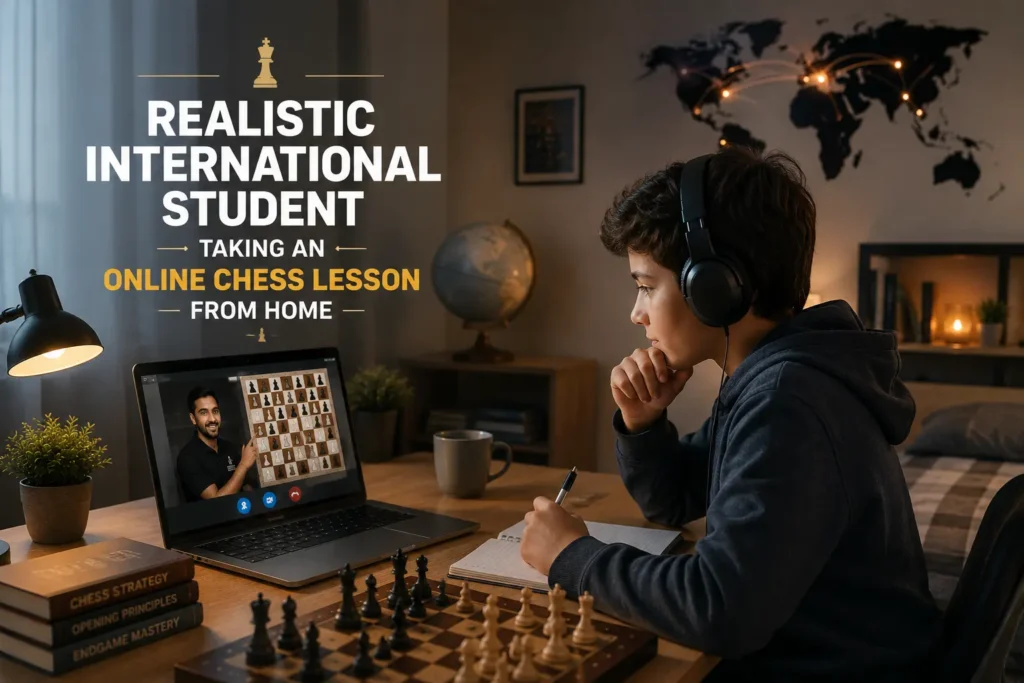
One advantage of Chess Lessons From Home is that most of the physical setup can remain simple. Families do not necessarily need a dedicated classroom. A suitable device, reliable internet connection and comfortable learning space may be enough for a live lesson.
A practical home setup can include:
- Laptop or tablet: Large enough for the child to see the coach and digital board clearly.
- Stable internet: Important for uninterrupted live interaction.
- Headphones: Useful when other family members are working or studying nearby.
- Quiet space: Reduces distractions during explanations and practice.
- Digital chess board: Allows positions and moves to be demonstrated visually.
- Practice platform: Useful for puzzles, games or assigned exercises when included in the program.
- Parent support: Helpful for younger children who need assistance joining the class or managing homework.
The objective is not to create a complicated home classroom. It is to give the child an environment where they can concentrate and participate comfortably.
What Should Parents Look for in an Online Chess Academy?
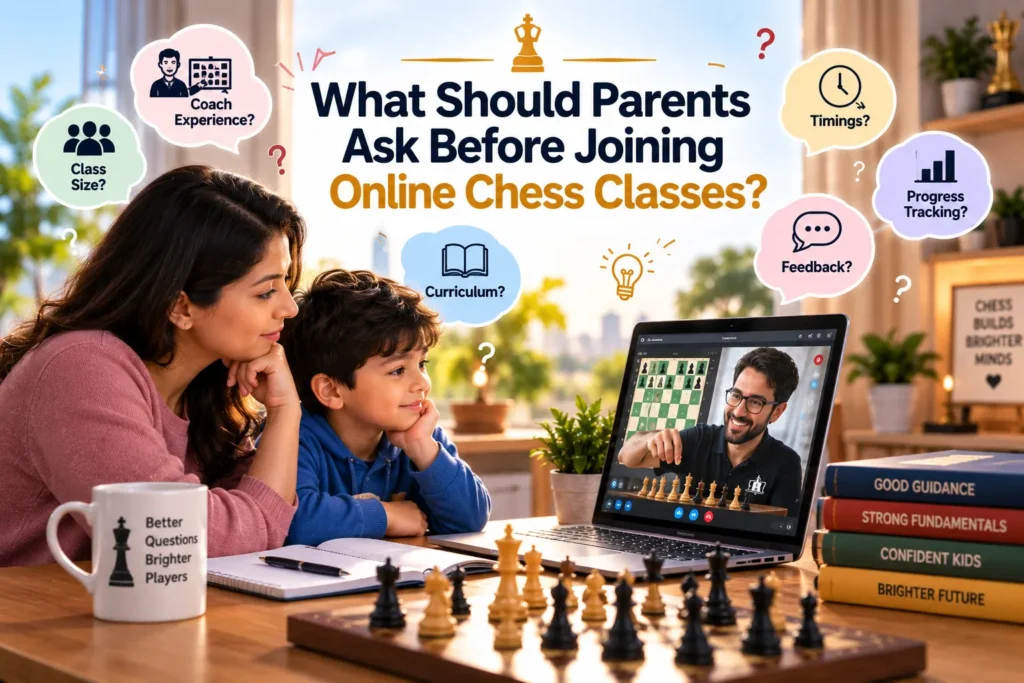
Choosing an online academy involves more than checking whether classes are available at a convenient time. Parents should understand how the program actually teaches children.
- Coach experience: Ask who teaches the child and how lessons are adapted to different levels.
- Structured curriculum: Check whether lessons follow a logical progression.
- Class size: Understand how much individual interaction the child can expect.
- Live interaction: Confirm whether children can ask questions and participate actively.
- Level-based learning: Beginners should not be placed into lessons that assume advanced knowledge.
- Feedback: Ask how parents and students are informed about areas for improvement.
- Progress tracking: Understand how the academy evaluates development over time.
- Scheduling: Confirm whether recurring timings work with the child's local time zone.
- Trial or demo: If available, use it to evaluate the child's comfort with the teaching format.
- Tournament preparation: If relevant, ask whether the program includes appropriate game analysis and preparation.
- Parent communication: Find out how questions, absences and progress concerns are handled.
Parents who want a broader decision-making framework can also read how to choose an online chess academy for your child before comparing different programs.
After-School Chess Classes for Kids in Different Countries
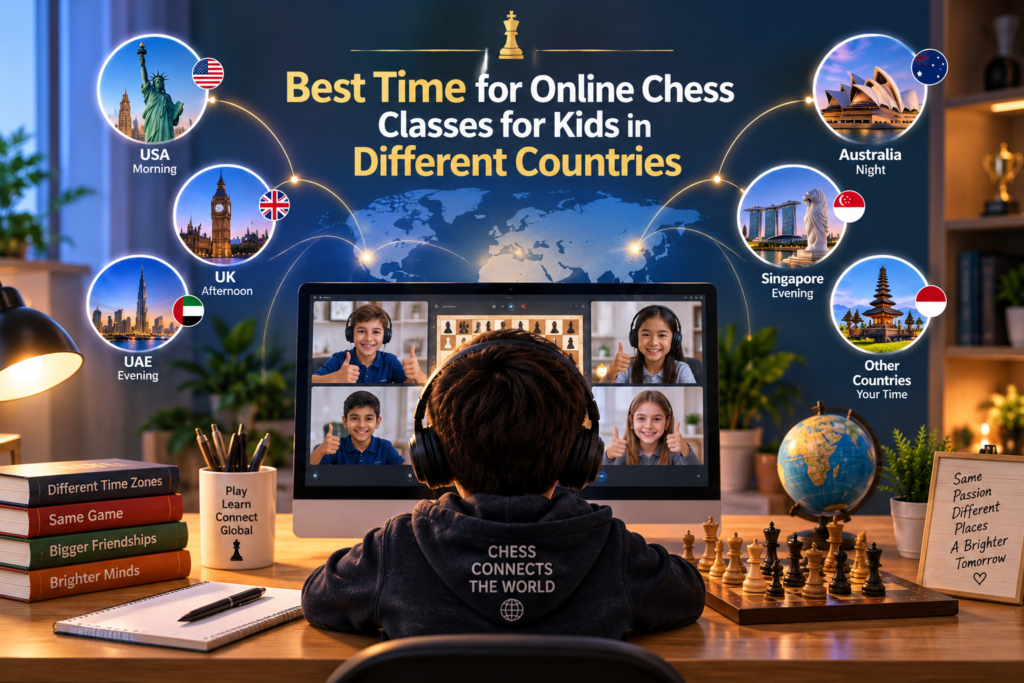
The basic principles of online chess remain similar across countries, but the practical schedule can be different. International parents should think in terms of the child's actual local routine, not a generic country-wide timetable.
Children in the USA
Families in the USA may need to coordinate chess with school, homework and other extracurricular activities while also confirming the correct local time zone. Parents exploring online chess classes in the USA can use the same principle: choose a recurring class time that works for the individual child, rather than assuming one schedule suits the whole country.
Children in Canada
Canadian families should also check the child's specific local time zone before confirming a recurring class. For parents considering online chess classes in Canada , the practical question is how the class fits around the child's existing after-school routine, homework and other activities.
Children in the UK
For children in the UK, parents can compare the class timing with the child's normal afternoon and evening commitments. Families considering online chess classes in the UK should also confirm how recurring lesson times are displayed when seasonal clock changes occur.
Children in the UAE
For families in the UAE, after-school chess may fit naturally into a home-based evening routine, depending on the child's other commitments. Parents exploring online chess classes in the UAE should compare the available live slots with homework, family time and other activities.
Children in Australia
Australia spans multiple time zones, so parents should identify the child's actual local time before selecting a class. Families researching online chess classes in Australia should focus on the recurring local schedule and whether it remains practical alongside school and other after-school activities.
Children in Singapore
Singapore families may prefer a clearly structured extracurricular routine where chess has a consistent place in the week. Parents considering online chess classes in Singapore can evaluate the class according to the child's level, schedule and ability to participate comfortably after school.
How Parents Can Keep After-School Chess Enjoyable
Children are more likely to maintain an extracurricular activity when the routine leaves room for enjoyment. Parents can support chess learning without turning every lesson into a performance test.
- Avoid excessive pressure: A child does not need to win every game to make progress.
- Celebrate improvement: Notice better decision-making, understanding and effort.
- Allow breaks: Rest is part of a sustainable after-school schedule.
- Use age-appropriate challenges: Difficulty should encourage thinking rather than constant frustration.
- Balance chess with play: Chess should have a reasonable place alongside other activities.
- Focus on consistency: A manageable routine is easier to maintain than an overloaded one.
- Respect the child's goals: Some children enjoy competition while others mainly enjoy learning and playing.
Parent involvement is especially useful for younger children, but it does not mean a parent has to teach chess. Helping the child join on time, providing a quiet space and asking what they learned can be enough.
Pros and Cons of After-School Chess Classes Online
| Potential Advantages | Potential Limitations |
|---|---|
| No travel to a physical academy | Requires a reliable internet connection and suitable device |
| Can fit around the family's existing routine | Time-zone coordination may require additional planning |
| Children can learn from home | Home distractions can affect concentration |
| Access to coaches beyond the child's immediate local area | Some children may prefer face-to-face learning |
| Digital boards make demonstrations and online practice convenient | Adds another screen-based activity to the child's day |
| Recurring classes can create a structured learning routine | Parents still need to check whether the schedule fits the child's energy level |
These factors should be considered together. The right choice depends on the child's preferences, family schedule, available technology and learning goals.
A Simple Parent Checklist Before Enrolling
Before enrolling, parents can use this quick checklist to identify practical issues before making a commitment:
- ☐ Is the class timing compatible with school?
- ☐ Is the child comfortable with online learning?
- ☐ Is the class live and interactive?
- ☐ What is the class size?
- ☐ Who teaches the class?
- ☐ Is the curriculum structured?
- ☐ Is the curriculum appropriate for the child's current level?
- ☐ How is progress tracked?
- ☐ Is feedback provided?
- ☐ Is homework or practice guidance provided?
- ☐ Is a trial or demo available?
- ☐ Can the recurring schedule work with the family's time zone?
People Also Ask
Can my child learn chess online after school?
Yes. A live online chess class can be included in an after-school routine when the timing, lesson format and practice expectations are suitable for the child.
What is the best time for an online chess class?
There is no universal best time. Parents should choose a slot that works with the child's school, homework, energy level, other activities and local time zone.
Can children abroad learn chess from an Indian coach?
Yes. Online learning allows a child living abroad to attend live lessons with a coach located in another country, provided the schedule, technology and teaching format work for the family.
Are online chess classes good for beginners?
Beginners can learn online when lessons are age-appropriate, interactive and structured around their current level. A trial or demo can help parents assess whether the format suits the child.
How often should children attend chess classes?
Frequency depends on age, level, goals and the child's overall schedule. A sustainable routine that leaves enough time for school, rest and play is important.
Frequently Asked Questions
Parents often have practical questions before enrolling their child in an online chess program. Here are some common questions about after-school chess classes for children living abroad.
Are online chess classes suitable for children after school?
Yes. Online chess classes can fit well into an after-school routine when the class time matches the child's school schedule, energy level, homework and other activities. Parents should choose a schedule that the child can attend consistently without feeling overloaded.
Can children living abroad learn chess from an Indian academy?
Yes. Live online coaching allows children living abroad to attend chess lessons with an academy based in another country. Before enrolling, parents should confirm the available class timings, time-zone difference, technology requirements and communication process.
How do online chess classes work across different time zones?
The academy provides available class timings, and parents select a slot that works in the child's local time zone. Families should confirm the recurring time on their calendar and check it again if daylight-saving changes affect their local clock.
How long should an after-school chess class last?
There is no single ideal duration for every child. Lesson length can depend on age, concentration, chess level and the overall after-school schedule. A good class should allow meaningful instruction and participation without making the child excessively tired.
Can beginners join online chess classes after school?
Yes. Beginners can start with fundamentals such as board setup, piece movement, check, checkmate, basic tactics and simple game principles. The important factor is that the class should be designed for the child's current level rather than assuming previous chess knowledge.
Does a child need to practice after an online chess class?
Practice can help children apply what they learned during the live lesson. Depending on the child's age and level, practice may include puzzles, reviewing games, playing practice games or completing coach-assigned exercises. The amount should remain manageable within the child's weekly routine.
What should parents check before enrolling?
Parents should check the coach, curriculum, class size, live interaction, class timing, progress tracking, feedback, practice expectations, technology requirements and parent communication. If available, a trial or demo class can also help the family understand whether the teaching format suits the child.
Can online chess classes help with tournament preparation?
They can support tournament preparation through areas such as tactical practice, game analysis, calculation exercises and preparation based on the child's level. Parents should ask the academy what tournament-related training is actually included because programs can differ in their approach.
Final Thoughts
For families living abroad, chess does not have to compete unnecessarily with school, homework, sports, family time and rest. A well-planned online lesson can become a practical part of the weekly after-school routine when the timing and teaching format suit the child.
The most important considerations are practical: the child's local time zone, energy level, class schedule, learning environment, coach interaction, curriculum, practice expectations and communication with parents. These factors matter more than simply choosing the first available class slot.
Online Chess Classes After School for Kids can be a useful option for international families when the program is structured around the child's actual needs. Before enrolling, take time to understand how the lessons work, what happens between classes and how progress is communicated.
Ready to Explore Online Chess Classes for Your Child?
If you are considering online chess coaching for your child, a demo can help you understand the teaching format, class experience and whether the schedule is suitable for your family's routine. Explore the learning approach first, then decide whether it fits your child's needs.
Book Your Free Demo Right NowWhatsApp: +91 93248 29329