Online Chess Classes in UK: Expert Coaching for Kids
Flexible, structured, live online chess training designed to fit seamlessly into busy British family schedules, after-school routines, and weekend timetables.
Book Your Free Demo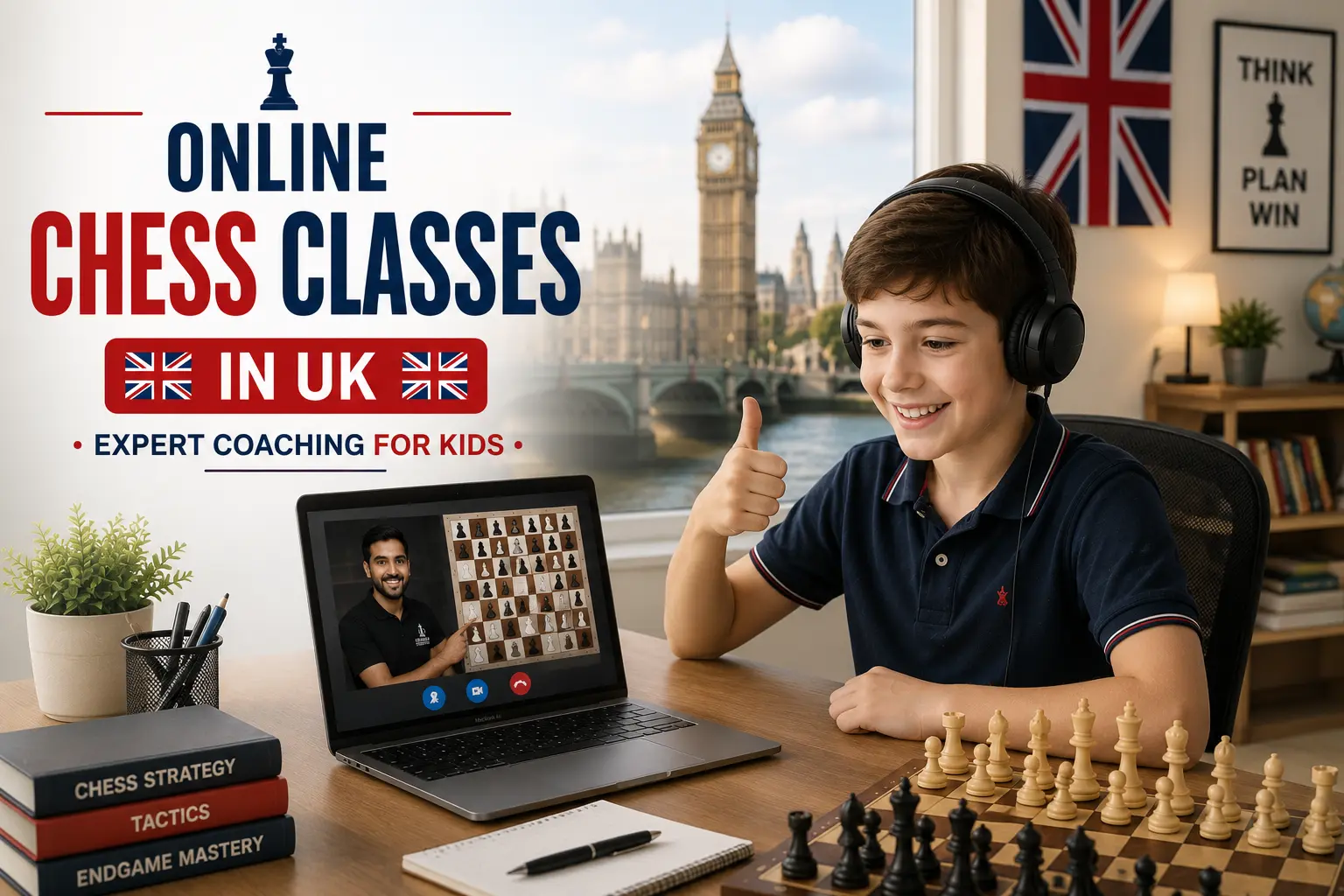
Finding the right balance between academic work, extracurricular activities, and downtime is a familiar challenge for parents in the United Kingdom. On a typical weekday evening, families often manage homework assignments, music lessons, football or swimming practice, and family meals before the evening routine ends. When parents look to introduce a thoughtful activity like chess, the prospect of adding another physical commute to a local community centre or after-school club can feel overwhelming.
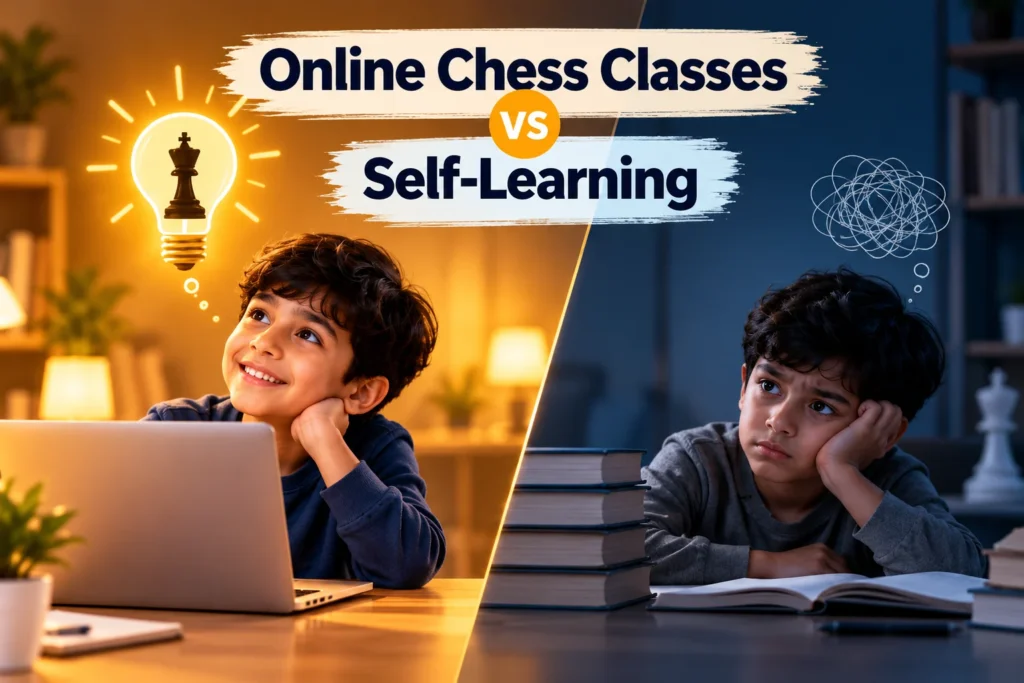
That is why enrollment in Online Chess Classes in UK has grown significantly among UK families. Structured virtual coaching allows children to gain all the strategic, cognitive, and analytical benefits of formal chess instruction straight from the comfort of their home dining table or study room. Rather than spending time stuck in traffic during busy after-school hours, young learners can log into interactive, live sessions with experienced coaches, practice tactical puzzles online, and steady their mental focus without compromising their existing family routine.
Quick Answer
Yes, Online Chess Classes in UK offer a highly practical and effective way for children to master chess. Through interactive digital boards, live small-group instruction, personalized video feedback, and flexible scheduling options, students gain structured guidance from experienced coaches without requiring parents to add another commute to their weekly school-term schedule.
What Are Online Chess Classes in the UK?
Many parents initially wonder how a physical board game converts to an online classroom setting. Modern virtual chess instruction is far more than simply watching passive video lectures; it is an active, two-way educational experience carefully designed for young minds.
In a structured online chess class, students connect with an instructor through real-time video conferencing while sharing an interactive digital chessboard. The coach can highlight key squares, demonstrate classic opening strategies, set up dynamic tactical puzzles, and instantly correct mistakes. During a typical session, a child might participate in:
- Live Concept Demonstrations: Visualizing piece development, king safety, dynamic pawn structures, and middle-game planning.
- Interactive Puzzle Solving: Testing tactical awareness in real-time, calculating checkmates, forks, pins, and skewers.
- Supervised Practice Games: Playing practice games against classmates on secure, child-friendly digital platforms while the coach observes decision-making patterns.
- Post-Game Analysis: Reviewing student games move-by-move to identify tactical oversights and reinforce good habits.
Why Are Online Chess Classes Useful for Families in the UK?
Managing extracurricular activities during the British school term requires careful organization. Between homework demands, seasonal weather variations, and multiple family commitments, convenience is just as crucial as educational quality.
Online chess lessons provide several distinct practical benefits for busy families:
- Elimination of Commute Time: Parents do not need to rush through peak evening traffic or stand in rainy car parks waiting for an after-school club session to finish.
- Adaptability to School Timetables: Lessons can be scheduled after primary or secondary school hours, during evening slots, or over the weekend without disrupting family dinner routines.
- Consistent Learning Throughout the Year: Whether it is term time, half-term breaks, or extended summer holidays, online classes allow students to maintain their learning rhythm from anywhere with a stable internet connection.
- Access to Experienced Global Coaches: Families living outside major metropolitan areas are no longer limited to the handful of local clubs in their immediate vicinity.
Who Can Join Online Chess Coaching in the UK?
Chess instruction is never a one-size-fits-all model. Children enter the game at different ages, with varying maturity levels and distinct goals.
Beginners
For children who have never touched a piece, beginner modules cover fundamental rules, how pieces move, board setup, basic checkmates, and basic pawn structures. The focus is on making the initial learning curve engaging, intuitive, and fun.
Chess Classes for Kids
Young learners—typically between 5 and 10 years old—benefit from shortened visual demonstrations, high-energy coaching methods, and immediate positive reinforcement. Coaches focus on building patience, concentration, and structured thinking habits.
School Students
Older children in primary and secondary school use chess to sharpen logical reasoning, strategic planning, and emotional resilience. Training connects theoretical chess principles with deep calculation and critical evaluation.
Intermediate Players
Students who already understand piece movement and basic checkmates work on foundational openings, tactical pattern recognition (such as double attacks and discovered checks), simple endgames, and basic middle-game strategy.
Tournament-Focused Players
For ambitious young players aspiring to compete in regional junior tournaments, coaching shifts toward personalized opening preparation, clock control, rigorous blunder checks, and in-depth classical game evaluation recognized by international chess authorities like FIDE.
Adults Learning Chess
While much of the focus rests on youth development, adult beginners and casual players also benefit from structured online training to master positional strategy, boost brain agility, or learn the game alongside their children.
What Can Children Learn Through Online Chess Training in the UK?
While chess is fundamentally a deep strategic game, the skills developed on the 64 squares frequently carry over into everyday decision-making. Structured chess training helps develop several key cognitive and personal capabilities:
- Structured Calculation: Thinking ahead by asking, "If I move here, how will my opponent respond?"
- Spatial Awareness & Visualization: Predicting board movements several turns in advance without physically moving the pieces.
- Emotional Regulation & Patience: Learning to handle defeat constructively, managing time under pressure, and resisting impulsive reactions.
- Focus & Sustained Attention: Exercising quiet, concentrated effort on complex problem-solving over extended periods.
How Should UK Parents Choose an Online Chess Academy?
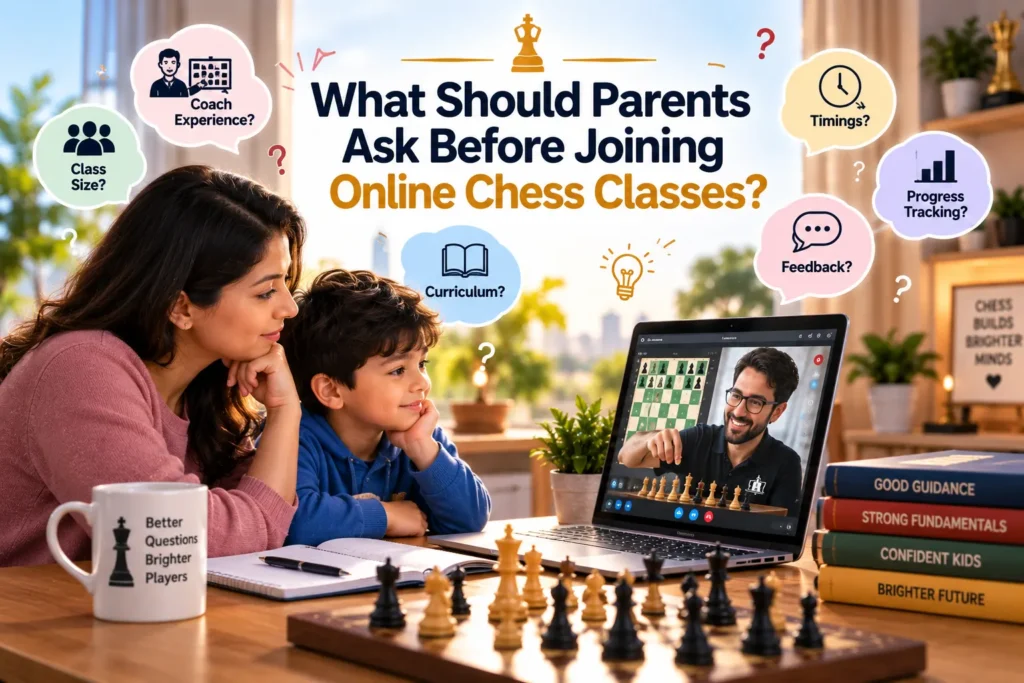
With numerous virtual platforms available online, choosing the right learning environment requires looking beyond decorative marketing headers. Parents should evaluate prospective academies against a practical checklist:
- Coach Qualification & Demeanour: Are the instructors patient, articulate, and skilled at communicating complex concepts to children in an encouraging manner?
- Structured Curriculum Progression: Is there a clear, step-by-step syllabus that moves logically from beginner fundamentals to intermediate tactics and advanced positional mastery?
- Small Class Sizes: Are group batches kept small enough so every child gets to ask questions and receive personal attention during the lesson?
- Balanced Interaction & Practice: Does the academy combine live theoretical instruction with supervised real-time play and puzzle practice?
- Trial Demo Sessions: Does the academy offer an introductory demo class to evaluate how the student interacts with the instructor before long-term enrollment?
Online Chess Classes vs Local Chess Classes in the UK
Both physical chess clubs and online coaching platforms offer value, but they serve different needs. The table below outlines how they compare across key everyday factors for UK families:
| Feature / Metric | Online Chess Classes | Local Chess Clubs |
|---|---|---|
| Travel & Logistics | Zero commuting; learn directly from home. | Requires travel to community halls or schools. |
| Scheduling Flexibility | High; multiple weekday and weekend batch options. | Fixed weekly time slot, often limited options. |
| Coach Selection | Access to international expert coaches. | Limited strictly to local area volunteers/coaches. |
| Digital Practice Integration | Seamless use of puzzles, analysis software, and databases. | Primarily physical board setup; manual exercise sheets. |
| In-Person Social Interaction | Virtual group interaction via video and chat. | Direct physical peer socialization. |
Pros and Cons of Online Chess Classes
Advantages
- Convenient, stress-free routine with zero travel.
- Ability to record lessons for review before tournaments.
- Access to structured study materials and digital analysis tools.
- Flexible scheduling during school terms and holiday breaks.
Things Parents Should Consider
- Requires a reliable internet connection and tablet/computer setup.
- Younger children (under 6) may need initial parental setup assistance.
- Does not replace physical over-the-board tournament experience entirely.
When selecting a chess coaching programme, prioritize curriculum clarity, active coach feedback, and interactive batch size over price alone. A cheap course with 30 passive attendees on muted audio will yield far less improvement than a small, focused group session where your child regularly explains their thinking out loud.
How Should UK Families Choose Chess Class Timings?
Integrating a new activity into a household schedule requires finding a slot where your child is well-rested and focused. When selecting class times, consider:
- Post-School Decompression: Avoid scheduling lessons immediately after the school bell rings. Giving children 30 to 45 minutes to rest and have a snack usually leads to better focus during chess class.
- Homework Deadlines: Choose slots that do not create friction with evening assignment schedules.
- Weekend Morning Slots: Many families find Saturday or Sunday mornings ideal, as children are fresh and alert before weekend family activities begin.
How Much Should Children Practise Chess at Home?
Consistent, short daily practice sessions yield far better long-term skill retention than occasional marathon sessions. Here is a recommended general framework based on player experience levels:
- Beginners (5–8 years old): 15 to 30 minutes daily, focusing on basic tactical puzzles and simple practice games.
- Intermediate Students: 30 to 45 minutes daily, splitting time between opening review, tactical calculations, and regular game analysis.
- Tournament Aspirants: 45 to 60+ minutes daily under structured guidance, including deep endgame study and clock-managed practice matches.
Can Online Chess Coaching Help Children Prepare for Tournaments?
Yes. While ultimate tournament competition takes place over physical boards in local halls or regional venues, the analytical preparation leading up to an event is exceptionally well-suited for online delivery.
Online coaches help young competitors build concrete opening repertoires, analyze opponent playing styles using online databases, simulate time-pressure scenarios, and conduct detailed post-tournament reviews of recorded games. This blend of virtual preparation and physical tournament play gives young players a strong foundation for competitive growth.
Can Children Across the UK Learn Chess Online?
One of the primary advantages of digital education is geographical equity. Whether your family is located in London, Birmingham, Manchester, Leeds, Bristol, Glasgow, Edinburgh, or Cardiff, online coaching provides direct access to high-caliber instruction without relying strictly on the presence of local chess clubs in your immediate neighborhood.
Can UK Students Learn Chess From an International Academy?
Enrolling in an international chess academy is a routine practice for families globally. International academies often offer highly competitive pricing structures, flexible international time-zone batch availability, and experienced coaches with deep experience in junior training.
When evaluating an international option, parents should simply verify that class times align smoothly with UK local times (GMT/BST), that communication with the administration is clear, and that the teaching methodology emphasizes small group sizes and interactive feedback.
Why Consider Brainiac Chess Academy for Online Chess Coaching?
At Brainiac Chess Academy, we specialize in providing structured, interactive online chess instruction tailored for young learners globally. Our academy focuses on delivering systematic training that develops logical calculation, emotional composure, and strategic understanding step-by-step.
Our key program features include:
- Structured, Level-Based Syllabus: Curriculum progression designed to take students smoothly from complete beginner rules to advanced tactical planning.
- Small Interactive Batches: Limited group sizes ensuring every student receives direct coaching, active board time, and individual feedback.
- Experienced Instructors: Dedicated coaches skilled at maintaining high engagement, encouraging curiosity, and fostering a positive learning environment.
- Flexible Global Scheduling: Class times structured to align comfortably with UK after-school routines and weekend timetables.
Fact Check & Transparency Notice: Brainiac Chess Academy is physically located in Sector 7, Janata Market, Vashi, Navi Mumbai, Maharashtra, India, and provides specialized online chess coaching to students internationally across the United Kingdom, Europe, and beyond.
Frequently Asked Questions About Online Chess Classes in UK
Are online chess classes good for children in the UK?
Yes, online chess classes provide an excellent, highly structured way for children in the UK to learn chess. They eliminate travel time during busy school terms, offer flexible scheduling, and use interactive digital boards that make visual pattern learning engaging for young minds.
What age can a child start online chess lessons?
Children can typically start learning chess around 5 or 6 years old. At this stage, lessons focus on fun visual exercises, basic piece movements, and short interactive sessions designed to build attention span and curiosity.
Are online chess classes suitable for complete beginners?
Absolutely. Beginner courses start from zero, teaching piece movement, basic board setup, piece values, and fundamental rules step-by-step without assuming any prior knowledge of the game.
How do live online chess classes work?
Students join a live video conference where the coach shares a digital chessboard. The coach explains concepts, poses tactical puzzles, and oversees live student matches, giving real-time feedback and move corrections.
How often should children attend chess classes?
Attending 1 to 2 weekly live classes combined with 15–30 minutes of daily individual puzzle practice at home is ideal for steady, consistent skill progression without overloading a child's weekly routine.
Can online chess coaching help with tournament preparation?
Yes. Online coaches help students analyze tactical blunders, refine opening setups, manage clock pressure, and review game records, which directly supports their preparation for physical junior chess competitions.
What should parents look for in an online chess academy?
Parents should look for small batch sizes, a structured curriculum, patient and experienced coaches, clear interactive feedback, and trial demo options rather than choosing purely on low price points.
Can students in the UK join Brainiac Chess Academy online?
Yes. Brainiac Chess Academy welcomes international students from across the United Kingdom into dedicated online coaching batches designed to fit comfortably into UK time zones and after-school schedules.
Book Your Free Demo Class
Looking for structured, engaging chess coaching for your child that fits seamlessly into your home routine? Discover how our live, interactive classes build strategic thinking, confidence, and concentration.
Book Your Free Demo Right NowSector 7, Janata Market, Vashi, Navi Mumbai, Maharashtra, India
📞 Phone / WhatsApp: +91 93248 29329
Conclusion
Finding an extracurricular activity that enriches a child's mind without stressing the family calendar can be a delicate balance. Online Chess Classes in UK offer a practical, effective solution for parents seeking to foster focus, logical reasoning, and resilience in their children. By delivering structured lessons, interactive practice, and personalized coach feedback straight to your home, digital learning removes the friction of daily commutes while maintaining high educational standards. Whether your child is taking their very first steps with piece movements or preparing for upcoming regional junior competitions, structured online coaching provides the guidance they need to excel. Take the first step today by exploring a demo session tailored to your child's learning pace.