Online vs Offline Chess Classes: Which Is Better?
As a professional chess coach who has spent years watching young minds develop over the 64 squares, I frequently get asked one specific question by anxious, well-meaning parents. They notice their child's growing interest in the game, they understand the immense cognitive benefits, but they are stuck at a modern crossroads. The question is always: "Coach, should I enroll my child in traditional academy sessions, or are virtual lessons just as good?"
It is a completely valid concern. In the past, the only way to learn was to sit across from a master in a local club. Today, world-class coaching is accessible from your living room. But which is actually better for your child's growth, focus, and long-term love for the game?
When evaluating Online Chess Classes vs Offline Chess Classes, the truth is that neither method is universally superior. The "best" choice depends entirely on your child’s age, learning style, your family’s schedule, and the specific goals you have for their chess journey.
In this comprehensive guide, I will draw on my years of coaching experience to break down both formats honestly. By the end of this article, you will have all the insights you need to make an informed, confident decision for your young grandmaster in the making.
Understanding Today's Chess Learning Methods
To make the best choice, we first need to understand how chess education has evolved. For centuries, traditional classroom coaching was the only path. Students gathered around a demonstration board, played practice games with peers, and received hands-on corrections from their mentor.
However, the rapid growth of educational technology has revolutionized Chess Learning Methods. Today, digital platforms offer interactive boards, instant engine analysis, and high-definition video conferencing. A student in India can now seamlessly train with a Grandmaster in Europe.
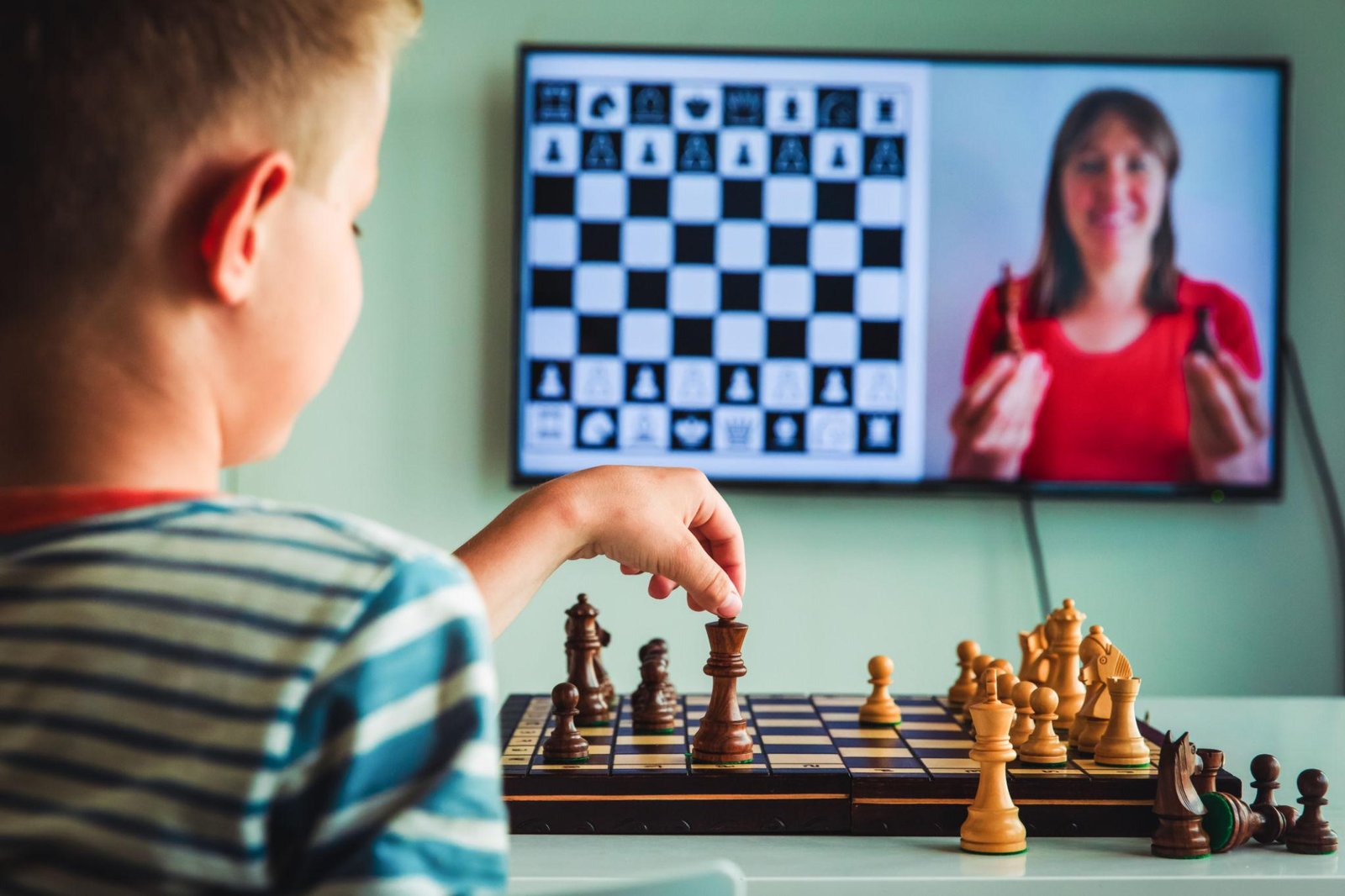
Because both avenues now offer incredibly high standards of education, parents find themselves comparing the tactile, social benefits of the physical board against the sheer efficiency and reach of digital platforms. Let's break down exactly how they compare.
Online Chess Classes vs Offline Chess Classes
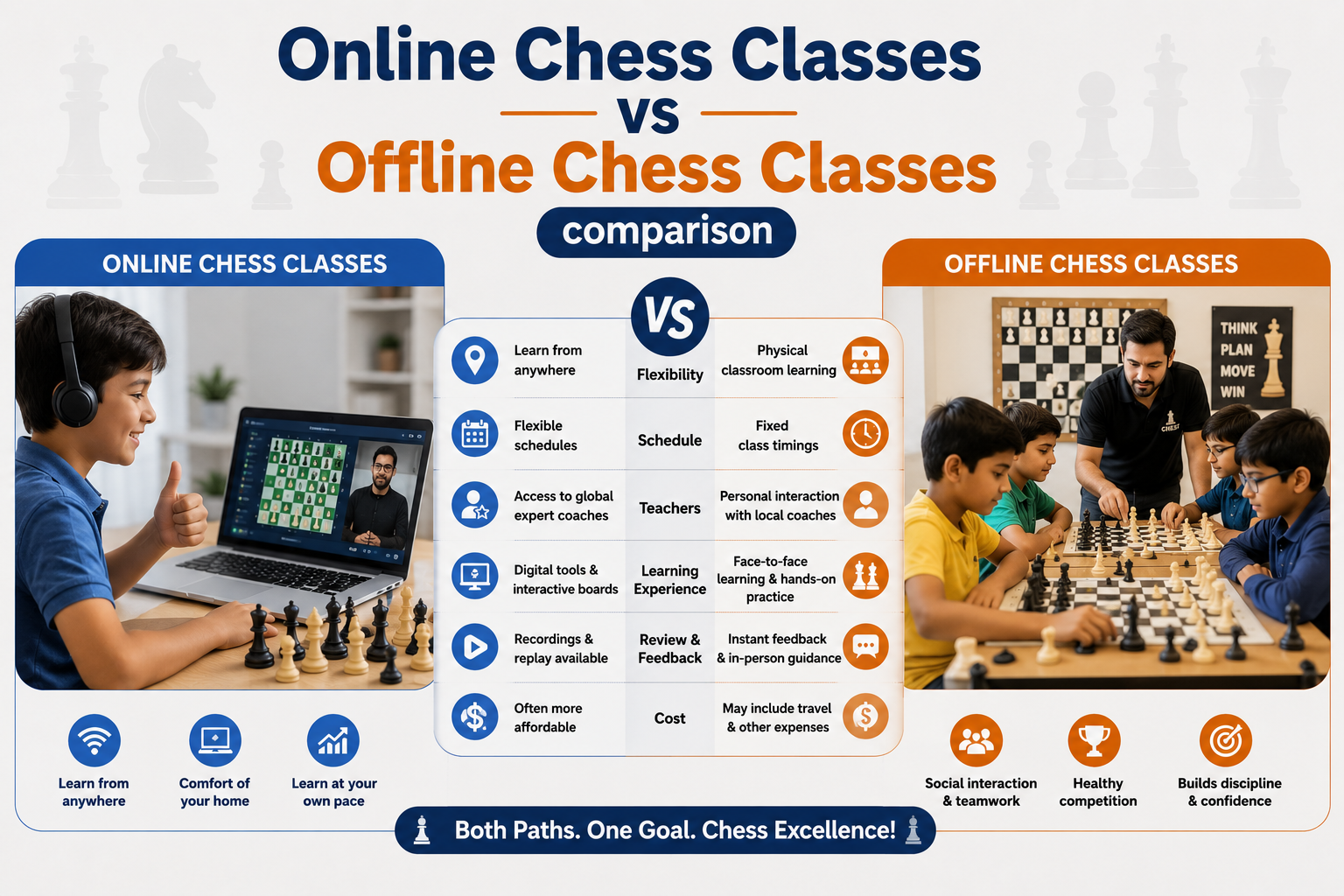
To give you a clear, bird's-eye view, I have created this detailed comparison table based on what I observe daily as a coach.
| Feature | Online Chess Classes | Offline Chess Classes |
|---|---|---|
| Flexibility | Extremely high; easily fits into busy family schedules. | Fixed schedules; requires adherence to academy timings. |
| Coach Availability | Access to top-tier coaches globally. | Limited to the best coaches in your local driving radius. |
| Learning Experience | Tech-driven, highly visual, fast-paced puzzle solving. | Tactile, hands-on, traditional board feel. |
| Cost | Generally more cost-effective (no commute). | Can be higher due to physical infrastructure. |
| Convenience | Learn from the comfort of home; zero commute. | Requires driving, parking, and waiting. |
| Travel Time | None. | 30 to 90 minutes round trip, depending on traffic. |
| Personalized Attention | Excellent in 1-on-1 formats; screen sharing allows direct focus. | Excellent; coach can read the child's physical body language. |
| Tournament Prep | Perfect for online tournaments (increasingly common). | Essential for physical tournament etiquette and clock use. |
| Student Interaction | Digital interaction, chat, and virtual practice rooms. | High physical social interaction, making friends between rounds. |
Benefits of Online Chess Coaching
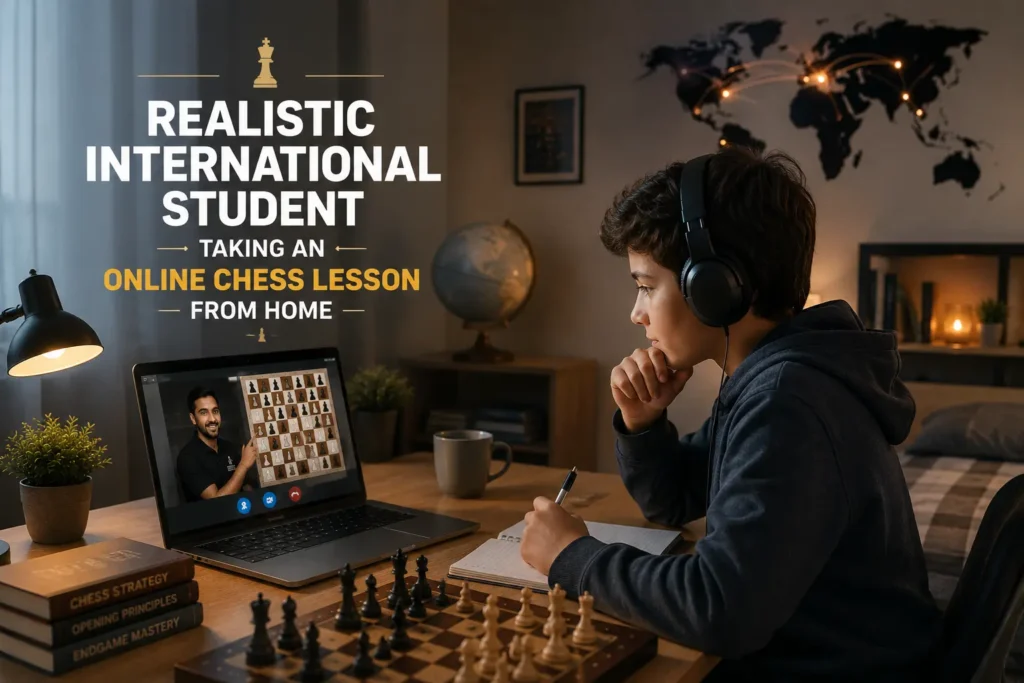
The surge in Online Chess Coaching isn't just a trend; it is a highly effective educational model. Here is why many of my students thrive in a digital environment.
Learn from Anywhere
Whether you are traveling for a family vacation or moving to a new city, online classes ensure your child's progress is never interrupted. The chessboard is always just a click away.
Access to Experienced Coaches
You are no longer limited by geography. If your child shows exceptional talent, online platforms allow them to train with specialized masters and international coaches that might not be available in your immediate neighborhood.
Flexible Scheduling
Modern parents juggle work, school, and multiple extracurriculars. Online coaching offers incredible flexibility. Classes can be slotted into early mornings, late evenings, or weekends without the logistical nightmare of driving across town.
Recorded Classes
This is a massive advantage for online learning. If a student forgets a complex opening trap or a specific endgame technique we covered, they can simply watch the recording of the class. Parents can also review these recordings to help their younger children practice.
Lower Overall Cost
Without the overhead of renting commercial space and the daily commute costs for parents, online chess training often provides a highly premium educational experience at a more accessible price point.

Benefits of Offline Chess Classes
Despite the digital boom, the traditional, physical chess academy remains a powerhouse for developing young minds. There is a magic to the wooden pieces that screens cannot always replicate.
Face-to-Face Interaction
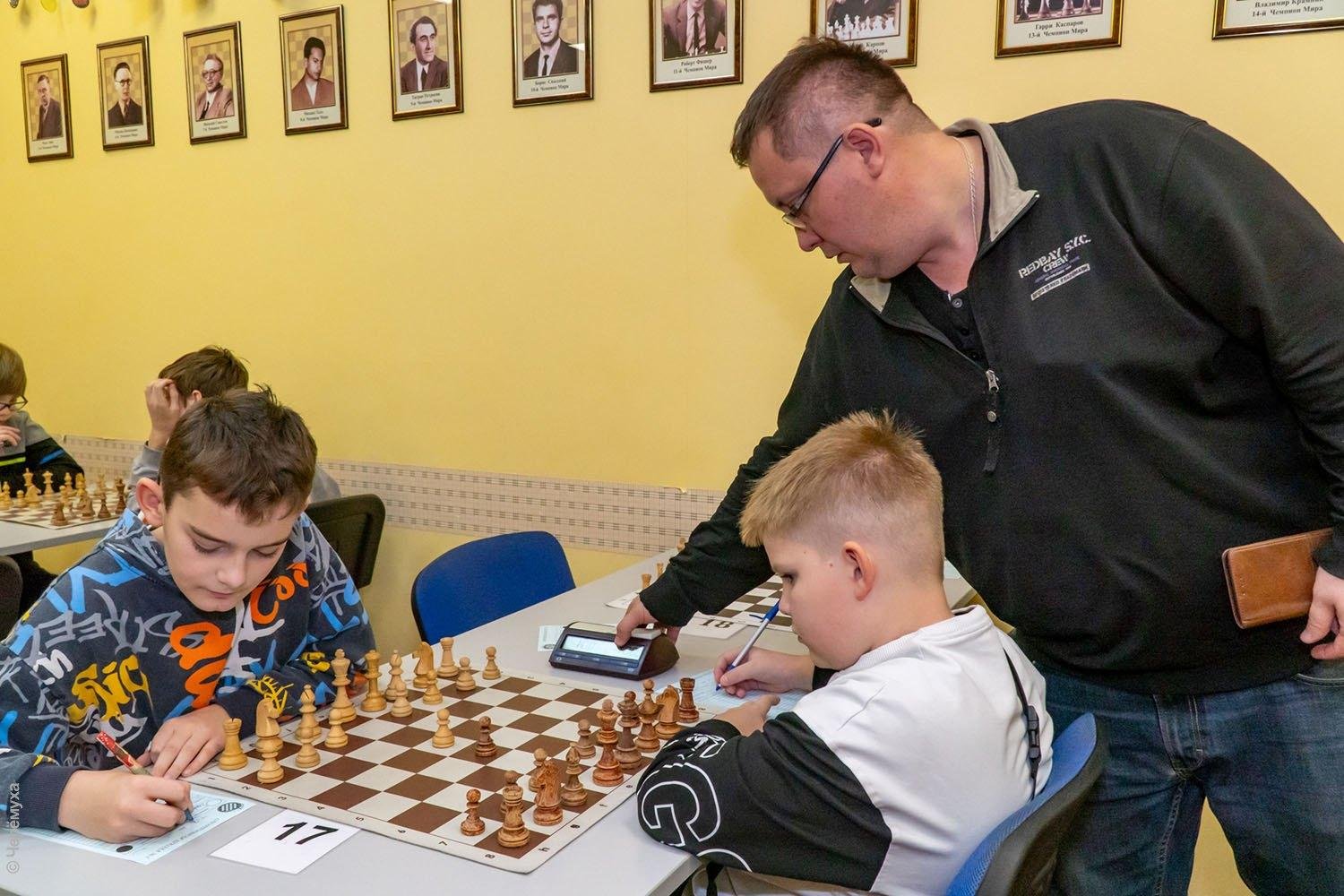
As a coach, being in the same room allows me to read a student's body language. I can see when they are frustrated, when they are losing focus, or when they are feeling confident. This allows for immediate, empathetic intervention.
Competitive Classroom Environment
There is a distinct energy in a room full of kids thinking deeply. The sound of chess clocks ticking and pieces moving fosters a healthy, competitive spirit. Children naturally push themselves harder when they see their peers succeeding at the next board.
Immediate Practical Guidance
When a child makes an illegal move or struggles with physical board vision (seeing diagonals on a real 3D board is different from a 2D screen), an offline coach can physically guide their hand, correct their posture, and teach them proper tournament etiquette immediately.
Social Development
For many kids, the local chess academy is a primary social hub. They make friends, learn how to win with grace, and learn how to lose with dignity while shaking their opponent's hand—crucial life skills developed away from digital screens.
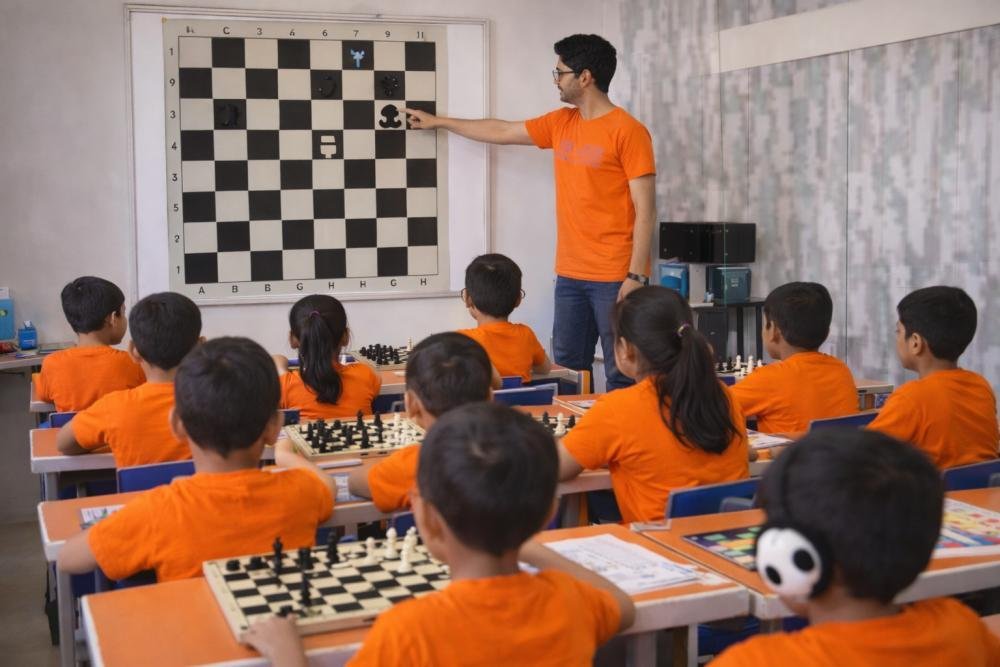
Which Option Is Better for Different Age Groups?
In my experience, a child's age and developmental stage heavily dictate which format will yield the best results.
- Children (5–8 years old): At this age, attention spans are short, and tactile learning is vital. Offline classes are generally superior here. Younger kids need to physically touch the pieces, engage with other children, and require the physical presence of a coach to keep them engaged.
- Kids (9–12 years old): This is the transition phase. Kids in this bracket usually do incredibly well with a hybrid approach or pure online classes. They are comfortable with technology, can navigate virtual boards easily, and possess the maturity to sit and focus on a screen for 45-60 minutes.
- Teenagers: Teenagers almost always prefer Chess Training Online. They value efficiency, have heavy academic workloads, and want to log in, learn their theory, play their practice games, and log out without wasting time on a commute.
- Adults: Adult learners universally lean toward online coaching due to demanding work schedules and the preference for highly focused, one-on-one virtual sessions.
- Competitive Players: Serious tournament players actually need both. They need online classes to quickly analyze database games with their coaches, but they must attend offline sessions to maintain their "board vision" and stamina for physical, over-the-board tournaments.
Factors Parents Should Consider Before Choosing
Before making your final decision, sit down and evaluate these crucial factors:
- Learning Style: Does your child get easily distracted by computer tabs, or do they thrive in interactive digital environments? Tactile learners need physical boards.
- Travel Time: Be realistic. If the nearest high-quality academy is a 45-minute drive in heavy traffic, the commute might drain the child’s energy before the class even starts. Online is the clear winner here.
- Budget: Factor in not just the class fees, but fuel, travel time, and convenience.
- Coach Quality: Never sacrifice the quality of the coach for convenience. If the local coach isn't great, look online. If a local academy has a renowned master, make the drive.
- Class Size: Ensure that whether online or offline, the coach-to-student ratio is small enough (usually no more than 1:6 for groups) that your child gets individualized attention.
- Tournament Goals: If your child wants to play in physical, rated tournaments, they absolutely must have some offline practice to get used to 3D pieces, physical clocks, and writing down moves on a scoresheet.
- Consistency: Choose the method you can stick with for at least six months. Chess requires immense consistency; hopping between methods constantly disrupts learning.
Common Myths About Online Chess Coaching
As the digital landscape has grown, so have the misconceptions. Let me clear up a few myths I hear regularly.
- Myth: Online coaching isn't effective.
Reality: Some of the youngest Grandmasters in history today were forged primarily through online training and engine analysis. The digital tools available actually accelerate pattern recognition faster than physical boards in many cases. - Myth: Children get distracted easily on screens.
Reality: While true for passive watching, online chess is highly interactive. A good coach uses screen sharing, gives the student mouse control, and constantly asks them to calculate lines, keeping them deeply engaged. - Myth: Offline is always better.
Reality: A mediocre offline coach is never better than an expert online coach. The quality of the pedagogy matters far more than the physical location. - Myth: Only advanced players can learn online.
Reality: With modern, kid-friendly chess software featuring animations and gamified learning, beginners can grasp the rules, piece movements, and basic checkmates online just as easily as advanced players learn deep opening theory.
Why Professional Coaching Matters
Whether you choose to go digital or traditional, the most important factor is securing a professional coach. Chess is too complex to learn efficiently through trial and error alone. Organizations like the World Chess Federation (FIDE) recognize the importance of structured learning environments.
A professional coach provides a structured curriculum, ensuring foundational concepts aren't skipped. Experienced coaches know how to identify and fix specific weaknesses. Furthermore, structured academies offer performance tracking, regular practice against peers of similar strength, and vital tournament exposure which is where true growth happens. You can learn more about these advantages in our guide on the Benefits of Chess for Kids.
Why Choose Brainiac Chess Academy?
If you are looking for a place that understands this delicate balance, you have found it. At Brainiac Chess Academy, we don't believe in a one-size-fits-all approach. We are proud to offer both premium Online Chess Coaching and elite Offline Chess Coaching to suit your family's exact needs.
Based in the heart of Vashi, Navi Mumbai, Maharashtra, our academy is built on the philosophy of holistic child development. We feature Experienced Coaches who are not just strong players, but trained educators who know how to communicate with children. We strictly maintain Small Batch Sizes to guarantee Personalized Attention for every single student.
Whether you are looking for fun Kids Chess Training to boost your child's academic focus, or rigorous Tournament Preparation for a budding champion, we offer Flexible Timings and a curriculum tailored to their specific goals. To learn more about our philosophy, visit our About Us page.
Book Your Free Demo Class
Looking for the right chess coaching program? You don't have to navigate it alone.
Brainiac Chess Academy offers both Online Chess Coaching and offline training designed for beginners as well as tournament players. We are proud to be The Ultimate Destination for Online Chess Learning as well as a premier local hub.
📍 Location: Sector 7, Janata Market, Vashi, Navi Mumbai, Maharashtra
📞 Call or WhatsApp: +91 9324829329
👉 Book Your Free Demo Right NowFrequently Asked Questions
Are online chess classes effective?
Which is better for beginners?
Can children learn chess online?
How many classes per week are recommended?
Do online classes prepare students for tournaments?
How long does it take to improve?
Are recorded sessions available?
What equipment is required?
Conclusion
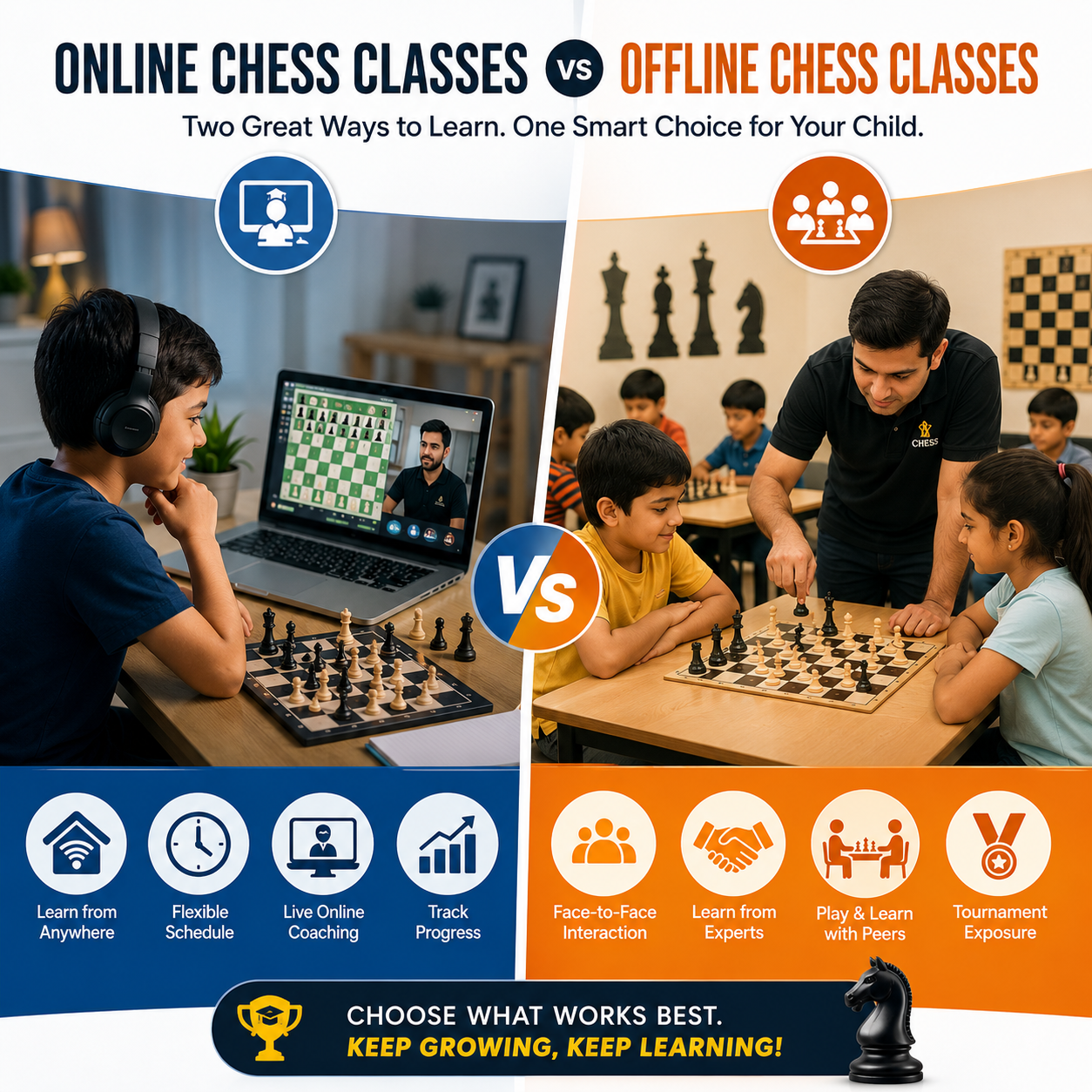
At the end of the day, the debate between Online Chess Classes vs Offline Chess Classes shouldn't be about which method is objectively superior, but rather which method is superior for your child.
If you value flexibility, lack travel time, and want access to a global standard of coaching from your living room, digital training is a phenomenal choice. If your child thrives on social interaction, needs physical tactile feedback, and wants the traditional academy experience, offline classes are the way to go.
As a coach, my ultimate advice is to choose the format that allows your child to learn consistently and joyfully. Whether they are moving a wooden knight in our academy in Vashi or clicking a digital bishop from home, the cognitive benefits and life lessons of chess remain exactly the same. Explore your options today by visiting the Brainiac Chess Academy Homepage.