Recent Posts
- Online Chess Coaching for Every Skill Level: A Guide
- First Online Chess Lesson: How Parents Can Prepare
- How to Support Your Child’s Online Chess Learning
- Online Chess Classes for Siblings: What Parents Should Know

- Online Chess Classes vs Self-Learning for Kids
- Equipment Needed for Online Chess Classes

- Online Chess Classes for Homeschoolers
- Online Chess Classes for Shy Kids: A Parent’s Guide

- What Happens in an Online Chess Coaching Session?

- Online Chess Lessons Cost: A Parent’s Guide
- What Is a Hanging Piece in Chess?
- What Is a Blunder in Chess?
- What Is a Draw in Chess?
- What Is a Stalemate in Chess?
- How Does Castling Work in Chess?
- What Is Checkmate in Chess? A 30-Second Lesson
- What Is Check in Chess? A 30-Second Chess Lesson
- Online Chess Classes After School for Kids Living Abroad

- What Should Parents Ask Before Joining Online Chess Classes?
- How Children Abroad Can Learn Chess Online From Home?

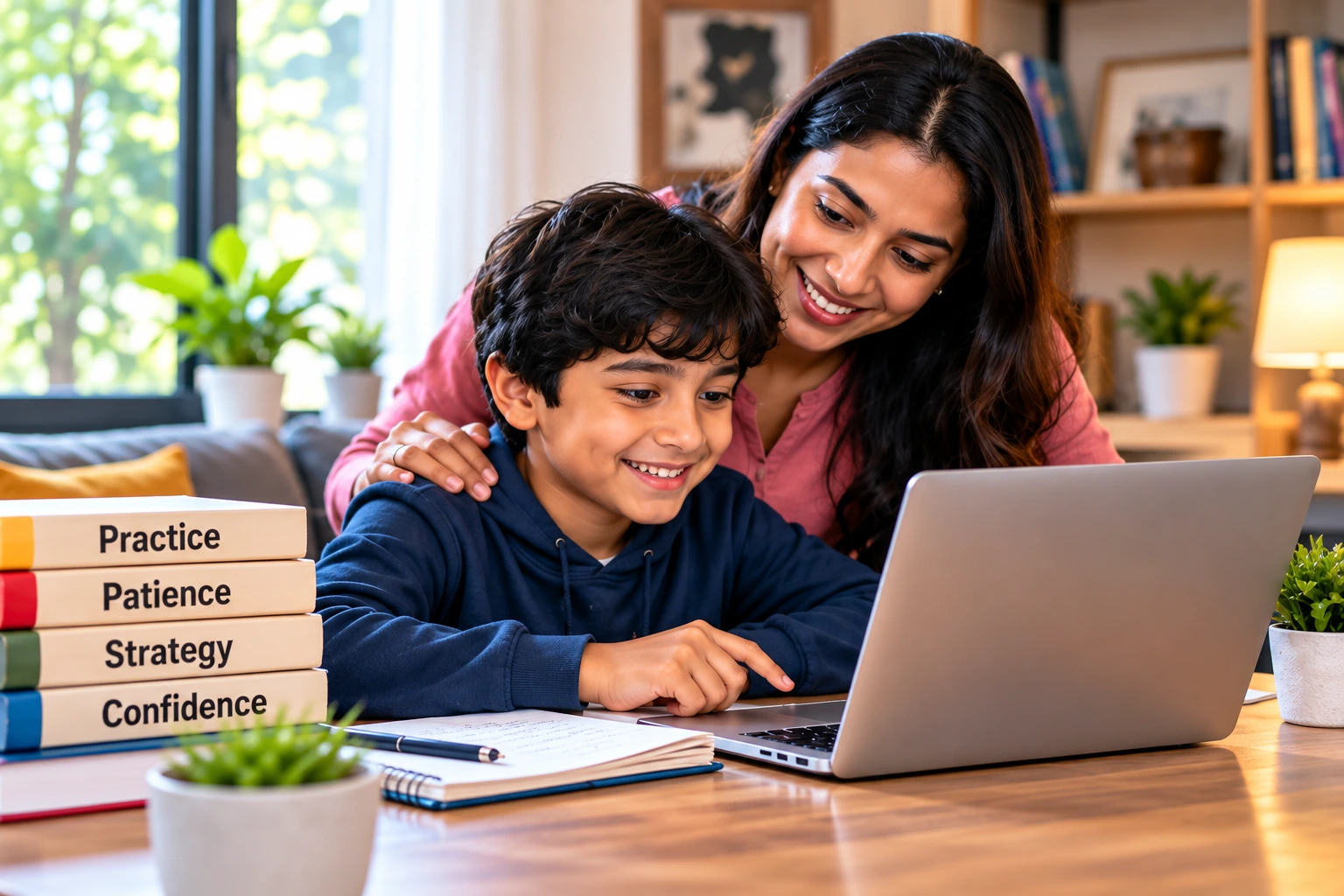
How to Support Your Child's Online Chess Learning
Enrolling your child in online chess classes is an important first step, but learning does not have to stop when the lesson ends. A few minutes of thoughtful practice at home can help children revisit what they learned, ask better questions, and become more comfortable making their own decisions on the chessboard.
The good news? You do not need to be an experienced chess player to help. Parents can make a meaningful contribution by providing encouragement, creating a comfortable place to practise, helping children follow realistic goals, and communicating with their coach when they need guidance.
This guide explains how to Support Your Child's Online Chess Learning with practical routines, simple game reviews, manageable chess homework, and positive habits that fit into everyday family life.
Quick Answer: How Can Parents Help?
To support your child's online chess learning, help them practise briefly and consistently between classes. Encourage them to revisit one lesson concept, solve a few level-appropriate puzzles, review a game without blame, and work towards small goals. You do not need to teach advanced chess; your role is to make learning organised, positive, and sustainable.
Why Support Between Online Chess Lessons Matters
During a lesson, a child may understand a new tactic or strategy while the coach is explaining it. Remembering when and how to use that idea in a different position can take additional practice.
Short review sessions give children opportunities to revisit ideas, test their understanding, and notice which questions they want to ask during their next lesson. Practice is most useful when it connects with what the child is currently learning rather than becoming a random collection of games and puzzles.
Revisit New Concepts
A quick review of a lesson topic helps children become familiar with an idea before moving on to something new.
Practise Making Decisions
Solving positions and playing complete games gives children opportunities to think through moves rather than only watch explanations.
Build Independent Habits
A predictable routine can gradually help children prepare their own practice activities and take responsibility for learning.
Keep Learning Positive
Supportive conversations help children feel comfortable discussing mistakes, asking questions, and trying challenging positions.
Practice does not need to be lengthy or complicated. The right activity depends on your child's age, experience, attention, current lesson topic, and interest in chess.
7 Practical Ways to Support Your Child's Online Chess Learning
Ask What They Learned in Their Last Class
Start with a simple conversation after the lesson. Ask your child to tell you about one move, position, or idea they found interesting. Let them explain it in their own words rather than testing them on every detail.
If they cannot remember everything, that is fine. Review the coach's notes, if available, or make a note of the question to revisit next time.
Try asking: "What is one thing you learned today that you would like to try in your next game?"
Keep Chess Practice Short and Manageable
Schoolwork, hobbies, family time, and rest all matter. Start with a short practice session that fits your child's routine rather than expecting a long study period every day.
For example, a younger beginner might start with five to ten minutes of a simple chess activity, while an older or more experienced child may prefer a longer session. Treat these as starting points, not strict rules.
If your child is tired or frustrated, reduce the task or take a break. Consistency is easier to maintain when practice feels achievable.
Choose Chess Homework That Matches the Lesson
Effective chess homework for children should reinforce a skill they are currently learning. A beginner may need to practise legal piece movements or basic checkmates, while a more experienced player may benefit from tactical puzzles or reviewing a complete game.
Ask the coach what the child should practise between lessons. If there is no formal homework, choose one simple activity related to the last session instead of introducing several unrelated topics.
- Practise a small number of puzzles at the appropriate difficulty.
- Revisit a position from the most recent lesson.
- Play a thoughtful game rather than rushing through several games.
- Write down one question to discuss with the coach.
Review Games Without Focusing Only on Wins and Losses
A game review can help children understand their decisions. You do not have to identify every mistake or know the perfect move yourself. Begin by inviting your child to think about what happened.
Choose one or two interesting moments rather than analysing the entire game. If you have access to a coach's review or a chess analysis tool, use it to clarify difficult positions rather than treating every computer suggestion as something your child must memorise.
Useful questions include:
- What were you planning when you played this move?
- Was one of your pieces under attack?
- What could your opponent do next?
- Is there one thing you would try differently in another game?
Set Small, Realistic Learning Goals
Goals give children a clear focus for practice. However, a goal such as "become a chess champion quickly" is difficult to turn into a useful daily activity.
Choose something specific that your child can practise, such as checking for an opponent's threats before moving or solving a few puzzles carefully. Review the goal regularly and change it when the skill becomes more familiar.
Keep goals appropriate to the child's current level. A beginner does not need the same practice targets as a player preparing for a tournament.
Create a Comfortable Place to Practise
A suitable learning environment makes it easier to focus. Choose a reasonably quiet space, check that the device works properly, and keep the chessboard or practice materials within reach if needed.
For online games, help younger children use age-appropriate accounts and review privacy, communication, and screen-time settings. Remind them to follow the platform's safety rules and ask an adult if something online makes them uncomfortable.
Keep the setup simple. Expensive equipment is not necessary for a child to revisit a lesson or solve a few chess positions.
Stay in Touch With the Chess Coach
A coach can help you understand which skills deserve attention and which activities are suitable for your child's current level. You can share observations about practice, recurring difficulties, or topics your child finds particularly interesting.
Ask for a manageable next step rather than a long list of tasks. This keeps home practice aligned with the lessons and reduces the chance of working on material that is too easy or too difficult.
Chess Practice for Kids at Home: What Should Your Child Do?
When planning chess practice for kids at home, choose activities that have a clear purpose. Children do not need to spend every session playing full games. Different activities help them work on different parts of their chess understanding.
| Practice Activity | What It Helps Practise | Parent's Role |
|---|---|---|
| Chess puzzles | Recognising patterns and calculating possible moves. | Help choose suitable puzzles and encourage careful thinking. |
| Lesson review | Remembering and applying a recently taught idea. | Ask the child to explain the concept in their own words. |
| Practice games | Making decisions in complete positions and responding to an opponent. | Encourage thoughtful play rather than rushing to finish. |
| Game review | Reflecting on decisions and noticing recurring mistakes. | Discuss one useful lesson without blame. |
| Physical board practice | Visualising positions and understanding piece movement. | Set up a position if helpful, or let the child do it independently. |
| Coach-assigned task | Working on an identified learning need. | Help the child complete the task and note any questions. |
Rotate activities according to the child's needs and interests. If a child is enthusiastic about puzzles but avoids game reviews, try reviewing just one position at first. If puzzles feel frustrating, ask the coach whether the difficulty should be adjusted.
A Simple Children's Chess Learning Routine
A routine should make it easier to begin, not create another source of pressure. The following weekly plan is an illustrative example for a child who already attends online chess lessons. Adjust the frequency and duration to the child's age, energy, schedule, and coach's recommendations.
| Day | Suggested Activity | Suggested Starting Time |
|---|---|---|
| Monday | Review one idea from the last lesson. | 5–10 minutes |
| Tuesday | Solve a few puzzles at the right level. | 5–15 minutes |
| Wednesday | Attend the scheduled online lesson, if applicable. | As scheduled |
| Thursday | Play a practice game or revisit a position. | 10–20 minutes |
| Friday | Review one decision from a game. | 5–10 minutes |
| Weekend | Enjoy a family game, explore a puzzle, or take a break. | Flexible |
The times above are flexible examples, not evidence-based requirements for every child. Some beginners will need less time, while older or more experienced students may prefer more structured practice. Follow the child's response and the coach's guidance.
Keep it flexible: If your child misses a practice day, simply continue with the next planned activity. Avoid making them complete extra work to compensate. A routine that can adapt to real family life is more practical than one that demands perfect attendance.
How to Help Your Child Improve Chess Skills Between Lessons
To improve chess skills between lessons, help your child connect practice with a specific learning goal. Repeating activities without thinking about the moves may feel productive, but reflection is also important.
Focus on One Skill at a Time
If the latest lesson covered forks, choose a few appropriate fork puzzles. If the coach explained how to keep pieces safe, ask the child to check whether their pieces are attacked during a practice game. Avoid introducing several advanced topics at once.
Encourage Thinking Before Moving
Invite your child to pause before making a move and consider what the opponent might do next. This can be a simple habit for beginners and a useful reminder for more experienced players. Do not interrupt every move with a question; allow the child time to think independently.
Use Mistakes as Learning Opportunities
Mistakes are part of playing chess. When something goes wrong, help your child identify one useful takeaway. There is no need to review every blunder or repeat the same correction throughout the game.
Track Progress Beyond Winning
Wins and ratings can be useful in the right context, but they do not tell the whole story of a child's learning. Notice whether your child can explain a move more clearly, recognise a familiar tactic, or identify a threat they previously missed.
For more ideas about building positive habits, read our guide to mistakes parents make when teaching chess at home.
How Can Parents Help If They Don't Know Chess?
You do not have to be a chess expert to provide useful support. Your child can receive chess instruction from a coach while you help create the conditions for regular learning.
Ask Curious Questions
Ask what your child was thinking, what they noticed, or what they would like to understand better. You do not need to know the correct move to have a useful conversation.
Help With Organisation
Set up a comfortable space, help the child remember lesson times, and keep track of any practice task the coach recommends.
Encourage Without Judging
Recognise effort, patience, and thoughtful decisions. Avoid criticising a child for losing or comparing them with stronger players.
Ask the Coach for Guidance
If you are unsure what to practise, ask for one or two clear activities that match the child's current learning level.
Your role is not to replace the coach or correct every move. It is to help your child feel supported, stay curious, and develop the confidence to learn from their own decisions.
Common Parent Mistakes to Avoid
Parents naturally want to see their children make progress. However, too much pressure can make practice feel like another school assignment instead of an enjoyable activity.
- Forcing long practice sessions: Choose an achievable task and stop when the child needs a break.
- Focusing only on results: Recognise thoughtful decisions and learning, even when a game ends in a loss.
- Teaching too many concepts at once: Reinforce the current lesson before adding unrelated material.
- Correcting every move: Give the child space to think and let the coach handle detailed chess instruction.
- Comparing with other children: Focus on the child's own goals and progress instead of someone else's rating.
- Using practice as punishment: Keep chess separate from arguments about schoolwork or behaviour.
- Ignoring fatigue or loss of interest: Adjust the routine if the child seems overwhelmed, and discuss persistent difficulties with the coach.
The aim is to develop a healthy relationship with learning. A shorter, positive session is a reasonable choice when a child is tired or busy.
A Parent's Weekly Chess Practice Checklist
Use this simple checklist to keep home practice organised without making every day a strict requirement.
Practice Check-In
You do not need to tick every item every week. Use the list as a reminder of the kind of support that can help children learn at a manageable pace.
Frequently Asked Questions About Supporting Online Chess Learning
1. How can I support my child's online chess learning if I don't play chess?
You can help by providing a quiet practice space, encouraging short review sessions, asking your child to explain what they learned, and communicating with the coach. You do not need to teach chess strategy yourself.
2. How often should children practise chess between online lessons?
The ideal frequency depends on the child's age, experience, interest, and schedule. Start with a manageable routine of short sessions and adjust it based on how your child responds and what the coach recommends.
3. What is suitable chess homework for children?
Suitable tasks may include a few level-appropriate puzzles, revisiting a lesson position, playing a thoughtful practice game, or reviewing one decision. The activity should reinforce the child's current learning goals.
4. How do I help my child improve chess skills between lessons?
Encourage focused practice, revisit recently taught ideas, and help your child reflect on decisions from games. Ask the coach to suggest activities that target the child's current needs.
5. Should I correct my child's chess mistakes during a game?
Avoid interrupting every move, particularly during a game the child is trying to play independently. Let them think, then review one or two useful moments afterward. Detailed analysis can be discussed with the coach.
6. How can I create a children's chess learning routine?
Choose a convenient time, plan short activities, and connect practice to the latest lesson. Include flexibility for schoolwork, rest, and family commitments, and revise the routine when your child's needs change.
7. What if my child does not want to practise chess at home?
Ask what feels difficult or uninteresting. Shorten the session, choose an activity your child enjoys, or ask the coach whether the task is appropriate. Avoid turning every practice session into a conflict.
8. Should parents track chess ratings to measure progress?
Ratings can provide information about competitive performance, but they are not the only measure of learning. Also notice whether your child understands new concepts, spots threats, explains decisions, and applies feedback.
Related Chess Learning Guides for Parents
Explore these related Brainiac Chess Academy resources for more practical guidance on your child's chess journey.
Final Thoughts: Help Your Child Learn Chess With Confidence
To Support Your Child's Online Chess Learning, you do not need to fill every free moment with chess or know the answer to every question. What matters is helping your child practise in a way that is organised, positive, and appropriate for their current level.
Start with a small review after a lesson, add a few suitable puzzles or a thoughtful game, and celebrate the effort your child puts into understanding a position. Keep communication open with the coach and allow the routine to evolve as your child's skills and interests change.
Over time, these manageable habits can make it easier for children to revisit what they learn in class, reflect on their decisions, and take a more active role in their chess journey. The goal is steady learning without unnecessary pressure.
Looking for Guidance on Your Child's Chess Journey?
Contact Brainiac Chess Academy to discuss your child's current chess level, learning goals, and ways to make practice between online lessons more focused and manageable.
Ask About Online Chess CoachingBrainiac Chess Academy · Practical chess learning guidance for parents and young players.