Recent Posts
- Online Chess Coaching for Every Skill Level: A Guide
- First Online Chess Lesson: How Parents Can Prepare
- How to Support Your Child’s Online Chess Learning

- Online Chess Classes for Siblings: What Parents Should Know
- Online Chess Classes vs Self-Learning for Kids
- Equipment Needed for Online Chess Classes

- Online Chess Classes for Homeschoolers

- Online Chess Classes for Shy Kids: A Parent’s Guide

- What Happens in an Online Chess Coaching Session?

- Online Chess Lessons Cost: A Parent’s Guide

- What Is a Hanging Piece in Chess?
- What Is a Blunder in Chess?
- What Is a Draw in Chess?
- What Is a Stalemate in Chess?
- How Does Castling Work in Chess?
- What Is Checkmate in Chess? A 30-Second Lesson
- What Is Check in Chess? A 30-Second Chess Lesson
- Online Chess Classes After School for Kids Living Abroad

- What Should Parents Ask Before Joining Online Chess Classes?
- How Children Abroad Can Learn Chess Online From Home?

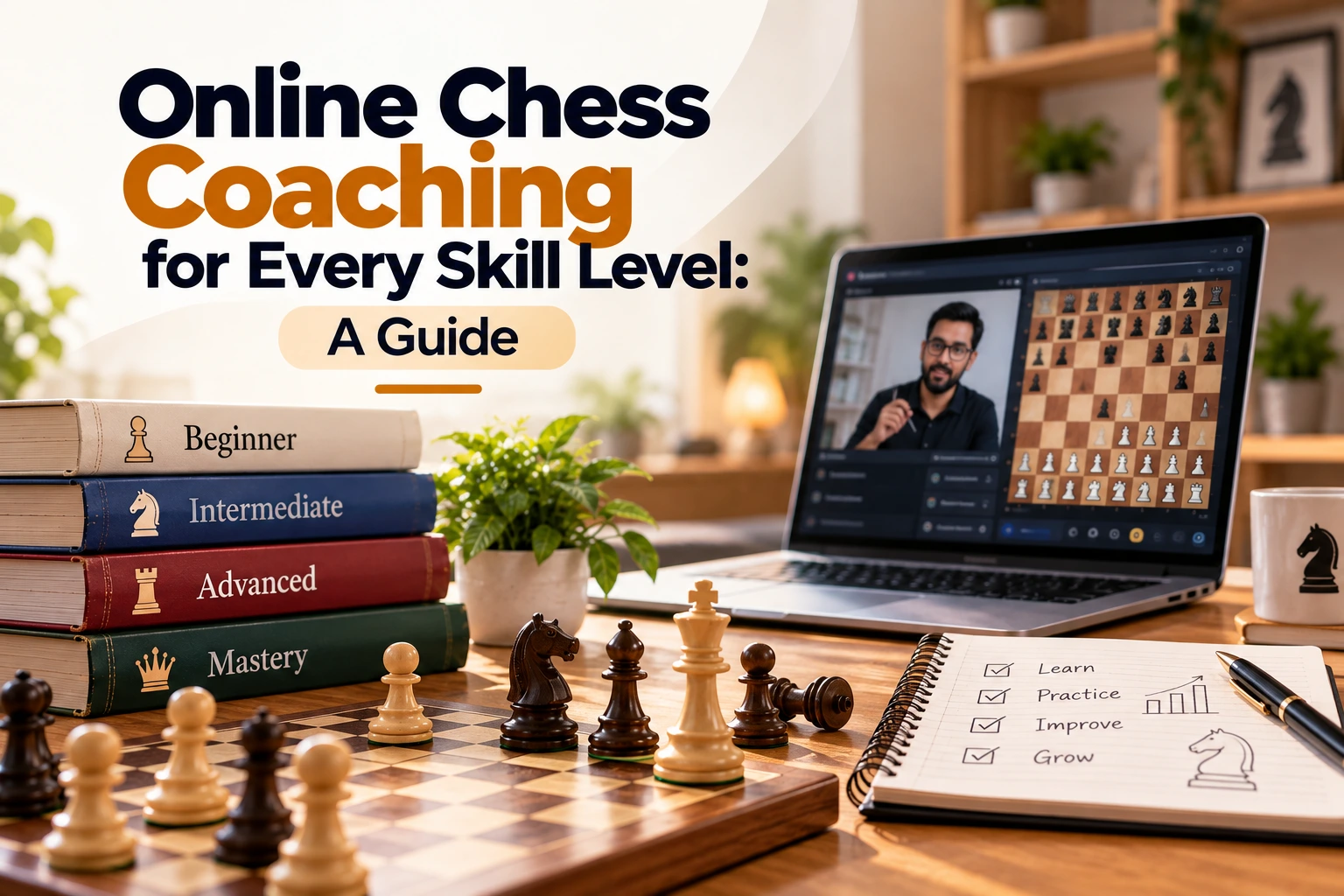
Online Chess Coaching for Every Skill Level: A Guide
Every chess player starts somewhere. Some children are learning how the pieces move, while others already understand basic tactics and want to make better decisions during games. Choosing coaching that matches a child's current ability can help make lessons relevant, engaging, and easier to follow.
However, skill level is only one part of the decision. A child's age, previous experience, interests, confidence, and learning goals also influence which teaching format may suit them. A beginner may need a clear introduction to the rules, while a developing player may benefit from structured practice, game analysis, and feedback on recurring mistakes.
This guide to Online Chess Coaching for Every Skill Level explains how parents can assess their child's needs, understand beginner and intermediate learning goals, compare coaching formats, and choose an appropriate next step.
Quick Answer: How Do You Choose the Right Level?
Start by identifying what your child already understands, where they struggle, and what they want to learn next. Ask the coach how students are assessed, how lessons are adapted to different abilities, and how progress is reviewed. The right coaching arrangement should provide suitable challenges without making lessons unnecessarily easy or overwhelming.
What Does Online Chess Coaching for Every Skill Level Mean?
Online chess coaching is not limited to complete beginners or experienced tournament players. It can support learners at different stages, provided the lesson content, teaching pace, and practice activities match their needs.
A suitable programme should help a student build on existing knowledge rather than follow a generic plan regardless of experience. This is why understanding the child's current level is an important first step.
Beginners
Learners who are new to chess or still developing confidence with piece movement, legal moves, check, checkmate, and basic rules.
Developing Players
Students who know the basics and want to improve tactical awareness, piece safety, planning, and decision-making during games.
Intermediate Players
Players who understand common tactics and basic strategy and want to work on calculation, positional understanding, endgames, and game analysis.
Competitive Learners
Students preparing for competitive play may need focused work on tournament games, preparation, time management, and recurring weaknesses.
These are broad descriptions, not universal rating categories. Different coaches and academies may define skill levels differently, so ask how a programme places students before enrolling.
How to Assess Your Child's Current Chess Skill Level
Parents do not need to conduct a formal chess test at home. Instead, observe what your child can do comfortably and ask a coach to help identify the next learning priorities.
1. Check Their Understanding of the Rules
Can your child identify the pieces and explain how they move? Do they understand check, checkmate, and the difference between a legal and illegal move? These questions can help establish whether the child needs a beginner-level introduction or is ready to explore more complex ideas.
2. Notice How They Approach a Position
A developing player may know how the pieces move but overlook an opponent's threat or leave a piece undefended. During casual games, notice whether your child considers what the opponent might do next or mainly focuses on their own intended move.
3. Ask What They Find Difficult
Children can often identify what feels confusing, even if they cannot explain the chess concept precisely. They may struggle with checkmate patterns, lose track of attacked pieces, or find it difficult to decide between several possible moves.
4. Share Their Experience With the Coach
Tell the coach whether your child is new to chess, plays occasionally, solves puzzles, or has participated in tournaments. The coach can then assess the student's knowledge more directly and recommend a suitable starting point.
Parent tip: Do not rely on age alone to choose a chess level. Two children of the same age may have very different amounts of experience. Current knowledge, learning needs, and goals are more useful starting points.
Chess Coaching for Beginners and Intermediate Players
Beginner and intermediate students often need different kinds of support. Understanding those differences can help parents ask more useful questions when exploring coaching options.
| Learning Area | Beginner Focus | Intermediate Focus |
|---|---|---|
| Rules and movement | Learn legal moves, special rules, check, and checkmate. | Apply the rules confidently in complete games. |
| Tactical awareness | Recognise simple attacks, captures, and basic checkmate patterns. | Calculate combinations and identify tactical opportunities. |
| Piece safety | Notice when a piece is attacked or left undefended. | Evaluate threats, exchanges, and tactical consequences. |
| Strategy | Understand simple development and basic opening principles. | Improve planning, piece coordination, and positional decisions. |
| Game review | Identify a few basic mistakes and learn from them. | Analyse critical positions and recurring decision-making errors. |
| Practice goals | Build familiarity, confidence, and sound habits. | Work on specific weaknesses and apply concepts more consistently. |
These are typical learning priorities, not strict boundaries. A student may be strong in tactics but need more work on endgames, or understand strategy while still making basic calculation errors. Good coaching recognises these differences.
Online Chess Lessons by Skill Level: What Should Each Stage Include?
Beginner-Level Online Chess Lessons
For a complete beginner, lessons should establish a clear foundation. Students need opportunities to understand the board, practise piece movement, recognise check and checkmate, and apply the rules in simple positions.
Useful beginner activities may include:
- Learning piece movement and legal moves.
- Recognising check, checkmate, and stalemate.
- Practising simple checkmate patterns.
- Solving basic tactical puzzles.
- Playing short games and reviewing simple mistakes.
At this stage, understanding the reason behind a move is often more useful than memorising long sequences of opening moves.
Developing Player Chess Classes
Once students know the rules and can complete games, they may benefit from a more structured approach to common mistakes and tactical patterns.
Depending on their needs, practice may focus on:
- Recognising forks, pins, skewers, and discovered attacks.
- Checking for threats before making a move.
- Understanding basic opening principles and piece development.
- Improving the coordination and safety of pieces.
- Reviewing games to understand why certain decisions worked or failed.
The objective is to help students apply what they know more consistently, rather than simply increasing the number of games they play.
Intermediate Chess Coaching
Intermediate students may already recognise many tactical patterns but struggle to evaluate more complex positions or create plans when there is no immediate tactic.
Relevant learning areas may include:
- Calculating variations and comparing candidate moves.
- Evaluating pawn structures and piece activity.
- Improving rook, minor-piece, and king activity in endgames.
- Reviewing critical moments from complete games.
- Recognising recurring weaknesses in decision-making.
The exact content should reflect the player's current strengths and weaknesses. A coach may recommend returning to a foundational concept if it continues to cause problems in actual games.
Coaching for Competitive Goals
Children who want to participate in tournaments may need a more focused plan. This can include reviewing tournament games, practising under time limits, working on opening preparation appropriate to their level, and learning to manage difficult positions.
Ask the coach whether their approach matches the child's goals and experience. Tournament preparation should be realistic and balanced with the child's schoolwork, rest, and enjoyment of chess.
Group Classes or Individual Coaching: Which Is Suitable?
Skill level is important, but the teaching format also influences how a child learns. Some students enjoy learning alongside peers, while others benefit from more individual attention.
| Coaching Format | Potential Benefits | What to Consider |
|---|---|---|
| Group coaching | Peer interaction, shared activities, and opportunities to discuss positions. | Check group size, skill-level placement, and individual feedback. |
| Individual coaching | Lesson content can focus on one student's questions and learning needs. | Check whether the approach suits the child's learning preferences and goals. |
| Small-group coaching | May offer a balance between peer interaction and closer guidance. | Ask how the coach distributes participation and feedback. |
No format is automatically best for every child. Ask how the academy adapts lessons when students have different levels of experience, and how you will know whether the current arrangement is working.
How to Build an Individual Chess Learning Plan
An individual chess learning plan connects a student's current ability with practical goals and a way to review progress. It does not need to be complicated. A few clear priorities can make lessons and practice more purposeful.
Identify the Starting Point
Discuss the child's chess experience with the coach. Identify which concepts they understand comfortably and which areas need more attention.
Choose a Small Number of Priorities
Select one or two goals, such as recognising basic checkmates, avoiding undefended pieces, or improving calculation in tactical positions. Too many simultaneous goals can make it harder to know what to practise.
Match Practice to the Lessons
Use suitable puzzles, reviewed positions, or coach-assigned activities to reinforce the current topic. Keep practice manageable and appropriate to the child's schedule.
Review Progress and Adjust
Discuss what has become easier, which mistakes still occur, and what the next goal should be. The plan can change as the student's needs develop.
For more ideas on practice between classes, read our guide to building a daily chess practice routine.
How Parents Can Tell Whether Coaching Is a Good Fit
The right coaching arrangement should help a child understand what they are learning and why it matters. Progress will not always be immediate, and a single result or rating change is not enough to evaluate the entire experience.
Suitable Challenge
The lesson is neither consistently too easy nor so difficult that the child cannot follow the explanation.
Clear Explanations
The child can describe at least some of the ideas covered and understands what they are practising.
Useful Feedback
The coach identifies mistakes constructively and offers practical ways to work on them.
Healthy Engagement
The child feels comfortable asking questions and has opportunities to participate in the lesson.
If a child seems persistently bored, confused, or overwhelmed, discuss the concern with the coach. The solution may be a different level, a change in pace, a revised practice plan, or a different teaching format.
Questions to Ask Before Choosing Online Chess Coaching
Before enrolling your child, use these questions to understand how the programme is organised and whether it matches the learner's needs.
- How do you assess a student's current skill level? Find out whether placement considers experience, rules knowledge, tactical understanding, and practical games.
- How are lessons adapted to different abilities? Ask how the coach adjusts explanations, puzzles, and learning goals.
- What happens if my child struggles with a topic? Understand how the coach revisits difficult concepts and provides feedback.
- How is progress communicated to parents? Ask whether you can receive feedback about topics covered and recommended practice.
- What practice should my child complete between lessons? Look for manageable activities related to the student's learning goals.
- Can the plan change as my child improves? A learner's needs may change over time, so ask how lessons and goals are reassessed.
You can also read our guide on how to choose the best chess academy for your child for more points to consider.
Frequently Asked Questions About Online Chess Coaching for Every Skill Level
1. Is online chess coaching suitable for complete beginners?
Yes, provided the programme is designed for beginners. Students can start by learning the rules, piece movement, basic checkmates, and simple tactics before moving to more complex concepts.
2. Can intermediate players benefit from online chess lessons?
Yes. Intermediate players may work on calculation, positional understanding, endgames, game analysis, and recurring mistakes. The lesson content should match the player's actual strengths and weaknesses.
3. How do I know which chess level is right for my child?
Consider what your child understands, how they approach games, and what they find difficult. Share this information with the coach and ask how the student will be assessed before a learning plan is chosen.
4. Should children of the same age join the same chess class?
Not necessarily. Children of the same age can have very different levels of chess experience. Choose a class based on current knowledge, learning needs, and the academy's teaching format.
5. What is an individual chess learning plan?
It is a practical plan based on a student's current ability, learning goals, suitable practice activities, and progress reviews. It can be adjusted as the student's skills and needs change.
6. Are group classes or individual chess lessons better?
Both can be suitable. Group classes provide peer interaction, while individual lessons can focus more closely on one student's needs. Consider the child's preferences, goals, and the level of feedback offered.
7. How can parents support chess learning between lessons?
Encourage short practice sessions, suitable puzzles, thoughtful games, and simple game reviews. Ask the coach which activities are most useful for the child's current learning goals.
8. How long does it take for a child to improve at chess?
Improvement varies with experience, practice, lesson quality, and individual learning needs. Focus on specific skills and consistent effort rather than expecting a fixed timeline or guaranteed rating increase.
Related Chess Learning Guides for Parents
Explore these related Brainiac Chess Academy resources to help you plan your child's chess learning journey.
Final Thoughts: Choose Coaching That Grows With Your Child
Online Chess Coaching for Every Skill Level should begin with an understanding of the learner, not just a label such as beginner or intermediate. A child needs lessons that connect with their existing knowledge, address their current challenges, and provide opportunities to practise what they learn.
Start by assessing your child's experience and goals, then ask how the coach chooses lesson content and reviews progress. As the child develops, revisit those goals and adjust the learning plan where necessary.
The aim is not to rush through levels or compare one child with another. It is to help each learner build chess knowledge, make more thoughtful decisions, learn from mistakes, and enjoy the process of improving over time.
Looking for Chess Coaching That Matches Your Child's Level?
Contact Brainiac Chess Academy to discuss your child's chess experience, learning goals, and the coaching options that may be suitable for their current level.
Ask About Online Chess CoachingBrainiac Chess Academy · Chess learning guidance for parents and young players.