How Chess Improves Concentration in Kids: A Parent's Guide
In today’s hyper-connected world, our children are constantly bombarded with digital stimuli. From short-form videos to instant-gratification apps, the modern environment is essentially engineered to fragment attention spans. As parents, we often notice the struggle: homework takes twice as long as it should, simple instructions are forgotten within minutes, and the ability to sit still with a single task is becoming a rare skill. We all want our children to thrive, yet the "distraction epidemic" makes it incredibly difficult.
This is where the ancient wisdom of the 64 squares offers a modern solution. Many parents are surprised to learn that how chess improves concentration is not just anecdotal—it is a functional workout for the developing brain. By teaching children to slow down, analyze, and anticipate, chess acts as a powerful antidote to digital impulsivity. In this guide, we explore how this classic game fosters mental discipline, supports academic growth, and provides the structured environment children need to sharpen their focus in an increasingly busy world.
Why Concentration Matters in Child Development
Concentration is far more than just "paying attention" in class. It is the bedrock of cognitive development and emotional maturity. When a child can concentrate, they are effectively managing their mental resources, filtering out irrelevant stimuli, and dedicating their full capacity to the task at hand.
This ability translates directly into academic success, as focused learners grasp complex concepts faster and retain information longer. Beyond the classroom, concentration is tied to emotional control. A child who can focus is better equipped to handle frustration, weigh consequences before acting, and make informed, rational decisions. In essence, concentration is the bridge between potential and achievement. Developing this skill early doesn't just make your child a better student; it equips them with the patience and discipline needed for lifelong success in everything from hobbies to professional life.
How Chess Improves Concentration
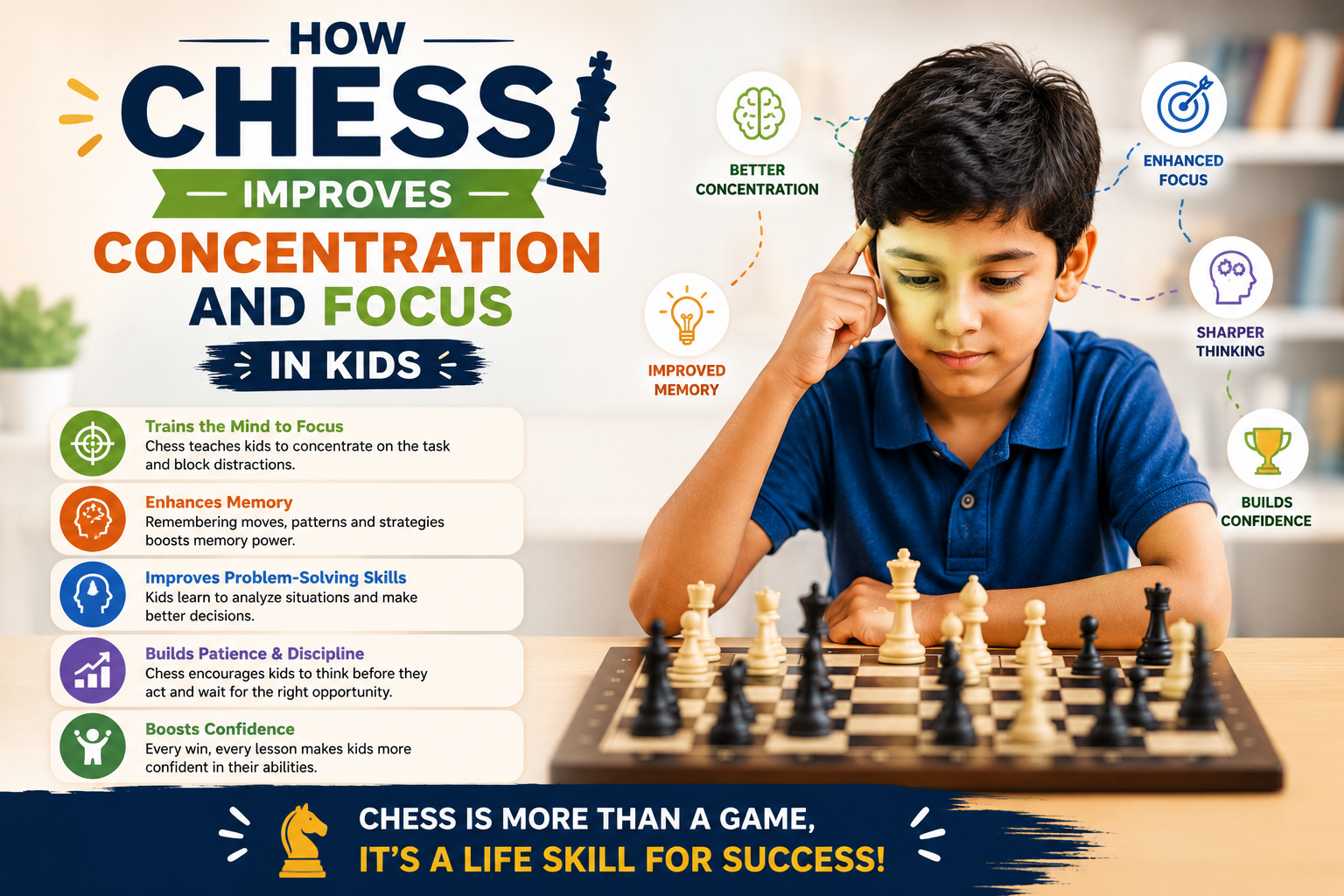
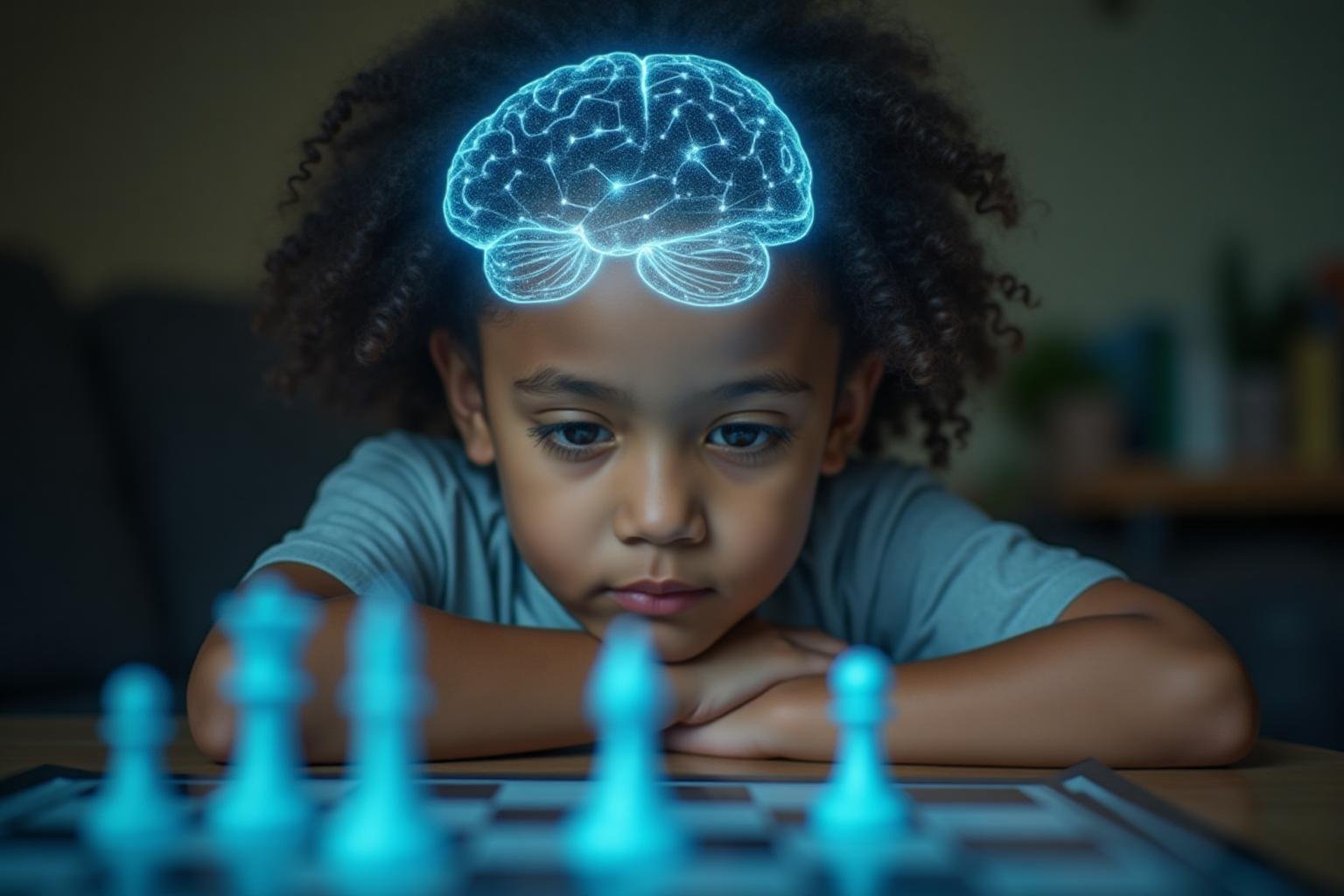
Chess is unique because it forces a child to engage in "Deep Work." Unlike games that rely on luck or reflexes, chess is a purely logical pursuit that rewards those who can sustain attention. Here is how it functions as a mental gymnasium:
Chess Requires Full Attention
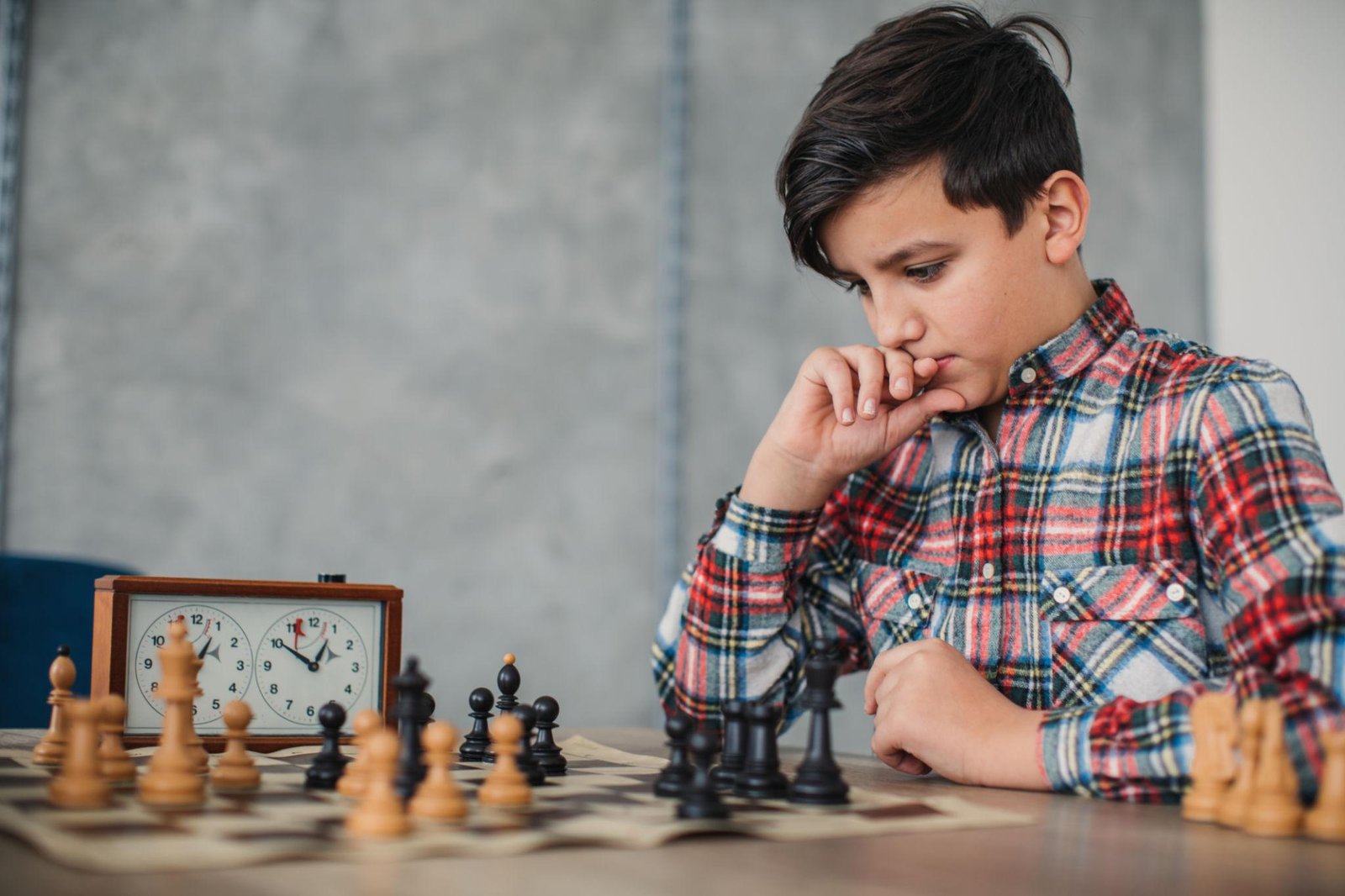
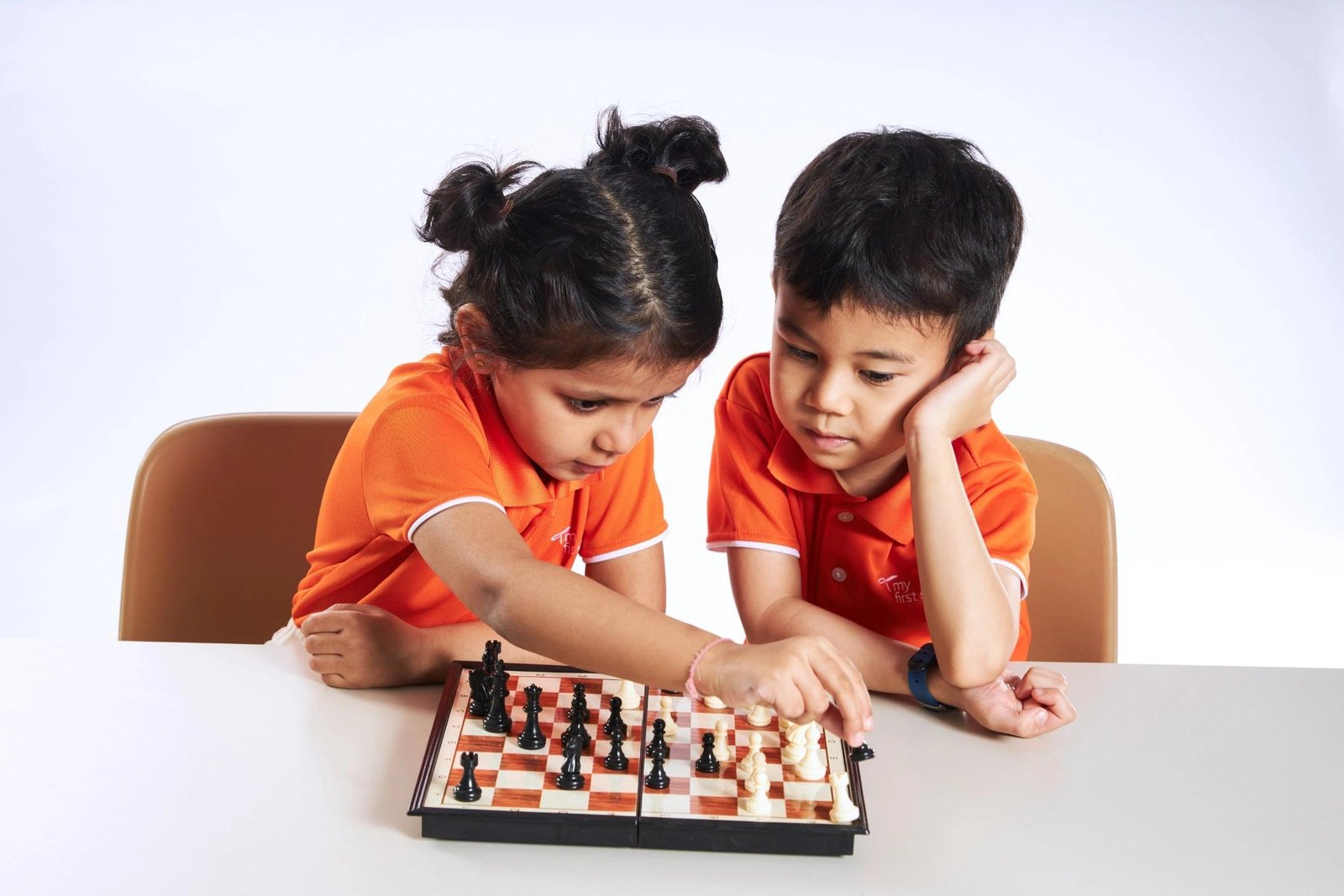
In chess, there is no place to hide. If a child stops paying attention for even a few seconds, they might miss a critical threat or lose their queen. This consequence-driven environment naturally encourages kids to stay locked into the game, training them to sustain focus for extended periods. For example, a child who usually struggles to sit still for 10 minutes will often spend 20 minutes staring unblinkingly at a board just to protect their favorite piece.
Every Move Demands Thinking
Every single move on the board is a miniature problem-solving exercise. A child must assess the position, calculate potential responses, and choose a path. This active participation prevents the mind from wandering, which is a common issue with passive entertainment.
Pattern Recognition Improves Focus
As children learn to recognize tactical patterns, they become more efficient. They aren't just staring at the board; they are actively searching for "themes." This goal-oriented scanning of the board significantly sharpens the child's ability to focus on specific targets while ignoring distractions.
Learning from Mistakes Builds Patience
Chess is a game of trial and error. When a child makes an impulsive move and loses a piece, they learn the value of "pause and reflect." This process builds the emotional patience required to focus on long-term goals rather than immediate gratification.
Longer Games Improve Mental Stamina
A standard game of chess can last anywhere from 30 to 60 minutes. As children participate in these sessions, their mental stamina grows. They learn that focusing for 45 minutes is not only possible but rewarding, which makes 45 minutes of studying feel much easier by comparison.
Chess and Brain Development
The relationship between Chess and Brain Development is a subject of ongoing study among educational psychologists. The game requires the use of both hemispheres of the brain—the left side for logic and analysis, and the right side for pattern recognition and spatial visualization. When a child plays chess, they are engaging in complex neuro-cognitive activity that improves memory, strengthens logical thinking, and enhances cognitive flexibility—the ability to adapt to new situations. This cognitive training is exactly why institutions like the International Chess Federation (FIDE) advocate for chess in schools globally.
How Chess Helps Students Perform Better in School
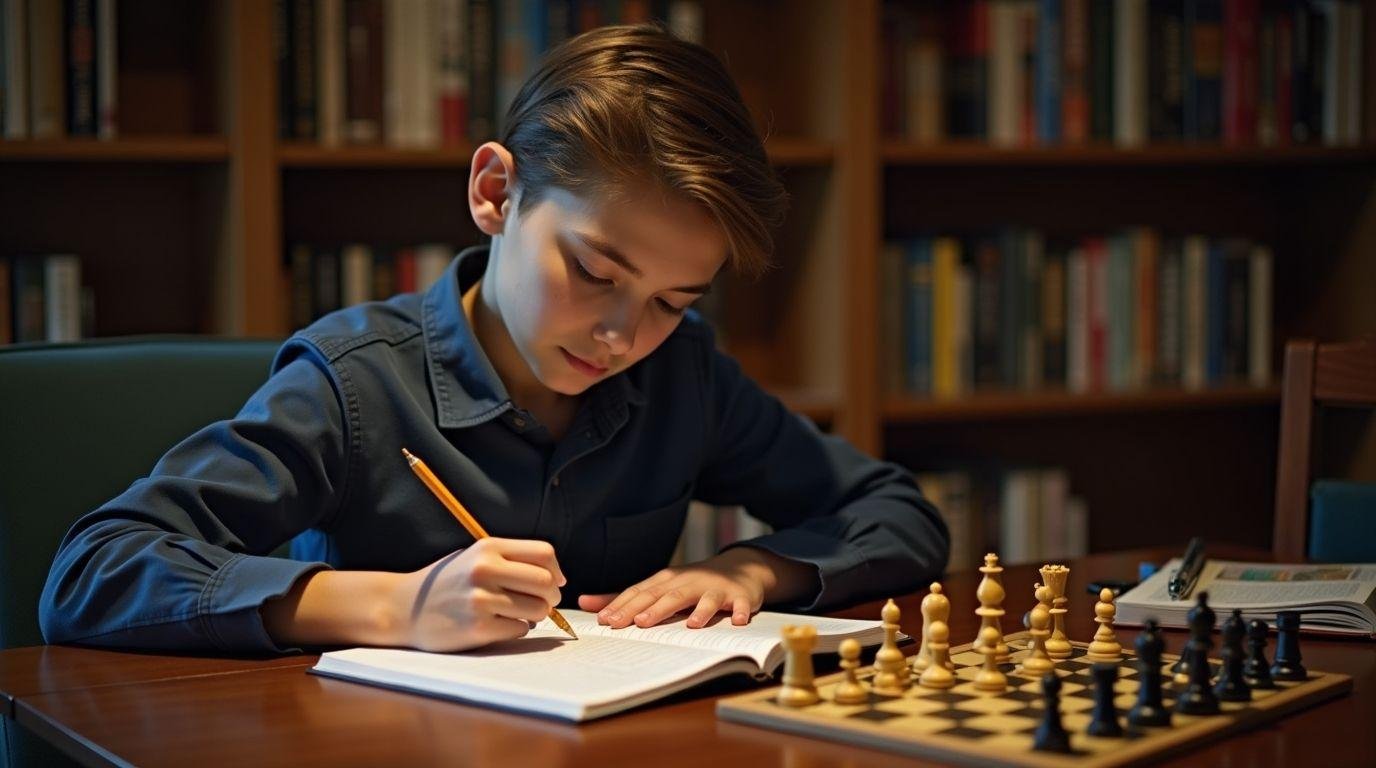
The skills gained on the chessboard are highly transferable. Students who practice chess often find that they approach their schoolwork with the same strategic mindset:
- Mathematics: Chess teaches algebraic thinking and geometry, helping kids visualize numbers and spatial relationships.
- Reading Comprehension: Analyzing a chess position requires the same level of deep reading as analyzing a complex text.
- Problem Solving: Chess trains kids to break large problems into smaller, manageable steps.
- Exam Preparation: The discipline of "thinking before moving" helps students slow down during exams, reducing careless errors.
- Time Management: Players learn to prioritize their moves, which helps them allocate time effectively during school projects.
Signs Your Child May Benefit From Chess
If you are wonderingHow Chess Improves Concentration, look for these common indicators:
- Difficulty concentrating or a seemingly short attention span with homework.
- Too much screen time and distraction by the digital environment around them.
- Impulsive behavior or trouble waiting their turn.
- A natural curiosity for logic games or puzzles.
- They are seeking a new challenge that feels more "meaningful" than watching videos.
How Parents Can Improve Focus Through Chess
You can supplement your child’s coaching with simple practices at home:
- Daily Practice: Even 15 minutes of tactical puzzles can reinforce focus habits.
- Limit Distractions: When practicing, ensure the environment is quiet and free from digital devices.
- Play Together: Show interest in their games. If you don't know how to play, learn with them—it builds a powerful bond.
- Celebrate Progress: Praise the process of thinking rather than the result of the game.
- Encourage Tournaments: Real-world competitive play provides a high-stakes environment that tests their focus skills in a fun, rewarding way.
Common Myths About Chess and Concentration
There are many misconceptions about How Chess Improves Concentration. Let's clear up a few:
- "Chess is only for intelligent children": False. Chess is a tool to build intelligence, not a talent one is born with.
- "Chess is boring": For kids, it is a game of battles and tactics. With the right Kids Chess Training, it is incredibly exciting.
- "Children lose interest quickly": They only lose interest if they are overwhelmed. Professional coaching ensures the material is scaled to their age.
- "Chess doesn't help academics": The cross-disciplinary focus required for chess is proven to improve executive function, which powers academic performance.
Why Professional Chess Coaching Makes a Difference
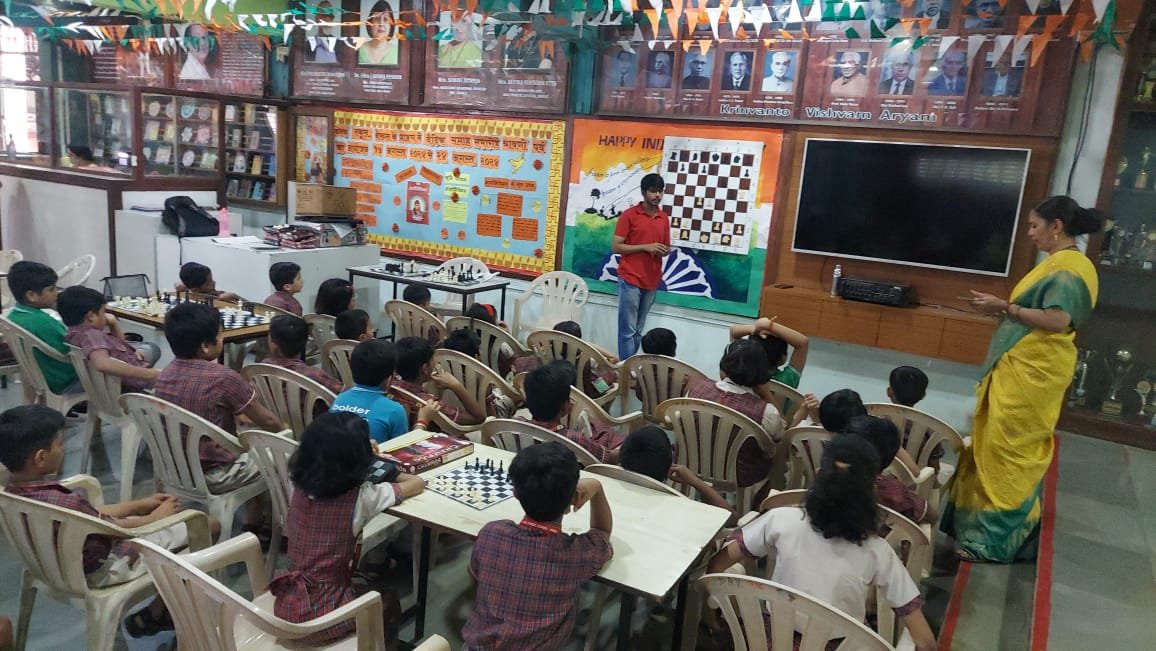
While playing at home is great, a structured environment is where the real transformation happens. Professional academies provide a curated curriculum that ensures your child is learning in a sequence that matches their cognitive development. With a coach, your child receives immediate feedback on why a move was good or bad, which is essential for learning. At a Global Chess Academy, we ensure that learning is social, structured, and consistent—three pillars that are hard to replicate at home.
Why Choose Brainiac Chess Academy?
At Brainiac Chess Academy, we understand that every child learns differently. We offer a holistic approach to Kids Chess Training that focuses on both the mental sport of chess and the development of the child's character.
- Experienced Coaches: Our mentors are skilled in both chess strategy and child psychology.
- Small Batch Sizes: We ensure every student receives personalized guidance and attention.
- Personalized Guidance: We track individual progress to ensure consistent improvement.
- Online & Offline Coaching: Whether you prefer Chess Training Online Pune or visiting our center, we have a solution for you.
- Tournament Preparation: We guide students step-by-step to ready them for competitive play.
- Flexible Timings: We understand the busy lives of modern families.
We are a Chess Academy Worldwide That Develops Skills From Beginner to Master. Whether you are looking for serious tournament preparation or just a way to improve your child's focus, we are here to support their journey.
Book Your Free Demo Class
Looking for a structured program that helps children How Chess Improves Concentration, confidence, and critical thinking?
Brainiac Chess Academy offers personalized Kids Chess Training through both online and offline classes designed to fit your schedule.
📍 Location: Sector 7, Janata Market, Vashi, Navi Mumbai, Maharashtra
📞 Call or WhatsApp: +91 9324829329
👉 Book Your Free Demo Right NowFrequently Asked Questions
Does chess improve concentration?
How often should children practice chess?
Is chess good for ADHD?
Can chess improve memory?
Is online chess coaching effective?
At what age should children start chess?
Does chess improve academic performance?
How long does it take to see improvement?
Conclusion
The question of how chess improves concentration is answered every day in our classrooms: it happens one thoughtful move at a time. By challenging the brain to analyze, calculate, and reflect, chess provides children with the mental fortitude to navigate the modern world with patience and clarity.
Beyond the medals and rankings, the true value of chess lies in the quiet strength it builds within the child—the ability to sit with a challenge, trust their process, and solve problems independently. If you are ready to help your child develop these life-changing skills, we encourage you to start early. Visit the Brainiac Chess Academy homepage and book your free demo class today to begin this rewarding journey.