How to Choose the Best Chess Academy for Kids
As a parent, noticing that spark of curiosity when your child first interacts with a chessboard is incredibly exciting. You see their mind working, their tiny hands moving pieces with intent, and you realize they are ready to learn. But then comes the difficult part: typing "chess classes near me" into a search engine and being overwhelmed by hundreds of options. How do you identify the best chess academy for kids?
Choosing the right environment is one of the most critical decisions you will make in their early educational journey. A great chess coach does far more than teach opening traps or endgame checkmates. The right mentor shapes a child's confidence, instills deep mental discipline, and transforms how they approach complex problems in everyday life.
In this comprehensive guide, we will walk you through exactly what you need to look for. Drawing on years of experience guiding parents and students, we will break down how to evaluate an academy's curriculum, the real difference between online and offline classes, and the crucial questions you must ask before enrolling your child.
Why Choosing the Right Chess Academy Matters
When you enroll your child in a chess program, you are not just signing them up for a hobby; you are investing in their cognitive development. The quality of the academy directly dictates the quality of this development.
A subpar program might just let kids play games against each other aimlessly, which leads to bad habits and eventual boredom. Conversely, a high-quality academy focuses on long-term learning. They create a structured environment where children learn to manage their emotions after a tough loss, boosting their emotional resilience and confidence.
Furthermore, if your child shows natural talent, they will eventually need proper tournament preparation. A top-tier academy knows how to transition a child from casual play to competitive arenas, ensuring the learning environment is supportive rather than purely high-pressure.
What Makes the Best Chess Academy for Kids?
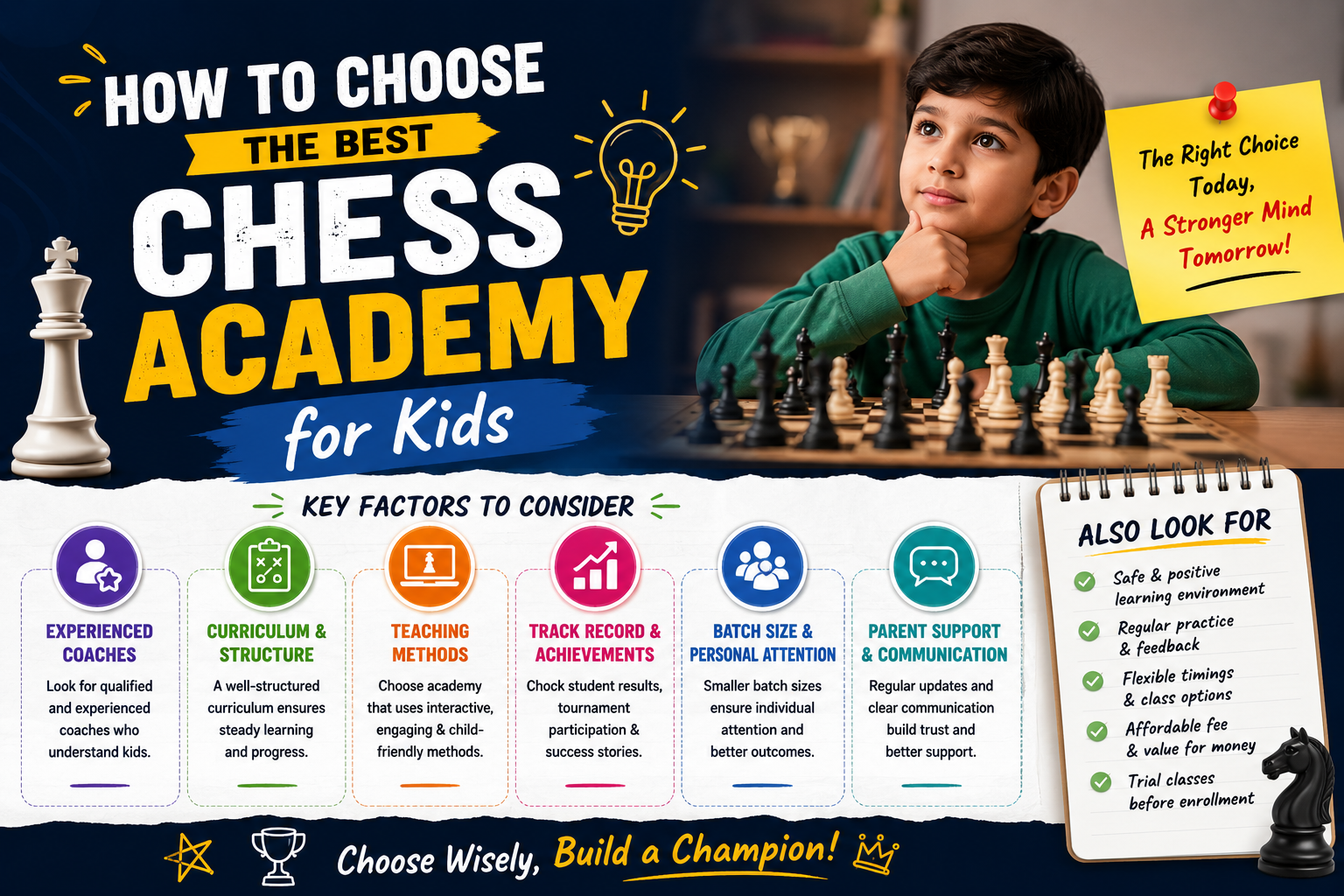
So, what specific features separate an average chess club from the best chess academy for kids? When evaluating your options, look for these non-negotiable pillars of quality.
Qualified and Experienced Coaches
A brilliant chess player is not automatically a brilliant teacher. You need a coach who understands child psychology. They must know how to explain a complex tactic like a "discovered attack" using language a 7-year-old can grasp. Ask about the coaches' teaching experience, not just their FIDE (International Chess Federation) ratings.
Structured Learning Curriculum
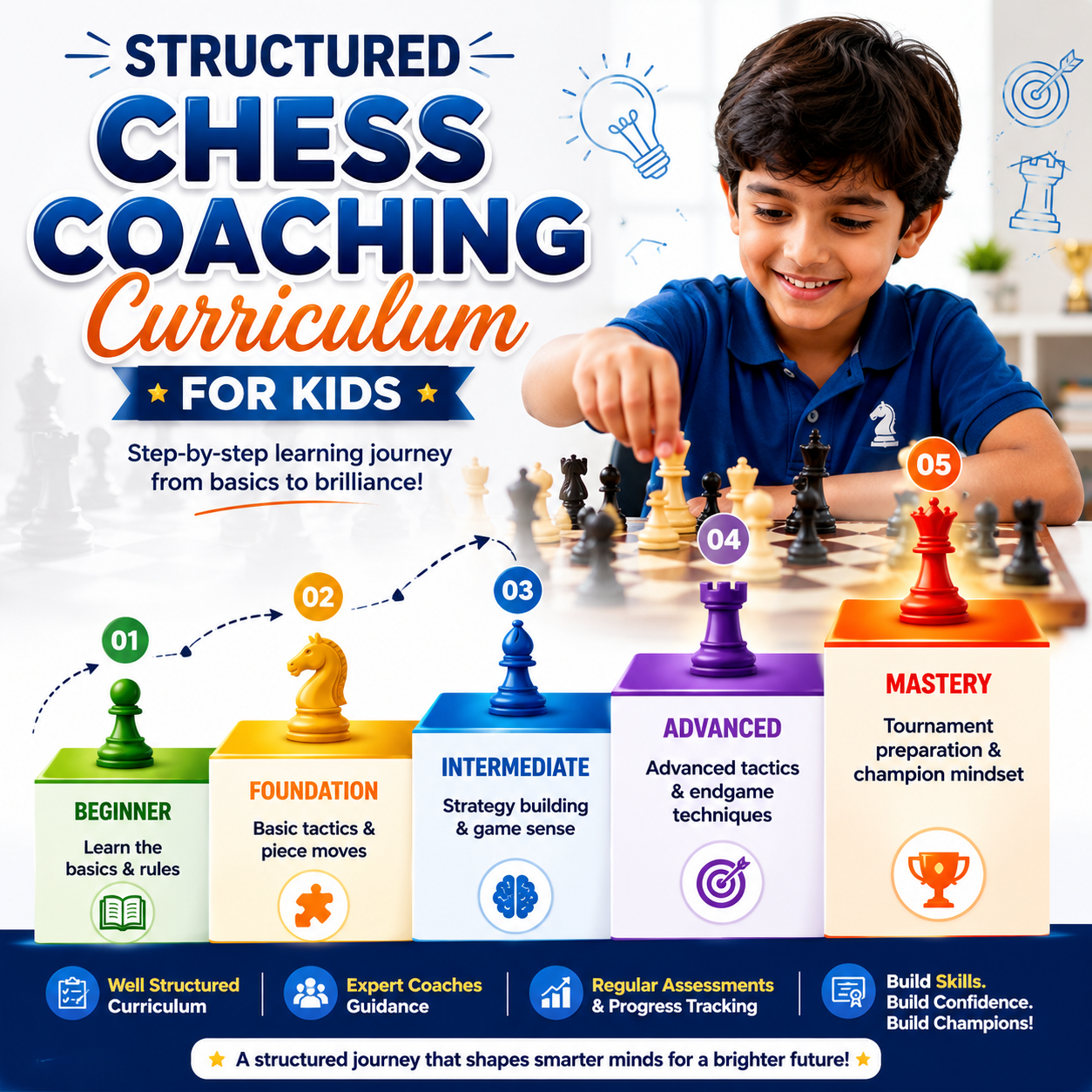
Avoid academies that "wing it" every session. There should be a clear, step-by-step syllabus. A beginner should not be learning advanced Sicilian Defense theories. The curriculum should seamlessly move from basic piece movement to simple tactics, and eventually to positional understanding.
Small Batch Sizes
In a group of 20 children, your child will be lost in the crowd. Small batch sizes (typically 1:4 or 1:6) ensure that the coach can monitor each child's board, correct individual mistakes in real-time, and provide the personalized attention required for mastery.
Regular Practice Sessions
Learning theory is only half the battle. The best academies balance theoretical lessons with supervised practice games. The coach must actively review these practice games with the students to point out where they went wrong.
Tournament Preparation
Even if your child isn't aiming for a World Championship, playing in local tournaments builds incredible focus. A quality academy will teach tournament etiquette, how to use a chess clock, and how to record moves on a scoresheet.
Progress Tracking and Feedback
Parents should never be in the dark. You should receive regular updates on your child's progress. Are they struggling with the endgame? Are they improving their focus? Consistent parent-coach communication is essential.
Safe and Positive Learning Environment
Chess can be intensely competitive. The best academies foster a culture of respect. Children are taught to shake hands before and after a game, respect their opponents, and view mistakes as learning opportunities rather than failures.
Online Chess Academy vs Offline Coaching
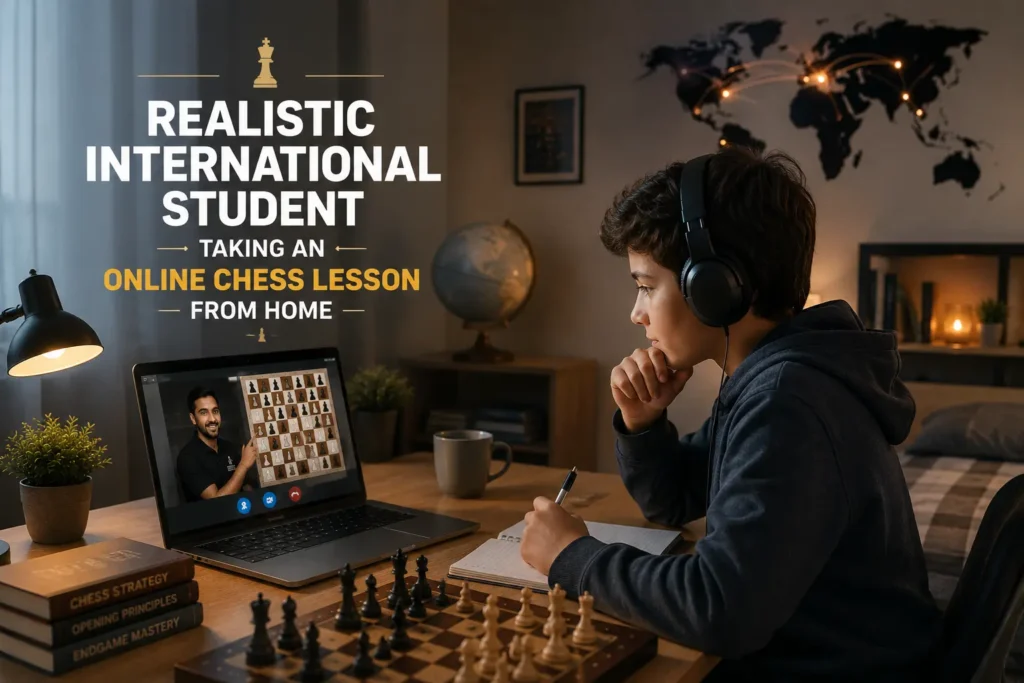
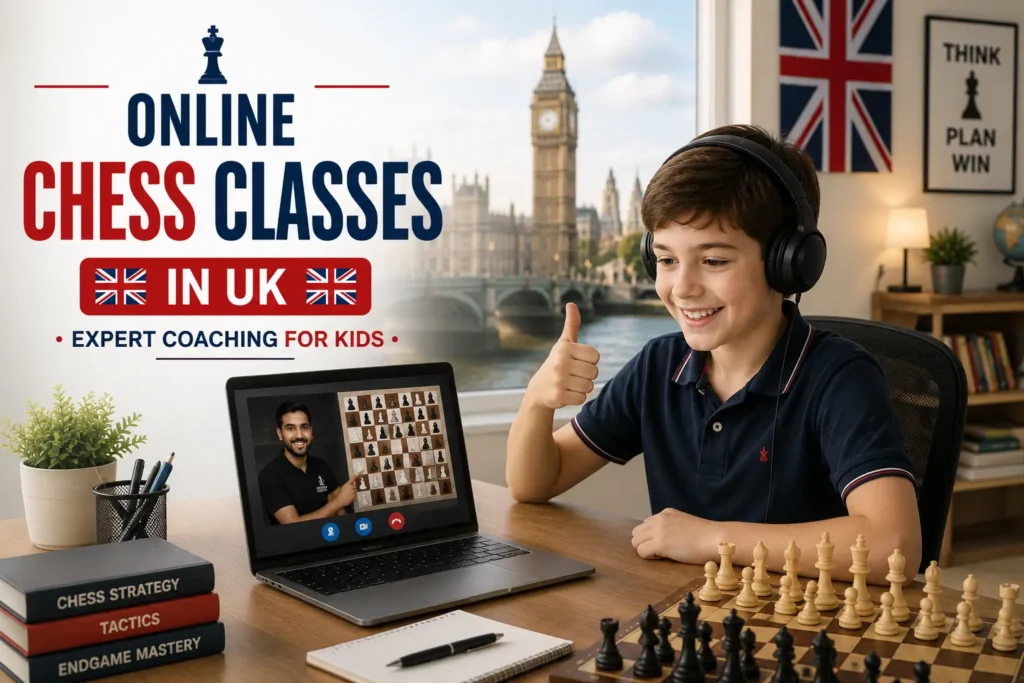
One of the biggest dilemmas parents face today is deciding between physical classes and an online chess academy. Both formats are highly effective, but they serve different family needs. Here is a clear breakdown to help you decide:
| Feature | Online Chess Academy | Offline Chess Coaching |
|---|---|---|
| Flexibility | Very High. Easy to reschedule and fit into busy family routines. | Fixed timings. Requires adherence to academy schedules. |
| Cost | Generally lower (saves on travel time and fuel). | Can be higher due to facility maintenance and overhead. |
| Coach Availability | Access to elite global coaches regardless of your location. | Limited to the coaches available in your local driving radius. |
| Learning Experience | Tech-driven, visual, allows for instant engine analysis and digital puzzles. | Tactile, hands-on, traditional physical board feel. |
| Convenience | Learn from the comfort of your living room. Zero commute. | Requires parents to drive, find parking, and wait. |
| Student Interaction | Digital interaction via chat and virtual practice rooms. | Face-to-face social interaction and peer bonding. |
| Tournament Exposure | Excellent for the rising trend of online e-sports chess. | Essential for physical tournament etiquette (clocks/scoresheets). |
| Parent Involvement | High. Parents can quietly observe classes from the next room. | Moderate. Parents usually wait outside the classroom. |
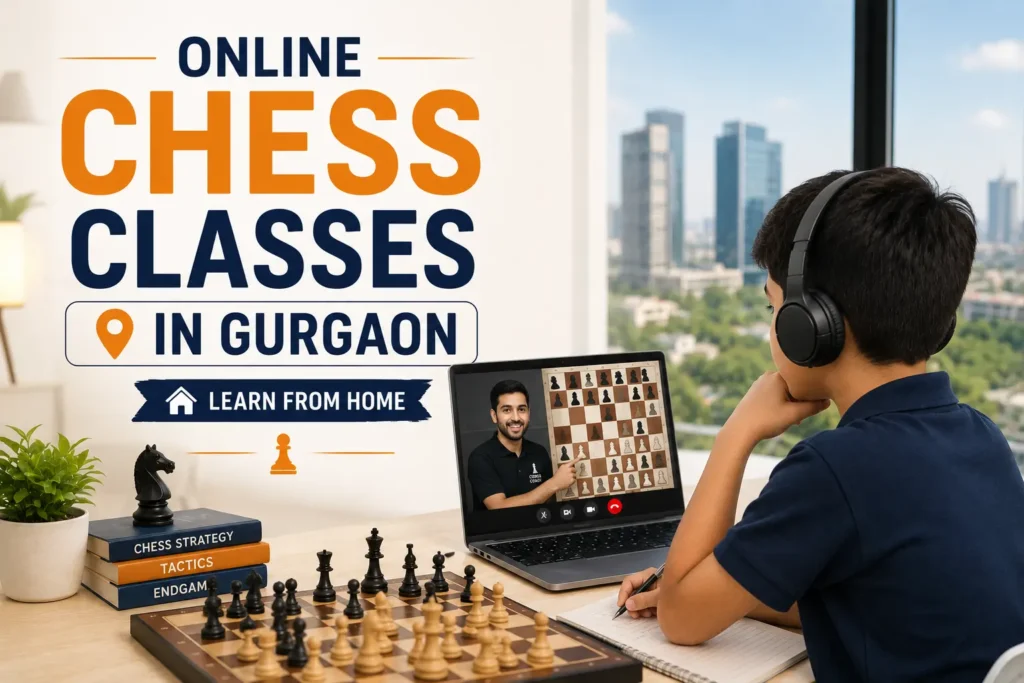
When to choose which: If you live in a bustling city with heavy traffic, or your child thrives with interactive digital tools, an online academy is brilliant. For parents looking specifically for online excellence in metro areas, reading about why Chess Classes Online in Delhi Are the Future or why Chess Coaching Online in Mumbai Is Gaining Massive Popularity can provide great insights. If your primary goal is reducing screen time and increasing physical social interaction, local offline coaching is the way to go.

Questions Parents Should Ask Before Enrolling
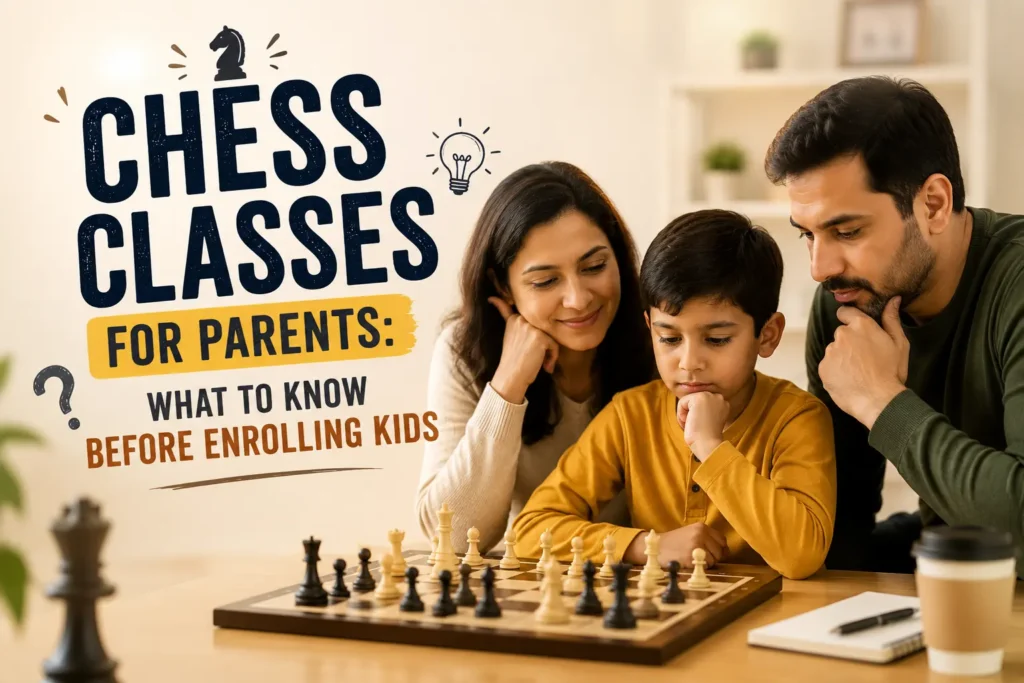
Before you commit to a program, treat your initial inquiry like an interview. Here is a checklist of questions you must ask:
- Are the coaches experienced in teaching children, or mostly adults?
- Is the class mostly lecture-based, or is it interactive?
- Do you follow a structured, step-by-step curriculum?
- Does the academy organize internal tournaments for students?
- How is my child's progress tracked and reported to me?
- Do you offer a free demo class to see if my child connects with the coach?
Common Mistakes Parents Make
In the rush to get their kids started, parents often fall into a few predictable traps. Here is how to avoid them:
- Choosing based only on fees: The cheapest option usually means overcrowded batches and inexperienced tutors. Value quality over cost.
- Ignoring coach experience: Just because someone plays well doesn't mean they can teach. Pedagogy is a separate skill.
- Focusing only on ratings: Pushing a child to increase their rating too quickly causes burnout. Focus on their love for the game first.
- Not checking the curriculum: Without a syllabus, your child will stop improving after a few months.
- Expecting instant results: Chess is a marathon. Cognitive benefits like improved focus take a few months to manifest. Be patient.
How Professional Chess Coaching Helps Children Grow
When you invest in proper Chess Coaching for Kids, the return on investment goes far beyond the chessboard. The skills learned are deeply ingrained into the child's developing brain.
They learn strategic thinking—the ability to look three or four steps ahead in life. Their concentration and memory skyrocket as they learn to remember complex opening variations. They develop profound problem-solving skills, realizing that every mistake has a logical fix. Most importantly, it builds incredible confidence. There is nothing quite like the self-esteem boost a child gets when they successfully out-think an opponent purely through their own mental effort.
Why Choose Brainiac Chess Academy?
If you are looking for an institution that embodies all these qualities, Brainiac Chess Academy is built exactly for this purpose. We understand that finding the right Chess Classes for Children can be daunting, which is why we have designed a curriculum focused entirely on holistic child development.
Based in Vashi, Navi Mumbai, we offer both a premier physical learning center and a world-class Online Chess Academy. Whether you are looking for Chess Coaching Online Bangalore or local classes in Maharashtra, we guarantee:
- Experienced Coaches: Our educators are vetted for their teaching skills and patience.
- Personalized Guidance: Every child is unique, and our coaching adapts to their learning speed.
- Small Batch Sizes: We cap our classes to ensure your child is never ignored.
- Tournament Preparation: We safely guide ambitious students into the competitive world.
- Flexible Learning Options: Mix and match online and offline classes to suit your busy schedule.
Book Your Free Demo Class
Looking for a trusted place where your child can begin their chess journey with confidence?
Brainiac Chess Academy offers structured online and offline coaching with experienced educators, personalized learning, and complete tournament preparation.
📍 Location: Sector 7, Janata Market, Vashi, Navi Mumbai, Maharashtra
📞 Call or WhatsApp: +91 9324829329
👉 Book Your Free Demo Right NowFrequently Asked Questions
How do I choose the best chess academy?
What age is ideal for chess coaching?
Are online chess classes effective?
Should beginners join group classes?
How many classes per week are recommended?
Do chess academies conduct tournaments?
How long does it take to improve?
Is a demo class important?
Conclusion
Finding the right mentor for your child is a journey, but armed with the right questions, it doesn't have to be overwhelming. When evaluating the best chess academy for kids, always prioritize the quality of the coaching, the structure of the curriculum, and the emotional environment over simple convenience or cost.
Chess is a beautiful game that will teach your child patience, resilience, and strategic thinking—skills that will benefit them for a lifetime. The right academy is merely the catalyst that unlocks this potential. If you are ready to give your child a mental edge, we invite you to experience our teaching philosophy firsthand. Head over to the Brainiac Chess Academy homepage and book your free demo class today!