Rapid Chess vs Classical Chess: Which One Should You Play?
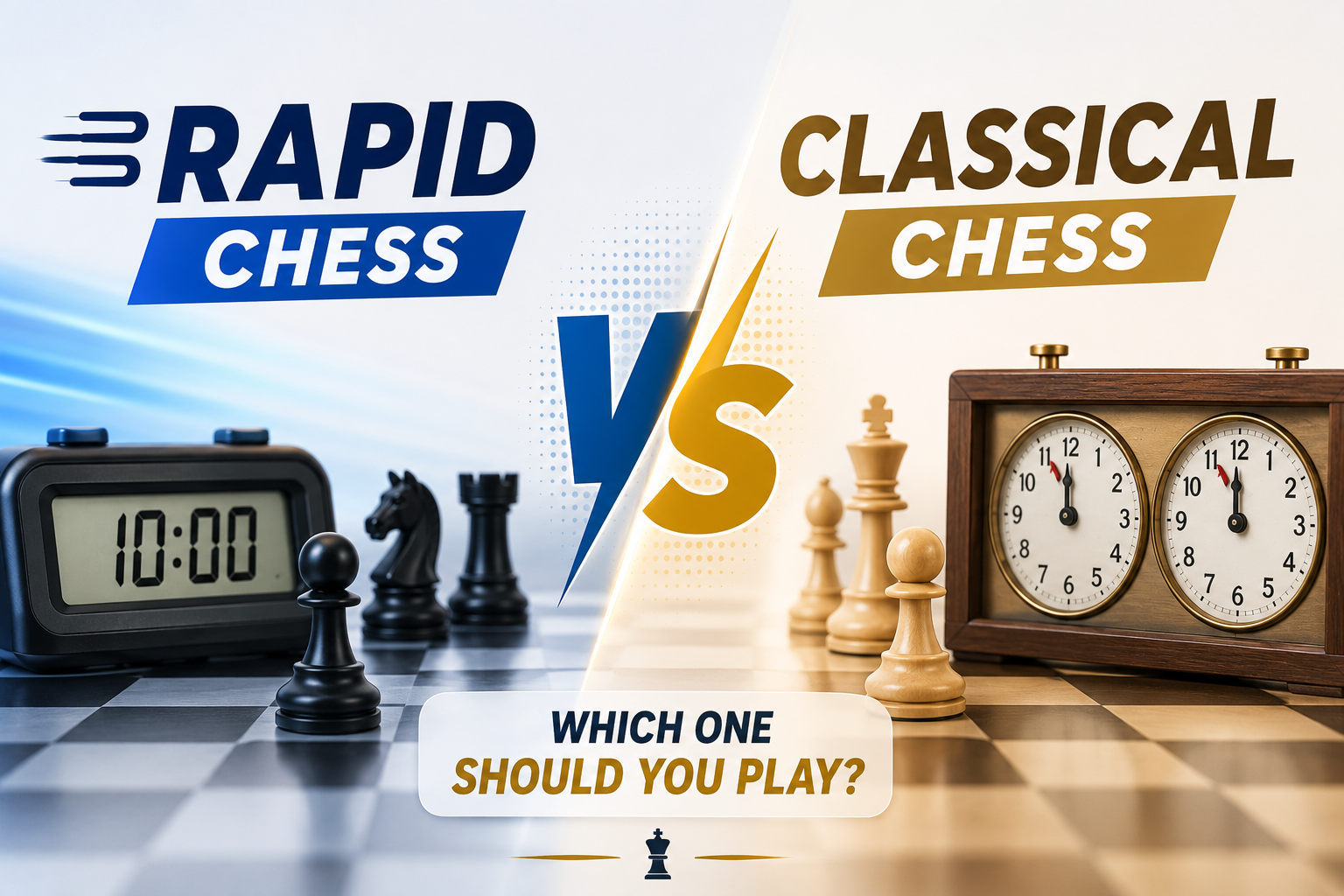
As a chess coach, one of the most frequent questions I receive from eager students and ambitious tournament players is about time. How fast should I be playing? The ongoing debate of Rapid Chess vs Classical Chess is a fundamental topic that directly impacts how quickly a player improves their rating, sharpens their tactics, and deepens their overall understanding of the game.
Your choice of time control dictates the entire rhythm of your learning process. If you play exclusively fast games, you might develop incredible intuition but struggle with deep strategic planning. If you only play long, arduous games, you might lack the quick tactical reflexes required in time scrambles. Therefore, mastering the balance of Rapid Chess vs Classical Chess is essential for any well-rounded chess education.
In this comprehensive guide, we will break down the mechanics of different Chess Time Controls, explore the unique advantages and disadvantages of each format, and provide expert coaching advice on which format you should dedicate your time to. By the end of this article, you will have a clear roadmap to tailor your training regimen to your specific chess goals.
Understanding Chess Time Controls
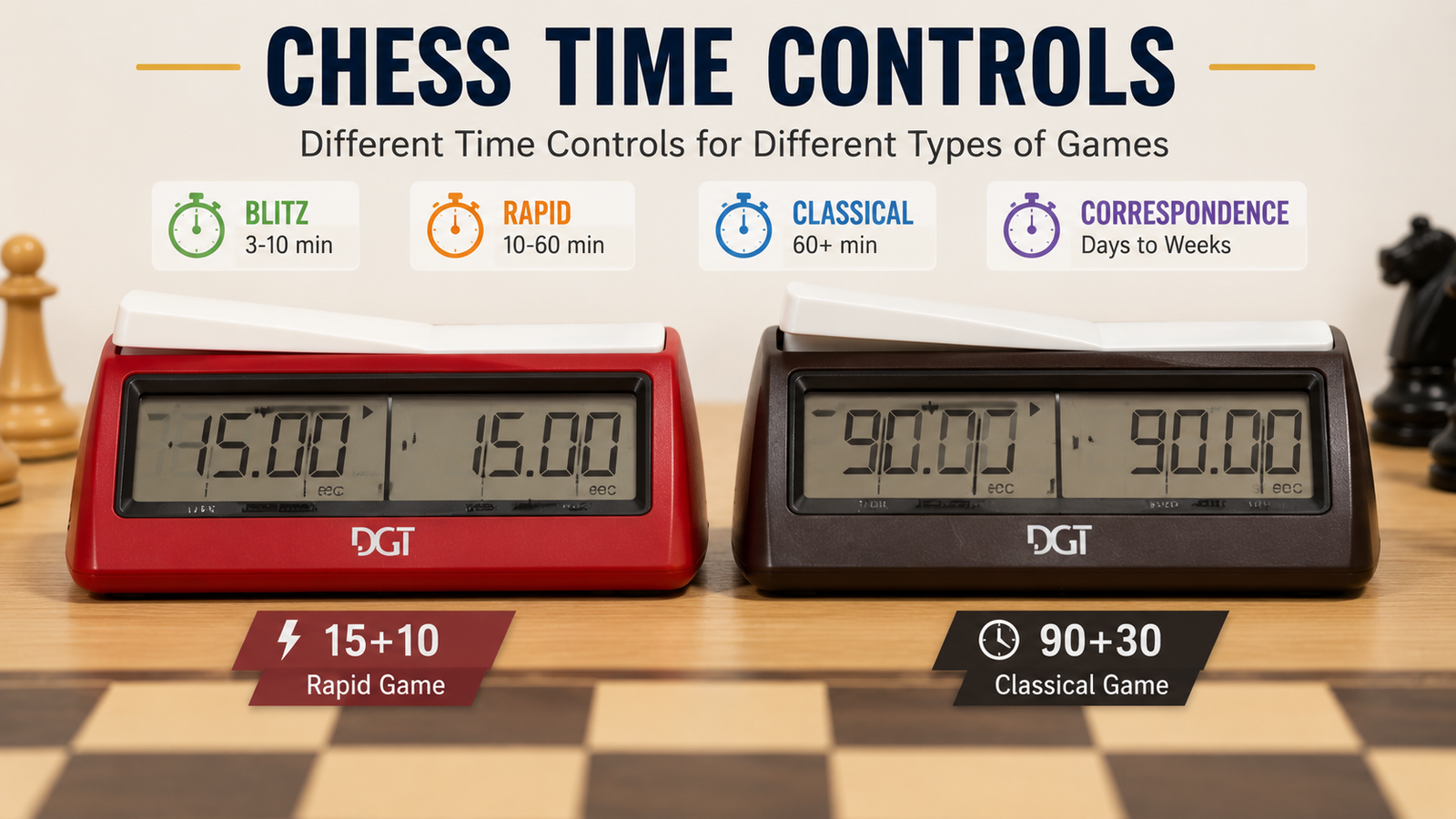
Before diving deep into the comparison of Rapid Chess vs Classical Chess, it is crucial to understand the hierarchy of Chess Time Controls. The World Chess Federation (FIDE) and major online platforms categorize games strictly by the amount of time allocated to each player.
- Bullet Chess: Extremely fast. Usually 1 or 2 minutes per player for the entire game. It relies entirely on instinct, mouse speed, and trickery. It has almost zero educational value for beginners.
- Blitz Chess: Fast-paced. Typically 3 to 5 minutes per player. Good for practicing openings quickly, but leaves little room for deep calculation.
- Rapid Chess: A balanced format. Time controls generally range from 10 minutes to 60 minutes per player. Popular online formats are 15|10 (15 minutes on the clock with a 10-second increment per move).
- Classical Chess: The traditional tournament standard. Games usually give each player 90 minutes or more, often extending past 4 or 5 hours total. This format requires deep focus, patience, and high-level strategy.
When we evaluate Rapid Chess vs Classical Chess, we are essentially comparing the two most educational formats in the game. One teaches you how to think practically under pressure, while the other teaches you how to think perfectly without limits.
Rapid Chess vs Classical Chess: Key Differences
To truly understand Rapid Chess vs Classical Chess, we need to analyze how the constraints of the clock alter the nature of the game. Below is a detailed comparison table highlighting the fundamental differences.
| Feature | Rapid Chess | Classical Chess |
|---|---|---|
| Time Control | 10 to 60 minutes per player. | 90+ minutes per player. |
| Thinking Time | Requires quick, practical decisions. Less time to calculate deep lines. | Allows for profound calculation, double-checking lines, and deep strategic planning. |
| Strategy vs Tactics | Heavily relies on quick tactics and opening traps. | Relies heavily on long-term positional maneuvering and precise endgame technique. |
| Accuracy | Blunders are common due to time pressure. Perfect accuracy is rare. | High accuracy is expected. Mistakes are heavily punished because the opponent has time to find the refutation. |
| Learning Value | Excellent for testing new openings and building quick pattern recognition. | The absolute best format for deep understanding, calculation stamina, and fixing core weaknesses. |
| Tournament Usage | Used in weekend events, online arenas, and tie-breaks for World Championships. | The gold standard for FIDE-rated tournaments, Grandmaster norms, and the World Chess Championship. |
Advantages of Rapid Chess
When analyzing Rapid Chess vs Classical Chess, many players naturally gravitate toward Rapid. It hits the "sweet spot" between chaotic Blitz and exhausting Classical games. Here are the core advantages:
1. Faster Decision-Making: Rapid forces you to trust your intuition. You cannot spend 20 minutes calculating a single move. This builds your ability to evaluate positions quickly and make practical choices.
2. More Games in Less Time: In the time it takes to play one Classical game, you can play four or five Rapid games. This means you encounter a wider variety of chess openings and middle-game structures in a single training session, accelerating your pattern recognition.
3. Excellent for Opening Practice: One of the best Rapid Chess Tips I give my students is to use 15+10 games specifically to test a newly learned opening. You get enough time to recall your preparation without wasting a 4-hour tournament game on an opening you haven't fully mastered.
Coach's Insight
"Rapid chess teaches you how to be practical. Sometimes the 'best' computer move takes 30 minutes to find. Rapid teaches you to find a 'good enough' move in 30 seconds to keep the pressure on your opponent."
Advantages of Classical Chess
In the debate of Rapid Chess vs Classical Chess, grandmasters and elite coaches universally agree that Classical chess is the ultimate crucible for improvement. Here is why it remains the most prestigious format:
1. Deep Calculation: Classical Chess allows you to calculate lines 5, 6, or 7 moves deep. It exercises your "calculation muscle," teaching your brain to hold complex variations without moving the pieces on the board.
2. High-Quality Games: Because both players have ample time, blunders are minimized. You are forced to win through superior strategy and positional understanding, rather than relying on cheap tricks or your opponent's time trouble.
3. Psychological Endurance: A 4-hour chess game is mentally grueling. Playing Classical Chess builds your stamina, teaching you how to maintain intense concentration and emotional control over long periods—skills that translate directly into academic and professional success.
Rapid Chess vs Classical Chess for Beginners
So, looking at Rapid Chess vs Classical Chess, which one should a beginner start with? The answer might surprise you.
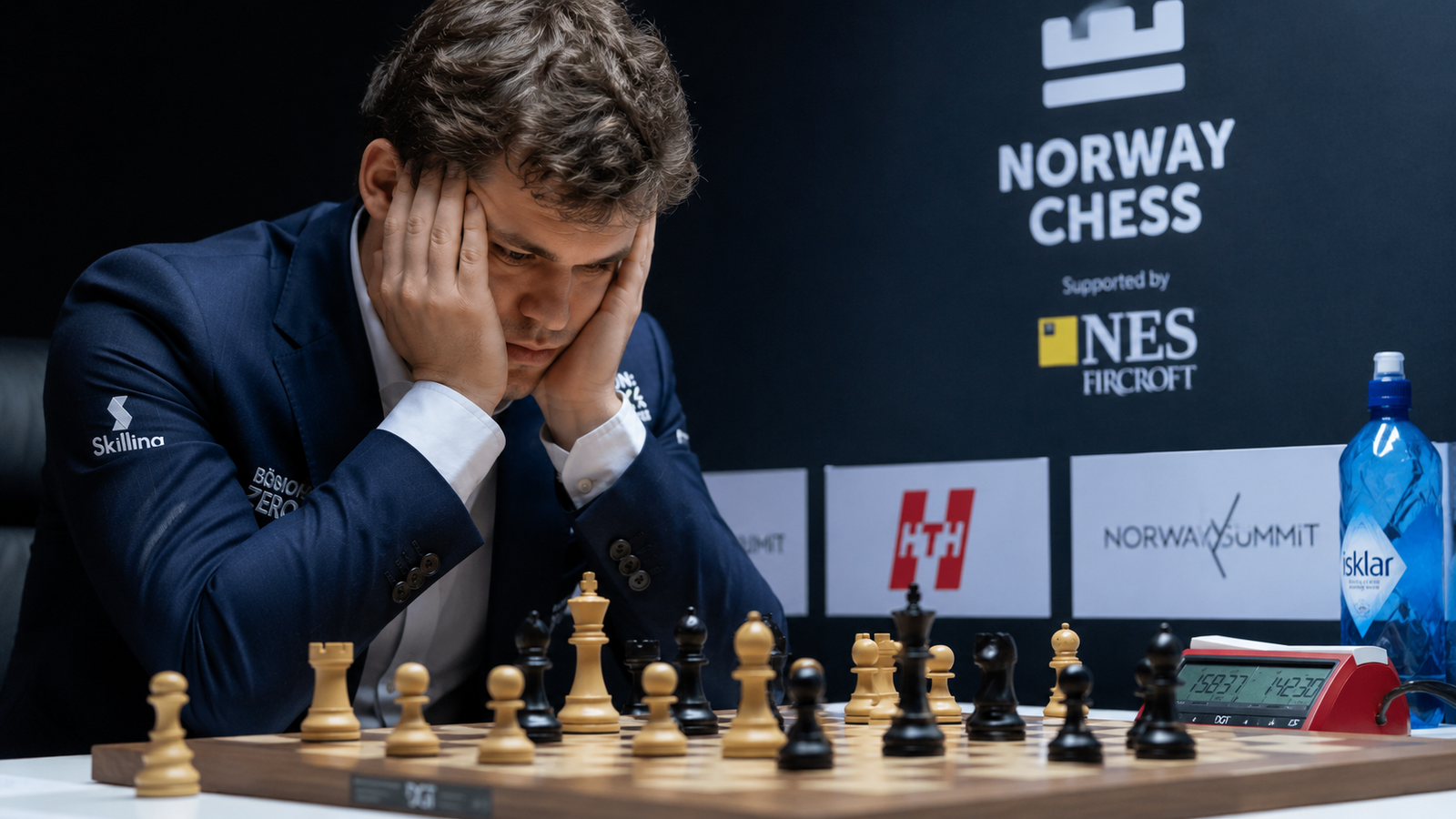
Beginners should absolutely prioritize longer time controls. When you are just learning the game, your pattern recognition is practically zero. Every single position is a brand-new puzzle. If you play fast time controls, you will simply panic, hang your queen, and learn nothing.
At Brainiac Chess Academy, we always start our students with slow, untimed games, eventually transitioning them into Classical Chess or very slow Rapid (like 30+0 or 15+10). They need time to ask themselves the fundamental checklist: Is my King safe? Are there any undefended pieces? What is my opponent threatening?
A common mistake is beginners watching grandmasters play Bullet online and trying to mimic them. Fast chess solidifies bad habits. Playing slower formats ensures you are actually calculating, rather than guessing. For structured guidance on this, consider enrolling in our Chess Training Course – Master the Game with Brainiac Chess.
When Should You Play Rapid Chess?
Understanding when to deploy each format is key to mastering Rapid Chess vs Classical Chess. Rapid chess is perfect for:
- Daily Online Practice: When you have 45 minutes free after work or school, logging on for a 15|10 game is the perfect way to keep your mind sharp.
- Testing Openings: As mentioned in our Rapid Chess Tips, it is the safest laboratory for your new repertoire.
- Casual Competition: If you are playing against friends at a local cafe, a 15-minute game keeps things fun, competitive, and moving at a pleasant pace.
When Should You Play Classical Chess?
On the other side of the Rapid Chess vs Classical Chess spectrum, Classical should be reserved for serious improvement:
- Tournament Preparation: If you are planning to play in an official FIDE-rated weekend tournament, you must practice by playing at least one or two full-length 90-minute training games to adjust your internal clock.
- Deep Skill Development: When you are stuck at a rating plateau, the only way to break through is to play slower games where you are forced to confront your strategic weaknesses.
- Serious Analytics: You should only deeply analyze games where you actually had time to think. Analyzing a blitz game where you blundered due to a 2-second time scramble offers little educational value.
Common Mistakes Players Make With Chess Time Controls
In my years of coaching, I have seen players stunt their own growth by mismanaging their relationship with Chess Time Controls. When balancing Rapid Chess vs Classical Chess, avoid these pitfalls:
- The Blitz Addiction: Playing 50 blitz games a day and calling it "training." This is just entertainment. It ruins your ability to focus deeply.
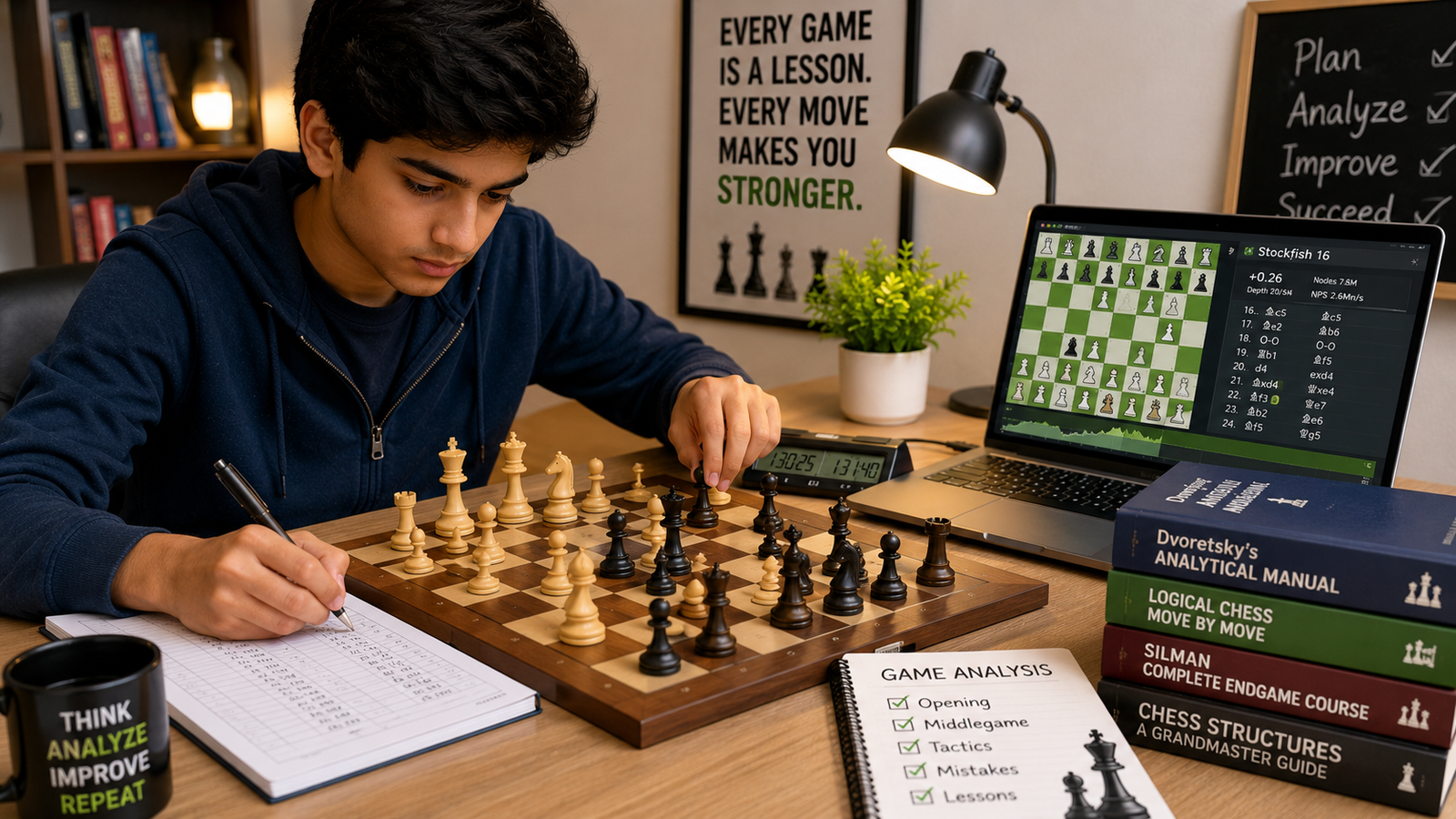
- Ignoring Game Analysis: Whether you play Rapid or Classical, if you do not review your game with an engine or a coach afterward, you will repeat the same mistakes tomorrow.
- Playing Too Fast in Classical: Some players sit down for a 90-minute game, play their moves instantly as if it's Blitz, and lose with 85 minutes still left on their clock. You must learn to sit on your hands and use your time!
- Switching Formats Too Often: Jumping from Bullet to Classical to Rapid in the same evening disrupts your internal rhythm. Stick to one format per session.
To avoid these errors, we highly recommend reading our guide on 10 Common Chess Mistakes Beginners Should Avoid.
Coach's Recommended Weekly Training Plan
To successfully balance Rapid Chess vs Classical Chess, you need a structured regimen. Here is a sample weekly plan I give to intermediate club players looking to boost their rating.
| Day | Training Focus | Time Control / Activity |
|---|---|---|
| Monday | Deep Calculation | Play one Classical Chess game (at least 45+45). |
| Tuesday | Analysis | Deeply analyze Monday's game. Identify critical blunders. |
| Wednesday | Tactics & Openings | Play two 15+10 Rapid games. Focus entirely on opening principles. |
| Thursday | Master Games | Study an annotated game by a Grandmaster (No playing today). |
| Friday | Endgame Practice | Play two 15+10 Rapid games. Focus on converting winning endgames. |
| Saturday | Tournament Sim | Play one Classical Chess game under strict tournament conditions. |
| Sunday | Rest & Casual | Review Saturday's game. Play a few casual blitz games for fun. Rest. |
Why Choose Brainiac Chess Academy?
Navigating the complexities of Rapid Chess vs Classical Chess on your own can be overwhelming. That is where expert guidance makes all the difference. At Brainiac Chess Academy, we take the guesswork out of your chess journey.
We pride ourselves on offering a Beginner-Friendly Curriculum that seamlessly transitions students from foundational rules to advanced tournament preparation. Our Expert Coaches provide Personalized Feedback on your games, identifying exactly where your thought process breaks down—whether it's due to time pressure in Rapid or lack of planning in Classical.
We offer highly flexible schedules. You can join our Online Chess Academy: Learn Chess Online with Expert Coaches from anywhere in the world, or if you are local, you can visit our premier center located right in Sector 7, Janata Market, Vashi, Navi Mumbai, Maharashtra for hands-on, over-the-board instruction.
If you want to fast-track your rating, Learn Chess Online with Expert Guidance at Brainiac Chess today.
Book Your Free Demo Class
Whether you prefer the fast-paced thrill of Rapid or the strategic depth of Classical Chess, expert coaching is the fastest way to improve. Brainiac Chess Academy offers structured online and offline training tailored specifically to your learning goals.
📞 Call / WhatsApp: +91 9324829329
👉 Book Your Free Demo Right Now
Frequently Asked Questions
What is Rapid Chess?
What is Classical Chess?
Which format is better for beginners?
Which improves rating faster?
How long is a classical game?
Should I play rapid every day?
What are official FIDE time controls?
Can I improve by playing both formats?
Conclusion
The debate of Rapid Chess vs Classical Chess does not have a single winner; rather, they are two sides of the same educational coin. Rapid chess hones your reflexes, practical decision-making, and opening repertoire, making it incredibly fun and efficient for daily practice. Meanwhile, Classical Chess builds your calculation depth, strategic patience, and psychological endurance, serving as the ultimate test of your true chess mastery.
To become a well-rounded, formidable player, you must embrace both formats. Structure your training to include long, thoughtful games on the weekends and sharp, focused rapid sessions during the week. By understanding the unique benefits of various Chess Time Controls, you take control of your own learning trajectory.
If you are ready to stop blundering and start winning, let our expert coaches guide you. Stop by our center in Navi Mumbai or join us online to take your game to the master level!