Recent Posts
- Online Chess Coaching for Every Skill Level: A Guide
- First Online Chess Lesson: How Parents Can Prepare
- How to Support Your Child’s Online Chess Learning
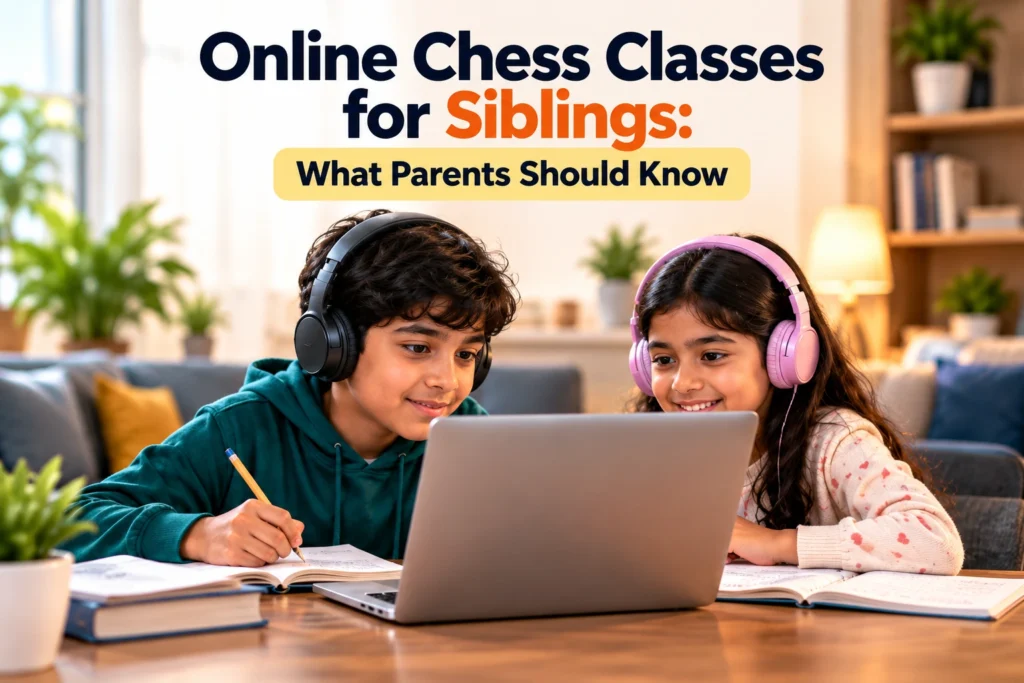
- Online Chess Classes for Siblings: What Parents Should Know
- Online Chess Classes vs Self-Learning for Kids
- Equipment Needed for Online Chess Classes

- Online Chess Classes for Homeschoolers
- Online Chess Classes for Shy Kids: A Parent’s Guide
- What Happens in an Online Chess Coaching Session?

- Online Chess Lessons Cost: A Parent’s Guide
- What Is a Hanging Piece in Chess?
- What Is a Blunder in Chess?
- What Is a Draw in Chess?
- What Is a Stalemate in Chess?
- How Does Castling Work in Chess?
- What Is Checkmate in Chess? A 30-Second Lesson
- What Is Check in Chess? A 30-Second Chess Lesson
- Online Chess Classes After School for Kids Living Abroad

- What Should Parents Ask Before Joining Online Chess Classes?
- How Children Abroad Can Learn Chess Online From Home?

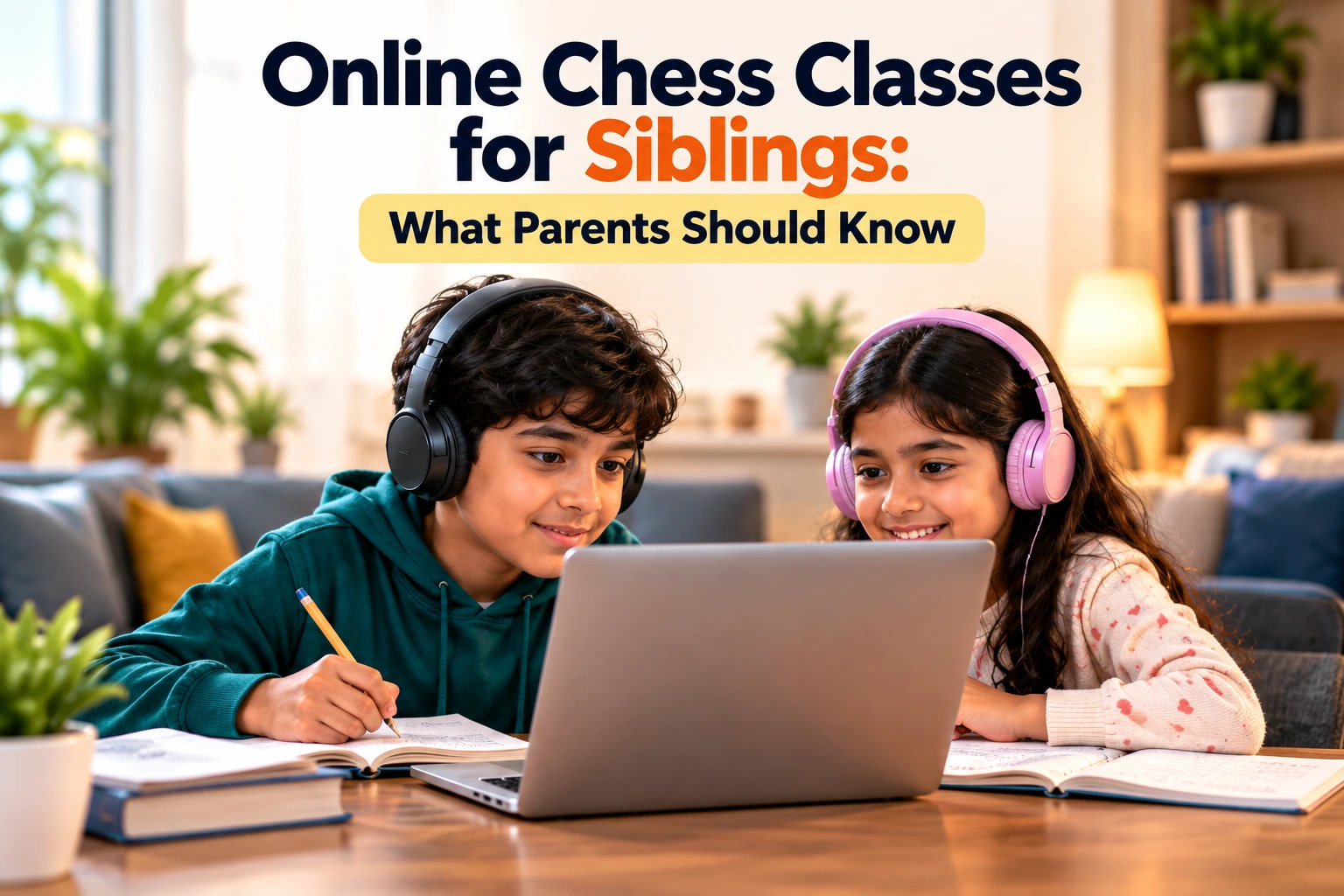
Online Chess Classes for Siblings: What Parents Should Know
When one child becomes interested in chess, it is natural for a brother or sister to want to join in. Learning together can give siblings a shared activity, create opportunities for friendly games, and make chess practice part of family life. But does that mean both children should attend the same online chess class?
The answer depends on their current chess knowledge, ages, interests, and learning needs. Some siblings can comfortably begin together, while others benefit from different learning levels or individual coaching. Choosing the right arrangement is more important than making both children follow exactly the same path.
This guide to Online Chess Classes for Siblings explains how parents can compare class formats, manage skill differences, encourage healthy competition, and help each child develop at their own pace.
Quick Answer: Can Siblings Learn Chess Together?
Yes. Siblings can learn chess together when the lesson format matches their needs. If both children are beginners with similar learning goals, a shared class may be suitable. If one child has more experience or needs advanced instruction, separate level-matched lessons combined with friendly games at home may work better.
Why Consider Online Chess Classes for Siblings?
Online chess lessons allow children to learn from home without travelling to a physical classroom. For families with more than one child interested in chess, this can make it easier to organise lessons and create a regular practice routine.
The benefits depend on how the family structures the experience. Here are four reasons parents may consider chess coaching for multiple children.
A Shared Interest
Siblings can discuss chess ideas, solve puzzles, and enjoy casual games together. A shared interest can give them another activity to enjoy beyond their usual routines.
Learning from Home
Online lessons remove the need to travel to a coaching centre. Parents can organise learning around schoolwork, family commitments, and each child's other activities.
Regular Practice Opportunities
Children who both enjoy chess can play practice games between lessons, revisit familiar positions, and share interesting moves they have learned.
Individual Development
With an appropriate learning plan, each sibling can work on personal goals, whether that means understanding the rules, spotting tactics, or reviewing complete games.
Remember that siblings do not have to learn at the same speed to enjoy the same activity. The goal is to make chess engaging and appropriately challenging for both children.
Should Both Siblings Join the Same Chess Class?
One of the biggest decisions when choosing online chess classes for families is whether both children should attend the same class or follow separate learning paths.
There is no single answer for every family. Start by considering what each child already knows and what they want to achieve.
| Family Situation | Possible Approach | What Parents Should Check |
|---|---|---|
| Both children are beginners | Consider a shared beginner class. | Can both children follow the same lesson pace? |
| One child knows more chess | Consider different levels or individual lessons. | Will each child receive suitable challenges? |
| Both children have similar skills | A shared class may be practical. | Does the format provide enough participation and feedback? |
| One child wants competitive chess | Consider more focused coaching for that child. | Can the lesson plan reflect different goals? |
| Children have different schedules | Explore separate lesson times. | Can the arrangement fit the family's routine? |
Before enrolling, ask the academy whether siblings can attend the same session, whether placement is based on skill level, and how individual questions are handled. Do not assume that every group class or coaching programme offers a sibling-specific arrangement.
How to Handle Different Chess Skill Levels Between Siblings
It is common for brothers and sisters to develop different interests and abilities. One child may already understand openings and tactical patterns, while the other is still learning how each piece moves. Even children of the same age can have different levels of chess experience.
Rather than treating this as a problem, parents can use it to create a more suitable learning environment for each child.
1. Let Each Child Start at the Right Level
A beginner needs time to understand piece movement, checks, checkmate, and basic tactics. A more experienced player may need to work on calculation, positional decisions, endgames, or analysing mistakes from previous games.
Ask the coach to assess each child's current understanding instead of placing both children in the same class simply because they are siblings. This helps avoid lessons that are too difficult for one child or too repetitive for the other.
2. Give Each Child Individual Goals
Shared chess practice does not require identical targets. One child might focus on recognising checkmate patterns, while the other works on choosing better candidate moves during a game.
Keep track of each child's progress separately. Celebrate meaningful milestones, such as understanding a new concept, noticing a tactical opportunity, or explaining why a move was a mistake.
3. Encourage Questions Without Pressure
Children should feel comfortable saying that they do not understand something. If one sibling answers every question first, the other may get fewer opportunities to think aloud.
Parents can encourage both children to explain their ideas in turn. During coaching, ask how the instructor makes sure each student participates and receives feedback.
Parent tip: Different chess levels do not mean one child is smarter or more talented than the other. Experience, interest, practice habits, and the amount of time spent learning can all differ. Focus on individual progress rather than comparing the children.
Shared Chess Coaching vs Separate Lessons
When exploring chess lessons for brothers and sisters, parents may find options such as group classes, two-student coaching, or individual lessons. Each format offers different advantages, so compare the actual teaching arrangement rather than choosing on convenience alone.
| Lesson Format | Potential Advantages | Possible Limitations |
|---|---|---|
| Shared group class | Peer interaction and opportunities to learn with other students. | The class may follow a pace that does not suit both siblings equally. |
| Two students with one coach | Both siblings can participate in a shared session with a coach. | Individual attention must be managed carefully, especially if skill levels differ. |
| Separate level-based classes | Each child can learn with students at a similar stage. | Parents may need to coordinate different schedules. |
| Individual coaching | Lesson content and feedback can focus on one child's needs. | It offers less shared class time between siblings. |
Neither shared coaching nor individual lessons are automatically the best choice. A shared format may suit siblings with similar goals, while separate lessons may be more appropriate when their knowledge, attention needs, or ambitions are substantially different.
How to Make Chess Practice Enjoyable for Siblings
Lessons are only one part of learning chess. Short, relaxed practice sessions at home can help children revisit ideas from class without making every game feel like a test.
Try these practical ideas for chess practice for siblings:
- Play friendly games: Let the children play for enjoyment, without requiring every game to be analysed or judged.
- Solve puzzles together: Choose positions appropriate to each child's level. They can solve different puzzles and then explain their reasoning.
- Take turns explaining moves: Ask each child to explain one decision from a game. Listening to different approaches can make practice more interesting.
- Review mistakes constructively: Discuss what a move allowed the opponent to do and what alternatives were available. Avoid blaming a child for losing.
- Keep practice manageable: Short, regular sessions may fit family life better than long sessions that children find tiring.
- Respect individual preferences: If one child wants to play while the other prefers puzzles, allow both to enjoy chess in their own way.
You can also explore our guide on how to build a daily chess practice routine for ideas on making practice more consistent.
How Can Parents Prevent Unhealthy Competition?
Friendly competition can make chess exciting, but constant comparisons can take the enjoyment out of learning. If one sibling wins more games, the other may start to believe that chess is not for them. The stronger player may also feel pressure to keep winning.
Parents can help by setting a few simple expectations at home.
Praise Effort and Thinking
Recognise careful calculation, thoughtful decisions, patience, and the willingness to learn from mistakes—not only wins.
Avoid Ranking Your Children
Do not use one sibling's rating, results, or speed of learning as the standard for the other. Give both children room to progress.
Keep Games Respectful
Encourage children to congratulate one another, accept results calmly, and discuss interesting positions without teasing.
Celebrate Personal Milestones
One child's first checkmate and another child's improved endgame technique can both be meaningful achievements.
If the children no longer enjoy playing against each other, do not force it. They can practise separately, play with other opponents, or return to shared games when both are comfortable.
What Should Parents Look for in Kids Chess Coaching Online?
When choosing kids chess coaching online for more than one child, look beyond the convenience of having both children learn from home. The quality of instruction and the fit between the programme and each learner matter most.
Use this checklist before making a decision:
- Skill-level assessment: Ask how the coach determines each child's current level and recommends a suitable starting point.
- Clear lesson structure: Look for a balance of explanation, solving positions, playing, and reviewing moves.
- Individual feedback: Ask how the coach identifies each child's mistakes and explains how to improve.
- Age-appropriate teaching: The explanations, activities, and expectations should suit the children's understanding and attention.
- Participation for both children: If siblings share a session, ask how the coach gives each child time to think, answer, and practise.
- Progress communication: Find out whether parents can receive feedback about topics covered, areas to practise, and next learning goals.
- Practical scheduling: Confirm lesson times, joining requirements, rescheduling rules, and any sibling-specific arrangements before enrolling.
It is also useful to ask how the academy handles a situation in which one sibling advances more quickly than the other. A suitable learning arrangement should be open to reassessment as the children's needs change.
For more guidance, read our article on how to choose the best chess academy for your child.
A Simple Weekly Chess Routine for Siblings
A balanced routine can combine structured instruction with independent practice and casual games. The following is an illustrative example, not a required schedule. Adjust it to your children's ages, lesson plans, school commitments, and interests.
| Day | Suggested Activity | Purpose |
|---|---|---|
| Monday | Review a concept from a lesson. | Revisit important ideas. |
| Tuesday | Solve puzzles suited to each child's level. | Practise calculation and pattern recognition. |
| Wednesday | Attend scheduled coaching, if applicable. | Learn new concepts and receive feedback. |
| Thursday | Play a casual game or review a position. | Apply learning in practice. |
| Friday | Practise individual learning goals. | Address each child's current needs. |
| Weekend | Play a family game or take a break. | Keep chess enjoyable and sustainable. |
The most important part of the routine is not following every day perfectly. It is giving each child an appropriate opportunity to learn while keeping the activity manageable and enjoyable.
Common Mistakes to Avoid When Enrolling Siblings
Parents usually want to make learning easier by organising one activity for both children. That can be practical, but a few common mistakes are worth avoiding.
- Choosing the same level without checking: Siblings may have different levels even if they are close in age.
- Assuming one class must suit both: Convenience matters, but it should not replace suitable teaching and feedback.
- Expecting identical progress: Children have different interests, practice habits, and learning needs.
- Making every game a competition: Allow time for puzzles, cooperative activities, and games played just for fun.
- Overloading the family schedule: A routine that fits comfortably around school and rest is easier to maintain.
- Ignoring a change in interest: Revisit the plan if one child becomes bored, overwhelmed, or interested in a different style of learning.
Frequently Asked Questions About Online Chess Classes for Siblings
1. Can two siblings attend the same online chess class?
Yes, if the class format and teaching level suit both children. Ask the academy whether siblings can share a session and how the coach handles different levels, participation, and individual feedback.
2. What if one sibling is better at chess than the other?
Let each child follow a suitable learning path. The more experienced child may need advanced positions, while the beginner needs to strengthen the basics. They can still enjoy casual games together outside their lessons.
3. Are online chess classes for siblings better than separate classes?
Neither option is automatically better. Shared classes can suit children with similar skills and goals, while separate classes can provide more appropriate instruction when their learning needs differ significantly.
4. Can siblings learn chess online if they are different ages?
Yes. Age alone does not determine chess ability. Consider each child's existing knowledge, ability to follow the lesson, interests, and preferred pace when choosing a class.
5. How can siblings practise chess together at home?
They can play friendly games, solve suitable puzzles, explain moves, and review interesting positions. Keep the activities constructive and allow each child to practise independently when needed.
6. Should parents compare siblings' chess ratings?
Ratings can describe performance in a particular competitive context, but they should not be used to measure one child's overall ability against a sibling. Focus on individual learning goals, decision-making, and progress.
7. What should parents ask before enrolling two children?
Ask about level placement, lesson formats, individual feedback, class participation, scheduling, progress updates, and whether the academy offers any sibling-specific options. Confirm the terms directly before enrolling.
8. Can siblings have different chess goals?
Absolutely. One child may enjoy chess as a hobby, while another may want to enter tournaments or study advanced strategies. Their learning plans can reflect those different goals.
Related Chess Learning Guides for Parents
If you are exploring online chess learning for your children, these guides can help you make a more informed decision.
Final Thoughts: Finding the Right Chess Learning Plan for Your Family
Online Chess Classes for Siblings can be a practical way to introduce brothers and sisters to a shared activity while helping each child develop individual chess skills. The key is to balance the convenience of learning together with the need for suitable challenges, personal feedback, and different learning goals.
If both children are beginners with similar needs, a shared class may be a sensible starting point. If their abilities or ambitions differ, separate level-based lessons combined with relaxed family practice may be more appropriate. Review the arrangement as they learn and let their interests guide the next step.
The aim is not to make siblings equally strong at chess. It is to help both children enjoy the game, understand their decisions, learn from mistakes, and build a learning routine that works for them.
Looking for the Right Chess Learning Option for Your Children?
Have questions about online chess learning for siblings? Contact Brainiac Chess Academy to discuss your children's current levels, learning goals, and the type of coaching arrangement that may suit your family.
Ask About Chess Classes on WhatsAppBrainiac Chess Academy · Chess learning guidance for parents and young players.