Recent Posts
- Online Chess Coaching for Every Skill Level: A Guide
- First Online Chess Lesson: How Parents Can Prepare
- How to Support Your Child’s Online Chess Learning
- Online Chess Classes for Siblings: What Parents Should Know
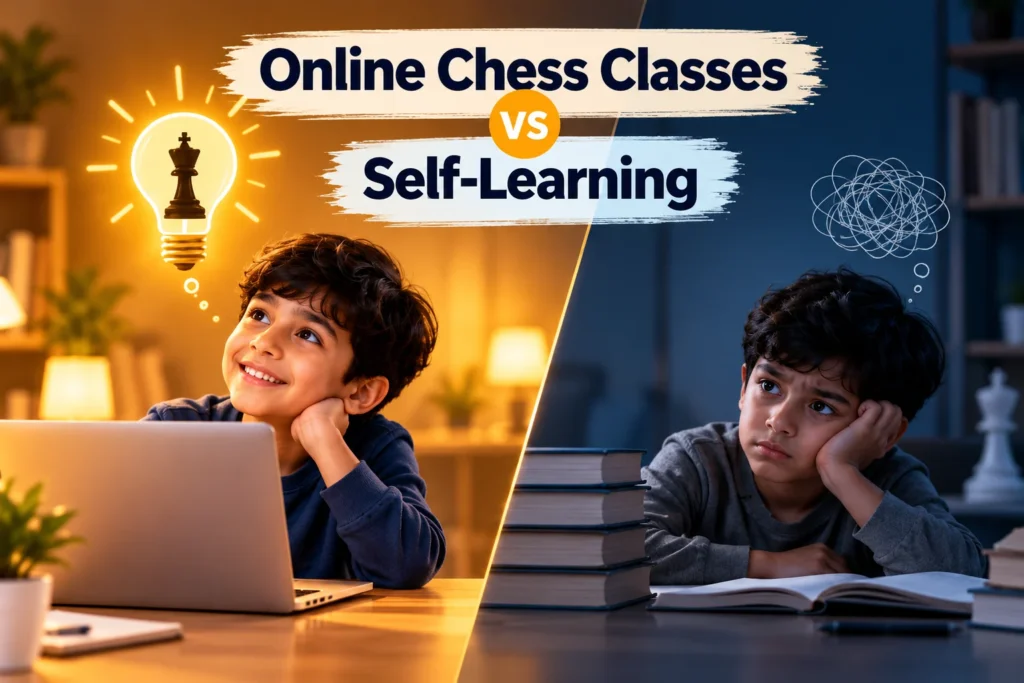
- Online Chess Classes vs Self-Learning for Kids
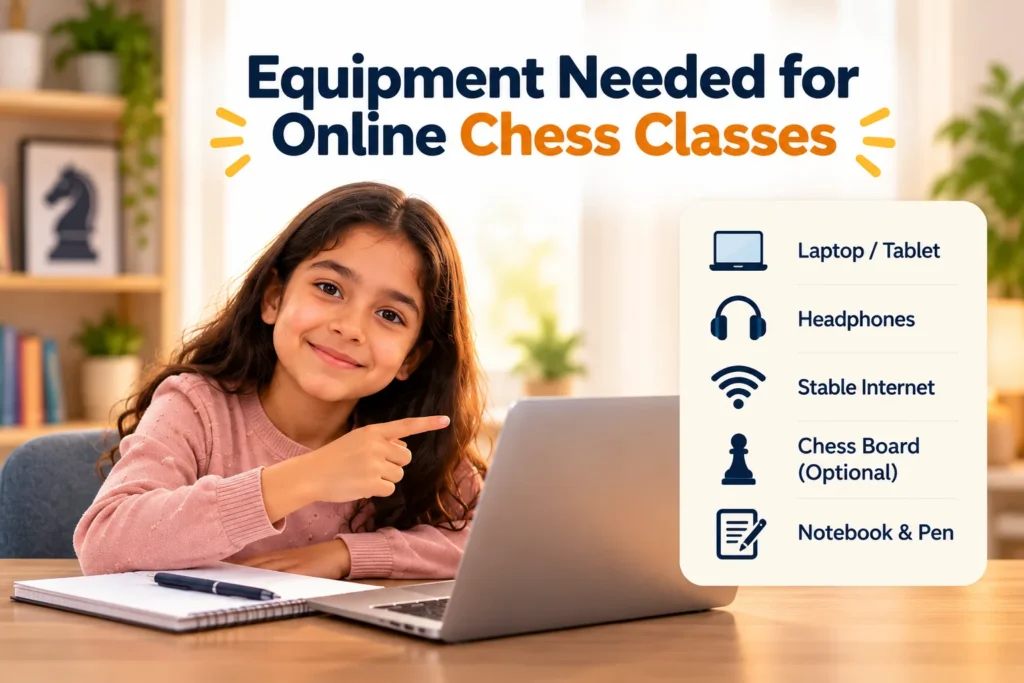
- Equipment Needed for Online Chess Classes
- Online Chess Classes for Homeschoolers
- Online Chess Classes for Shy Kids: A Parent’s Guide
- What Happens in an Online Chess Coaching Session?
- Online Chess Lessons Cost: A Parent’s Guide
- What Is a Hanging Piece in Chess?
- What Is a Blunder in Chess?
- What Is a Draw in Chess?
- What Is a Stalemate in Chess?
- How Does Castling Work in Chess?
- What Is Checkmate in Chess? A 30-Second Lesson
- What Is Check in Chess? A 30-Second Chess Lesson
- Online Chess Classes After School for Kids Living Abroad

- What Should Parents Ask Before Joining Online Chess Classes?
- How Children Abroad Can Learn Chess Online From Home?
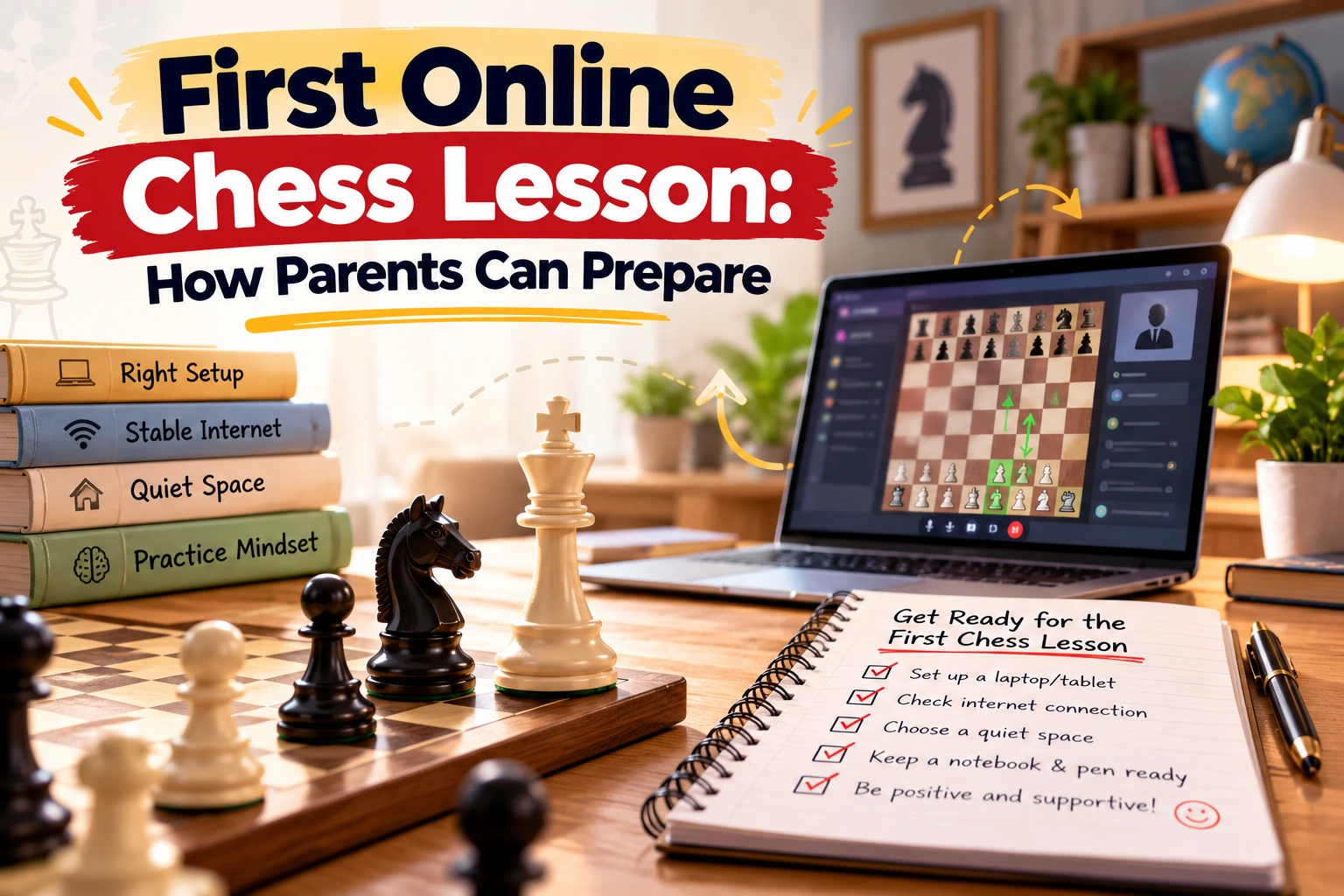
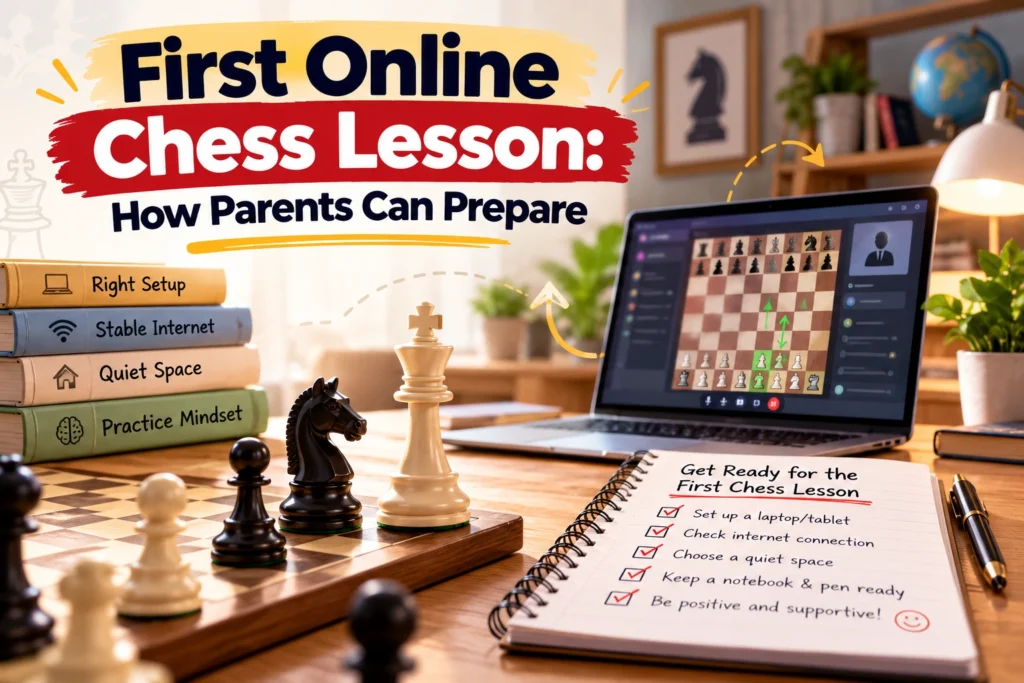
First Online Chess Lesson: How Parents Can Prepare
Your child's first online chess lesson is an opportunity to explore a new skill, meet a coach, and discover how chess learning works. Whether your child already knows how the pieces move or has never played before, a little preparation can make the experience feel more comfortable.
Parents sometimes wonder which device to use, whether their child needs a physical chessboard, what happens during the first class, and how much chess knowledge is required beforehand. The good news is that most beginners do not need advanced preparation. A working device, a suitable learning space, and a relaxed attitude are often enough to get started.
This guide explains how to prepare for a First Online Chess Lesson, what children can reasonably expect, which questions parents should ask, and how to help a beginner feel ready to learn.
Quick Answer: How Do You Prepare?
To prepare for your child's first online chess lesson, check the device, internet connection, camera or microphone requirements, and joining instructions. Choose a quiet space, keep any requested materials nearby, and explain that the lesson is a chance to learn rather than a test. Your child does not need to master chess before attending a beginner class.
What Happens During a First Online Chess Lesson?
The exact structure depends on the coach, the child's age, the teaching format, and whether the student is a complete beginner. However, an introductory lesson may include several familiar steps.
A Short Introduction
The coach may introduce themselves, learn about the child's experience, and ask what interests them about chess.
A Skill-Level Check
The coach may ask the child to identify pieces, explain basic rules, or solve a simple position to understand their starting level.
An Introduction to Chess
A beginner might explore piece movement, board orientation, basic rules, or another concept suited to their current knowledge.
A Practice Activity
Depending on the lesson, the child may answer questions, try a puzzle, move pieces on a digital board, or practise a position.
Not every introductory lesson follows the same format. Before the class, ask the academy what your child will need and whether there is anything specific to prepare.
How to Prepare Your Child for Their First Online Chess Class for Kids
Good preparation does not mean teaching the entire game in advance. It means helping your child feel comfortable enough to listen, ask questions, and participate.
Explain What the Lesson Is About
Tell your child that they will meet a chess coach and learn through explanations, questions, and practice. If they are complete beginners, reassure them that they do not need to know every rule before the lesson begins.
Avoid presenting the class as an exam or a competition. A child who feels they must give every answer correctly may become reluctant to ask for help.
Ask About Their Expectations
Some children are excited to play chess immediately, while others may feel shy about meeting someone new online. Ask what they are looking forward to and whether anything about the class makes them nervous.
Listen without making a big issue of their concerns. Knowing what to expect can help a child settle in more easily.
Introduce Only the Basics if Your Child Is Interested
If your child is curious, you can show them the chessboard and introduce a few pieces before the lesson. Keep this optional and light. There is no need to teach opening theory, advanced tactics, or complicated rules in advance.
If they already know some chess, ask them to mention that to the coach so the lesson can start at an appropriate level.
Keep the Schedule Comfortable
Avoid rushing into the lesson straight after a tiring activity if you can help it. Give your child time to settle, use the bathroom, get a drink of water, and prepare the device.
If your child is tired or unwell, consider whether the planned time is suitable and check the academy's rescheduling policy if a change is needed.
Online Chess Lesson Checklist: What Should Parents Prepare?
A simple online chess lesson checklist can prevent last-minute technical problems and help your child begin the session with fewer distractions.
Device and Internet
Learning Space and Materials
Requirements can differ between academies. Follow the specific instructions you receive rather than buying extra equipment before confirming what the lesson uses.
How to Set Up a Child-Friendly Online Chess Class
A comfortable chess class setup for children should help them see the board, hear the coach, and participate without unnecessary distractions.
Choose the Right Device
A laptop or desktop can be convenient because the child may be able to see the coach and chessboard more clearly on a larger screen. A tablet may also work well if the teaching platform supports it. Check the academy's requirements before the first lesson.
A phone may be less comfortable for lessons that involve reading small board squares or interacting with a digital chessboard, so test the setup beforehand if it is the only available option.
Test the Audio and Internet
Open the meeting link or learning platform in advance when possible. Check the sound, microphone, and any required permissions. Close unnecessary downloads or applications that could interrupt the connection.
Reduce Distractions
Turn off unrelated notifications and keep toys, games, and other distractions away from the immediate learning space. Younger children may benefit from having a parent nearby to help with technical issues, while still allowing them to interact directly with the coach.
Keep Materials Simple
Most introductory online chess lessons can use a digital board, depending on the teaching method. A physical board, notebook, or printed worksheet may be helpful in some classes, but none should be assumed necessary without checking first.
Parent tip: Test the device and meeting link before the lesson begins. This gives you time to solve basic technical problems without making your child feel that they are already behind.
Beginner Chess Lesson Preparation: Does Your Child Need to Know Chess?
No. A class designed for complete beginners should be able to start with the basics. Your child does not need to memorise all the rules, learn opening names, or solve advanced puzzles before attending.
If your child wants to explore chess before the lesson, these simple activities are enough to get familiar with the game.
- Look at a chessboard: Notice that it has 64 squares arranged in eight rows and eight columns.
- Recognise the pieces: Become familiar with the king, queen, rooks, bishops, knights, and pawns.
- Explore movement if interested: Try moving a piece with a parent, without worrying about remembering everything.
- Think of a question: Ask what the child would like to know about the game.
- Come ready to learn: Remind them that asking questions is a normal part of a lesson.
If your child already plays chess, there is no need to hide their existing knowledge or prepare a special performance. Simply tell the coach what they know and let the lesson begin at a suitable level.
Questions Parents Should Ask Before Chess Coaching Begins
A little communication with the academy can make the first class easier to organise. You do not need to ask every question below, but choose the ones that matter to your family.
| Question to Ask | Why It Matters |
|---|---|
| What should my child know before the first class? | Clarifies whether the lesson is suitable for complete beginners. |
| Which device and platform should we use? | Helps you prepare the correct setup and access details. |
| Will my child need a physical chessboard? | Prevents unnecessary purchases and last-minute preparation. |
| How will you assess my child's current level? | Helps the coach choose an appropriate starting point. |
| How can parents support practice after class? | Gives you a clear idea of useful follow-up activities. |
| What should we do if there is a connection problem? | Clarifies how to reconnect or contact the academy if needed. |
| How can we ask questions about progress? | Sets expectations for parent-coach communication. |
These questions also help you understand how the programme is organised. Confirm lesson times, fees, cancellation rules, and other arrangements directly with the academy rather than assuming they are the same everywhere.
How Parents Can Help During the First Online Chess Lesson
Your child may need some support when joining the class, especially if they are young or unfamiliar with online lessons. Once the session starts, aim to provide help without taking over.
Offer Reassurance
Remind your child that it is okay to take time to think, ask questions, and make mistakes while learning.
Let Them Answer
Give your child time to respond to the coach instead of answering every question for them.
Help With Technical Issues
Stay available for problems such as audio settings or a disconnected meeting, particularly for younger beginners.
Notice What They Enjoy
After the lesson, ask which activity they liked and whether anything felt confusing or difficult.
Follow the coach's guidance about parent involvement. Some lessons may invite parents to observe, while others may work better when the child interacts independently. For younger children, supervision should also reflect their age and online safety needs.
What If Your Child Feels Nervous Before the First Class?
Feeling unsure about a new experience is normal. Your child may worry about getting an answer wrong, speaking to an unfamiliar coach, or not knowing how to use the online board.
You can make the experience more comfortable with a few small adjustments:
- Explain the process: Tell your child what will happen when they join the meeting.
- Avoid pressure: Do not expect them to impress the coach or demonstrate perfect knowledge.
- Practise the technology: Let them see how to join the meeting or use the device before the lesson.
- Stay available: Offer reassurance if they need help, while allowing the coach to lead the class.
- Talk afterward: Ask what they enjoyed and what they would like to understand better next time.
If your child is quiet during the first session, that does not automatically mean the lesson is unsuitable. Give them time to become familiar with the format and discuss persistent concerns with the coach.
What to Do After the First Online Chess Lesson
Once the class ends, keep the follow-up simple. Your child does not need a long practice assignment immediately after an introductory session.
Ask One Open-Ended Question
Try asking, "What was the most interesting thing you learned?" This gives your child a chance to reflect without feeling tested.
Record Any Questions
If something was confusing, write it down and ask the coach how to revisit it. There is no need to resolve every question immediately.
Agree on a Manageable Next Step
Follow any practice guidance provided by the coach. If no task was assigned, ask whether a short review or a simple chess activity would be suitable.
Notice Your Child's Experience
Ask whether the class felt comfortable, whether they could hear and see everything, and whether they would like help with anything before the next lesson.
For additional guidance, read our related article on mistakes parents make when teaching chess at home.
Frequently Asked Questions About a First Online Chess Lesson
1. What should my child know before their first online chess lesson?
A complete beginner can usually start without prior chess knowledge if the class is designed for beginners. Check with the academy about any specific expectations, and avoid teaching too much in advance.
2. Which device is best for an online chess lesson?
A laptop or desktop can provide a larger view of the coach and digital board. A compatible tablet may also work. Follow the academy's platform requirements and test the device before the lesson.
3. Does my child need a physical chessboard for online coaching?
Not always. Some coaches use a digital chessboard throughout the lesson, while others may recommend a physical board. Confirm what is required before buying equipment.
4. How early should we prepare for the first online chess class for kids?
Prepare the device, internet connection, meeting link, and any requested materials in advance. Joining a little early, where the platform allows it, gives you time to address basic technical issues without rushing.
5. Should parents sit with their child during the lesson?
It depends on the child's age, confidence, technical needs, and the coach's approach. Younger children may need help joining the class, while older children may be comfortable participating independently with appropriate supervision.
6. What if my child makes mistakes during the first chess lesson?
Mistakes are a normal part of learning. Encourage your child to listen to feedback and ask questions. The introductory lesson should help the coach understand the child's current level, not serve as a test of perfection.
7. How can I prepare a shy child for online chess coaching?
Explain what to expect, test the technology, and reassure them that they can take time to answer. Ask the academy how it supports new students and give your child time to become comfortable with the format.
8. What should parents do after the first online chess lesson?
Ask what the child learned, note any questions, and follow the coach's practice suggestions. Keep the first follow-up manageable and use the experience to understand what your child needs next.
Related Chess Learning Guides for Parents
Explore these related Brainiac Chess Academy resources to help you make informed decisions about your child's learning journey.
Final Thoughts: Make the First Online Chess Lesson a Positive Experience
Preparing for a First Online Chess Lesson does not require advanced chess knowledge, expensive equipment, or hours of practice beforehand. A working device, a comfortable learning space, and a clear idea of what to expect are often enough to help a beginner get started.
Talk to your child about the lesson, check the technical setup, ask the academy any important questions, and let the coach guide the learning process. Afterward, encourage your child to share what they learned and follow any suggested next steps at a manageable pace.
Most importantly, focus on curiosity rather than perfection. When children feel comfortable asking questions, exploring new ideas, and learning from mistakes, their first chess lesson can become a positive starting point for continued learning.
Ready to Explore Online Chess Coaching for Your Child?
Contact Brainiac Chess Academy to ask about beginner-level chess coaching, lesson preparation, and the learning options that may suit your child.
Ask About Online Chess CoachingBrainiac Chess Academy · Practical chess learning guidance for parents and young players.