7 Best Chess Openings Every Beginner Should Learn
Every great chess player, from a local club champion to a grandmaster, started in the exact same place: staring at a board of 32 pieces and wondering, "Which piece do I move first?"
The first few moves of a chess game can dictate whether you spend the next hour launching a brilliant attack or desperately defending your king. Finding the best chess openings for beginners is the crucial first step to mastering the game. However, a common trap new players fall into is trying to memorize 20-move sequences they saw in a YouTube video. As a beginner, memorization will only get you so far before an opponent plays an unexpected move and your entire plan crumbles.
Instead of rote memorization, beginners must focus on understanding the ideas behind the moves. In this comprehensive guide, drafted by professional coaches, we will break down why openings matter, introduce the core principles you must never break, and reveal the 7 most reliable, easy-to-learn openings that will build a rock-solid foundation for your chess journey.
Why Chess Openings Matter
Why do we even study openings? Can't we just move pieces randomly until the middle of the game? Not quite. The opening phase (usually the first 10-15 moves) is a race. Both players are racing to achieve specific positional goals. If you ignore these goals, your opponent will overwhelm you before the game truly begins.
A good opening achieves four critical goals:
- Development: Getting your knights and bishops off the back rank and into active positions where they control the board.
- King Safety: Moving your king out of the center (where most attacks happen) and safely tucking it away behind a wall of pawns through castling.
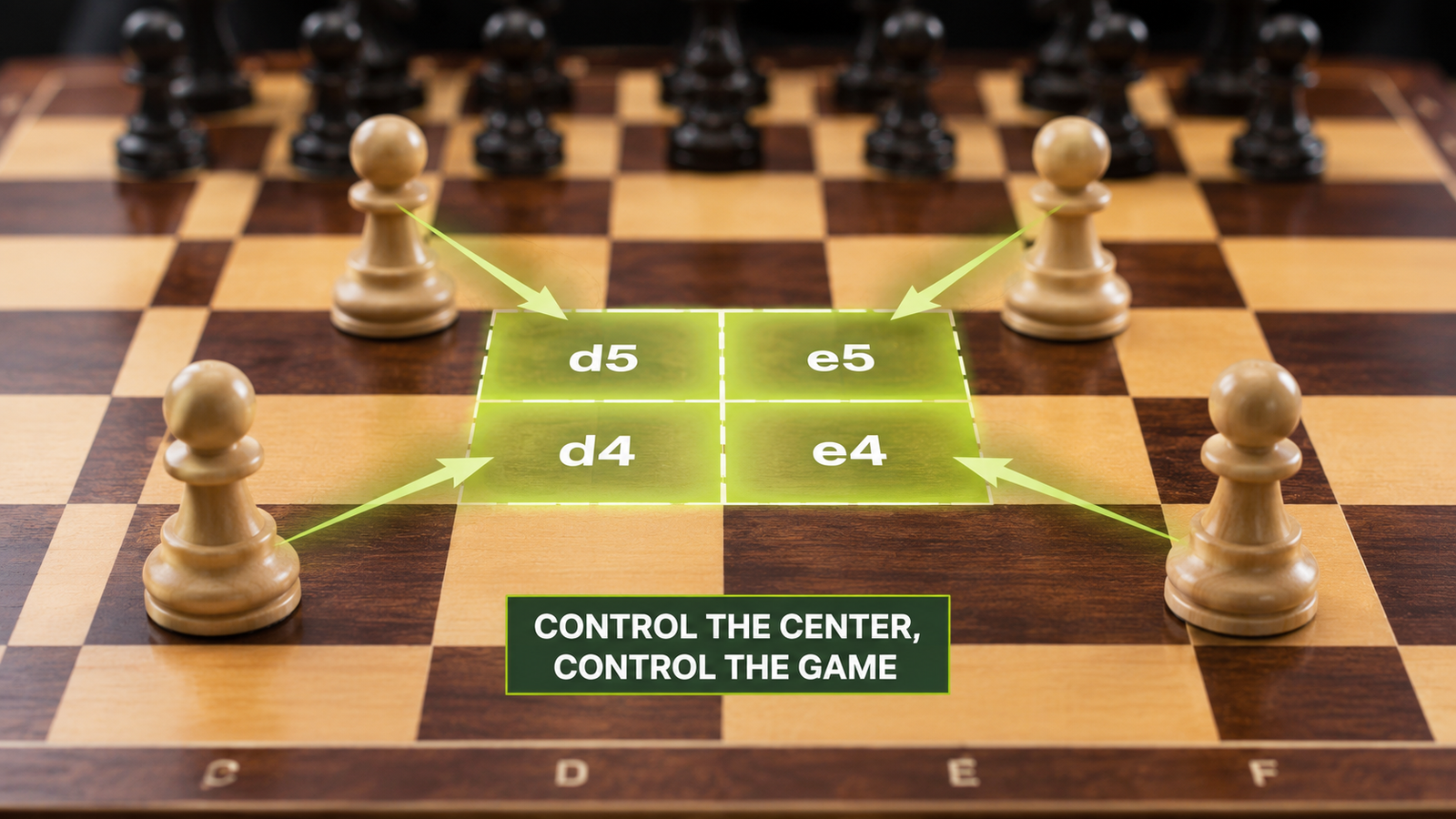
- Center Control: The player who controls the center squares (e4, d4, e5, d5) dictates the flow of the game.
- Piece Coordination: Ensuring your pieces are working together to attack and defend, rather than getting in each other's way.
By learning the fundamental Chess Opening Principles, you ensure that you survive the opening phase with a playable, comfortable position.
Basic Chess Opening Principles Every Beginner Should Know
Before diving into specific opening names, you must understand the rules that govern them. Whether you are playing online or aiming for a Master Level Chess Course, these golden rules remain the same.
💡 The Beginner's Opening Checklist
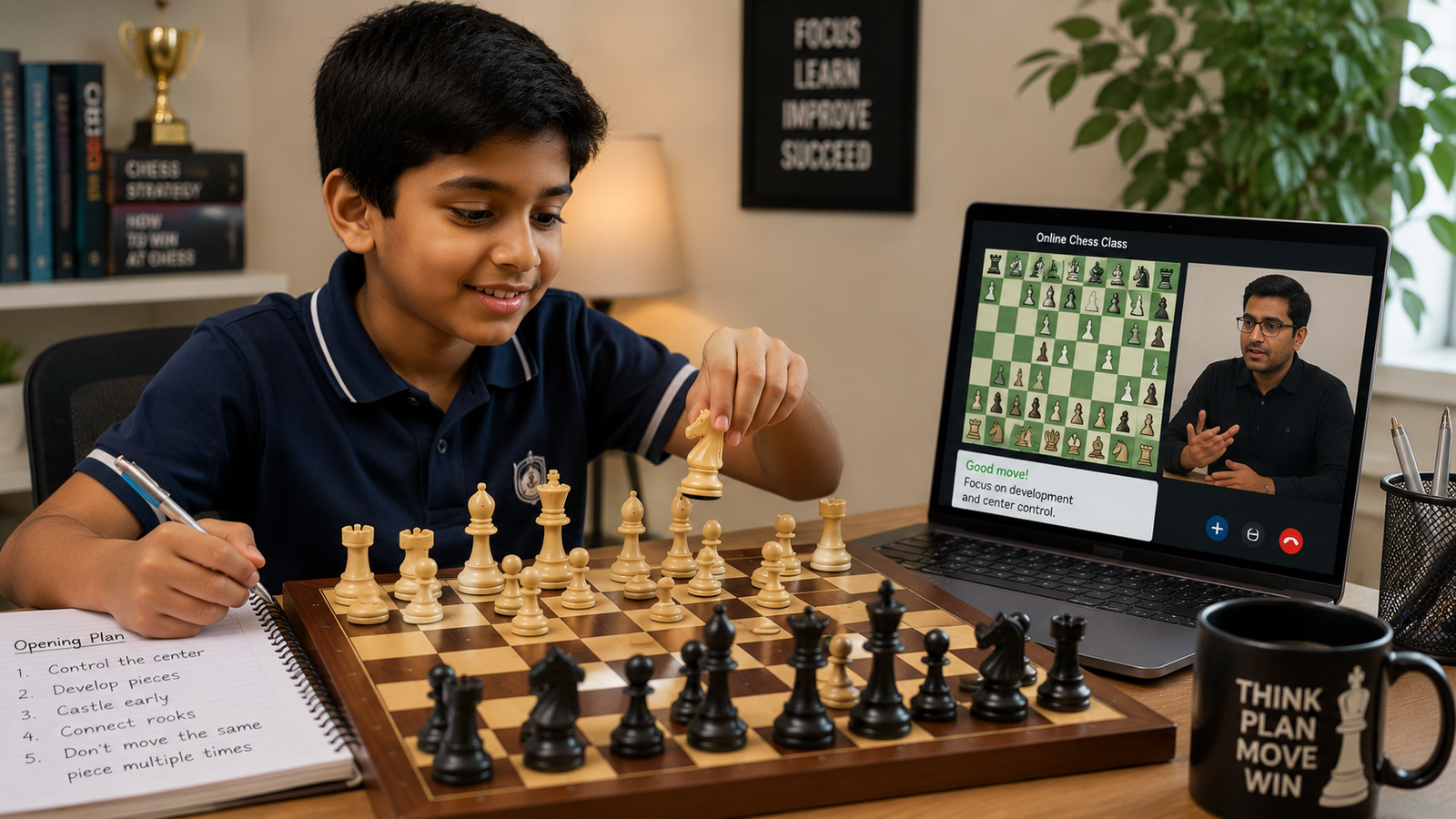
- Control the center: Always try to place a pawn in the center on move 1 or 2.
- Knights before Bishops: Generally, develop your knights before your bishops. Knights need to get closer to the center to be effective.
- Castle early: Aim to castle before move 10. A king left in the center is a target.
- Don't move the same piece twice: In the opening, time is precious. Moving the same piece repeatedly wastes time and allows your opponent to develop faster.
- Don't bring the queen out too early: Beginners love attacking with the queen early. However, your opponent will simply develop their minor pieces while attacking your queen, gaining free time.
- Connect the rooks: Once you castle and move your queen slightly up, your rooks on the back rank will "see" each other. This means your development is complete!
7 Best Chess Openings for Beginners
Now that we understand the principles, let's look at the openings that naturally follow these rules. These openings are frequently taught in our Online Chess Academy for Beginners to Masters because they are logical, solid, and incredibly effective.
1. The Italian Game
Why beginners should learn it: It is the classic, textbook chess opening. It teaches you the value of fast development and immediate center control.
Key idea: White plays e4 (controlling the center), then Nf3 (developing a knight and attacking Black's center), and finally Bc4 (aiming the bishop at Black's weakest point, the f7 square).
Main advantages: Very logical. It directly follows every golden rule of chess openings and prepares for early castling.
Difficulty level: Easy.
Best suited for: White.
2. The Ruy Lopez (Spanish Opening)
Why beginners should learn it: It is slightly more complex than the Italian but is considered one of the strongest openings in chess history.
Key idea: Similar to the Italian (e4, e5, Nf3, Nc6), but White plays Bb5 instead of Bc4. The idea is to put pressure on the knight defending Black's center pawn.
Main advantages: It teaches long-term strategic planning. You aren't just attacking immediately; you are building a slow, crushing positional advantage.
Difficulty level: Medium.
Best suited for: White.
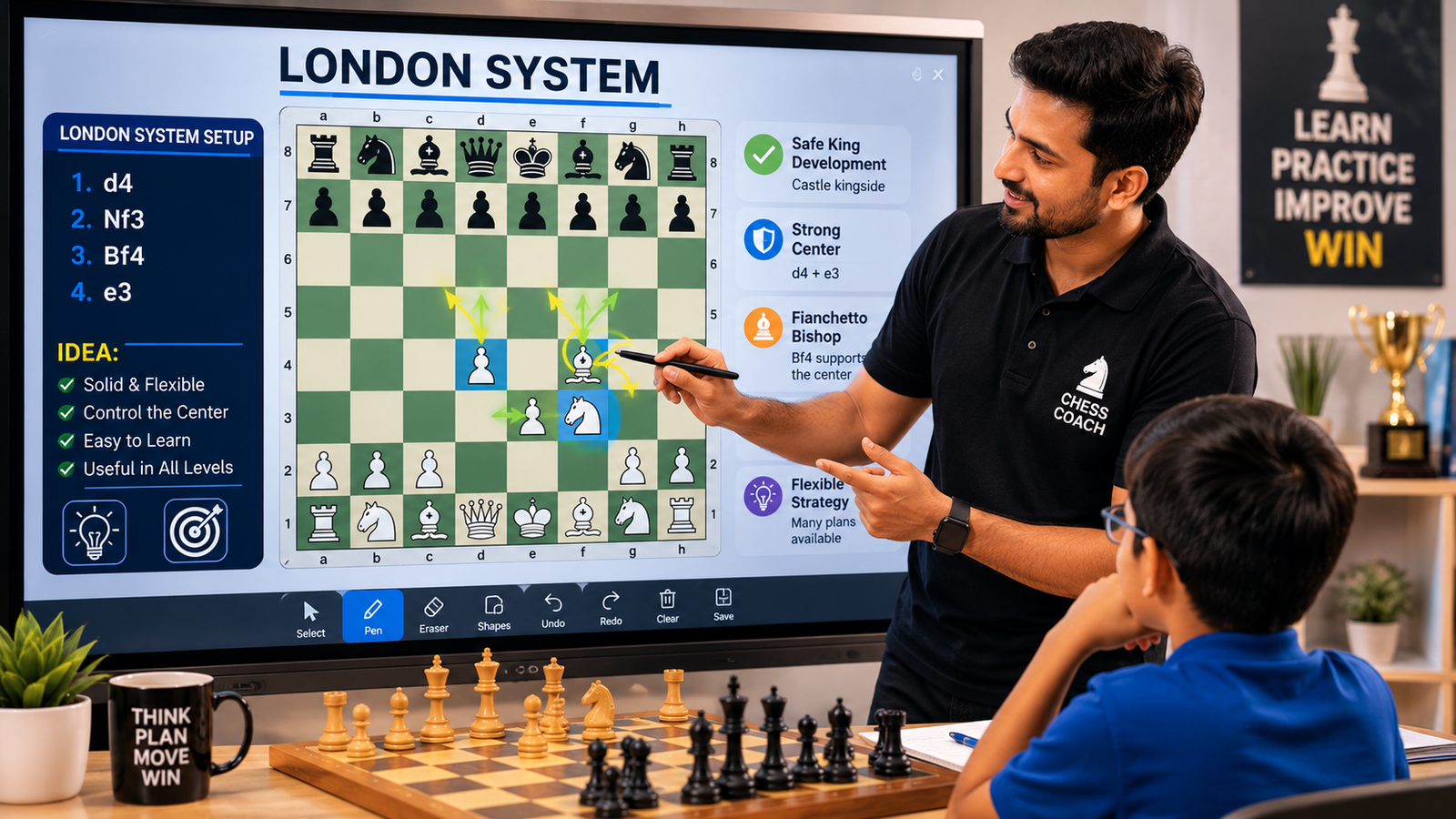
3. The London System
Why beginners should learn it: The London System is a "system" opening, meaning White can largely play the same setup regardless of what Black does.
Key idea: White plays d4, develops the dark-squared bishop to f4, and builds a solid pawn triangle (c3, d4, e3).
Main advantages: It requires very little memorization. It is incredibly solid, making it very difficult for your opponent to break through early on.
Difficulty level: Easy.
Best suited for: White.
4. The Queen's Gambit
Why beginners should learn it: Made famous by the Netflix show, it is the most popular way to play starting with the d4 pawn.
Key idea: White plays d4, Black answers d5, and White immediately plays c4. White is offering a temporary pawn sacrifice to gain total control of the center.
Main advantages: It teaches beginners the concept of the center and how sacrificing a pawn temporarily can lead to positional dominance.
Difficulty level: Medium.
Best suited for: White.
5. The Scotch Game
Why beginners should learn it: It forces the action immediately and opens up the center of the board, leading to exciting, tactical games.
Key idea: After e4 e5 and Nf3 Nc6, White immediately plays d4, striking in the center.
Main advantages: It avoids the heavy, slow theory of the Ruy Lopez and gets straight to an open, fighting game. Excellent for learning calculation and tactics.
Difficulty level: Easy to Medium.
Best suited for: White.
6. The Sicilian Defense (Basic Introduction)
Why beginners should learn it: When White plays e4, the Sicilian (c5) is the most popular, fighting response for Black.
Key idea: Black fights for the center using a flank pawn (c5) instead of mirroring White with e5. This creates an unbalanced, aggressive game.
Common mistakes: Beginners often dive too deep into the complex variations (like the Najdorf or Dragon). Stick to basic development principles when starting out.
Difficulty level: Medium to Hard.
Best suited for: Black.
7. The Caro-Kann Defense
Why beginners should learn it: If the Sicilian feels too aggressive and complex, the Caro-Kann is the ultimate solid shield for Black.
Key idea: Against e4, Black plays c6, preparing to push d5 on the next move, safely challenging the center.
Main advantages: It is incredibly resilient. Black gets a very safe pawn structure and easy development for all their pieces.
Difficulty level: Medium.
Best suited for: Black.
Which Chess Opening Is Best for White?
For a beginner playing White, starting the game with 1. e4 (moving the King's pawn two squares) is universally recommended by grandmasters and the International Chess Federation (FIDE) coaching standards. It immediately controls the center and opens lines for both the Queen and the Bishop.
From there, the Italian Game is arguably the best starting point. It naturally forces you to follow all the golden opening rules. If you prefer a game where you don't have to react to your opponent constantly, the London System (1. d4) is an excellent, safe alternative.
Which Chess Opening Is Best for Black?
Playing Black is slightly harder because White gets the first-move advantage. To counter 1. e4, the simplest and most robust reply for a beginner is 1... e5, mirroring White. This leads directly into standard, principled games where you fight equally for the center.
If you want an opening that frustrates attacking players, the Caro-Kann Defense is a phenomenal choice for Black. It is solid, structurally sound, and easy to understand.
Common Opening Mistakes Beginners Should Avoid
Even with the right openings, beginners often fall into typical traps. Here are the most common Beginner Chess Tips for avoiding early disasters:
- Moving the queen too early: Look up the "Scholar's Mate." Beginners try to use their queen to checkmate in 4 moves. If it fails, the queen gets chased around the board, and they lose. Leave the queen at home until your minor pieces are out!
- Ignoring king safety: Forgetting to castle because you are too focused on attacking. A king in the center will eventually be crushed.
- Chasing pieces unnecessarily: Pushing pawn after pawn just to chase an opponent's knight. This creates permanent weaknesses in your pawn structure.
- Memorizing instead of understanding: If you memorize 10 moves of the Ruy Lopez, but your opponent plays a weird 3rd move, you will panic. Understand why a move is made, not just where the piece goes.
How to Learn Chess Openings Faster
The secret to mastering how to Learn Chess Openings is consistency. Pick ONE opening for White (e.g., the Italian) and ONE response for Black against e4 (e.g., e5) and d4 (e.g., d5). Play them exclusively for 3 months.
After every game, analyze where you went wrong. Did you lose your center control? Did you forget to castle? By analyzing your mistakes in a familiar opening, your pattern recognition will improve rapidly. Avoid jumping from opening to opening every week.
Why Professional Chess Coaching Helps Beginners Improve Faster
While articles and videos are great, nothing replaces real-time feedback. Professional coaching transforms a confusing game into a structured science. Through guided Master Chess Classes, students receive:
- Structured curriculum: You learn concepts in the right order.
- Personalized feedback: A coach points out the specific opening mistakes you make repeatedly.
- Game analysis: Having a professional review your games is the single fastest way to improve.
- Tournament guidance: Coaches help you prepare emotionally and strategically for real-world play.
Why Choose Brainiac Chess Academy?
If you or your child are ready to move past the beginner stage, Brainiac Chess Academy is designed for you. Based in Vashi, Navi Mumbai, and operating a premier global Online Chess Academy, we specialize in building strong foundations.
- Experienced Coaches: Learn from seasoned professionals who know how to simplify complex theories.
- Beginner-Friendly Curriculum: We don't overwhelm students; we focus on principles and understanding.
- Small Batch Sizes: Ensuring every student gets the personalized attention they need to thrive.
- Chess Coaching for Kids: Specialized pedagogies designed specifically to keep children engaged and focused.
- Flexible Learning: Choose between our modern physical center or high-tech online classrooms.
Book Your Free Demo Class
Want to build a strong chess foundation with expert guidance?
Brainiac Chess Academy offers beginner-friendly online and offline coaching that helps students understand openings, improve strategy, and gain ultimate confidence on the board.
📞 WhatsApp / Call: +91 9324829329
👉 Book Your Free Demo Right Now
Frequently Asked Questions
Which opening should beginners learn first?
Is the London System good for beginners?
Should beginners memorize openings?
How many openings should I know?
What is the easiest opening for White?
What is the safest opening for Black?
How long does it take to learn openings?
Can online coaching improve opening skills?
Conclusion
Navigating the first few moves of a chess game doesn't have to feel like wandering through a minefield. By focusing on fundamental principles—controlling the center, developing your pieces efficiently, and prioritizing king safety—you will naturally start playing the best chess openings for beginners without having to memorize a textbook.
Remember, the goal of the opening isn't to win the game immediately; it is to reach a playable, comfortable middlegame. Pick one or two openings from this list, stick with them, and learn from your mistakes. If you are ready to stop guessing your moves and start playing with purpose, expert guidance is just a click away. Visit the Brainiac Chess Academy homepage and book your free demo today to let our coaches help you build a winning repertoire.