What Parents Should Know Before Enrolling Their Child in Chess
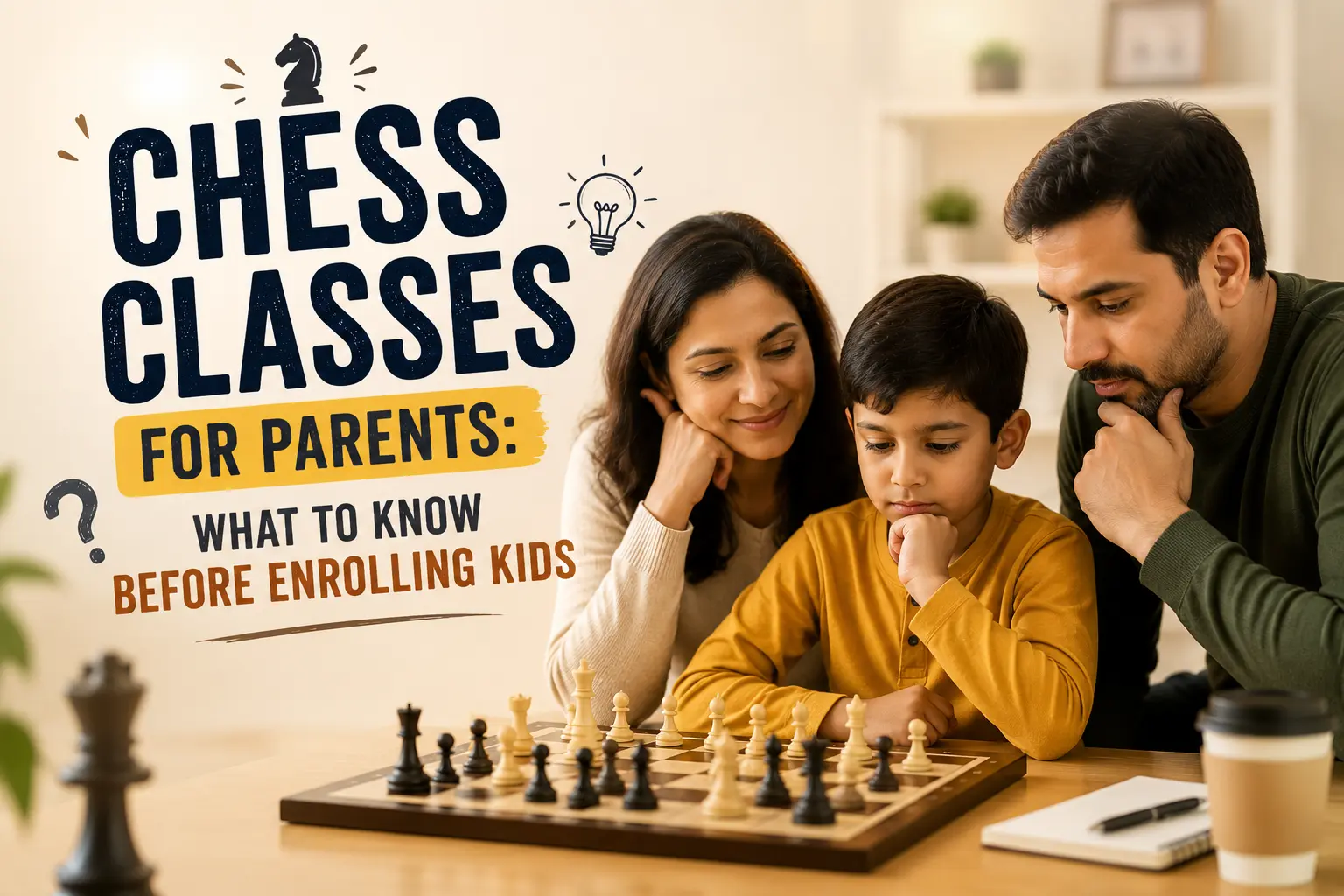
A few weeks ago, a mother walked into our academy holding her seven-year-old son by the hand. She told me she had spent three weeks browsing dozens of coaching websites, feeling completely overwhelmed by conflicting promises, fluctuating fees, and vague class schedules. "I just want to know if my son will actually benefit from this," she admitted. "How do I know if I am picking the right academy or just wasting his time?"
Finding the right Chess Classes for Parents who want to unlock their child's intellectual potential can feel daunting. With hundreds of academies claiming to produce grandmasters, understanding what to look for in Chess Classes for Parents can make the difference between a child falling in love with strategy or quitting after four weeks out of frustration.
In this comprehensive guide, we will walk you through everything you need to know before making a financial and emotional commitment. As experienced educators and mentors, we will break down how to evaluate academies, compare learning formats, identify quality Kids Chess Programs, and ensure your child receives structured, joyful guidance.
Why More Parents Are Choosing Chess Classes for Parents & Young Learners
Chess is no longer viewed as merely a recreational board game; it is recognized globally as an educational powerhouse. When parents look into enrolling their children in structured programs, they are usually seeking long-term cognitive and emotional development.
Here are the primary developmental advantages driving parents toward chess coaching:
- Enhanced Executive Function: Chess forces the brain to calculate consequences before taking action. Children learn impulse control because a hasty move leads to an immediate loss of a piece.
- Critical Thinking & Spatial Reasoning: Deciphering complex board setups trains children to analyze multi-step problems, a skill that directly translates to mathematics and science.
- Emotional Resilience and Patience: Learning how to handle a loss gracefully is one of the most valuable lessons a child can learn. Discovering How Chess Builds Discipline and Patience in Children helps them navigate real-world academic pressure.
- Focus in a Distracted World: In an era dominated by short-form video content, sitting at a chessboard for 45 minutes builds sustained attention spans.
Investing in high-quality Chess Classes for Parents ensures that these cognitive benefits are nurtured systematically rather than through random, unguided play.
10 Things Every Parent Should Check Before Enrolling a Child
To help you navigate your search, we have compiled the ten non-negotiable criteria every family should review when evaluating Chess Classes for Parents and kids.
1. Coach Experience and Pedagogical Skills
Why it matters: Being a strong chess player does not automatically make someone a good teacher for young children. Teaching a 6-year-old requires patience, storytelling, and developmental psychology.
What parents should ask: "What experience does the coach have in teaching beginners, and are they FIDE-rated or certified educators?"
Common mistake to avoid: Enrolling with a high-rated player who lacks patience or age-appropriate communication skills.
2. A Clear, Structured Curriculum
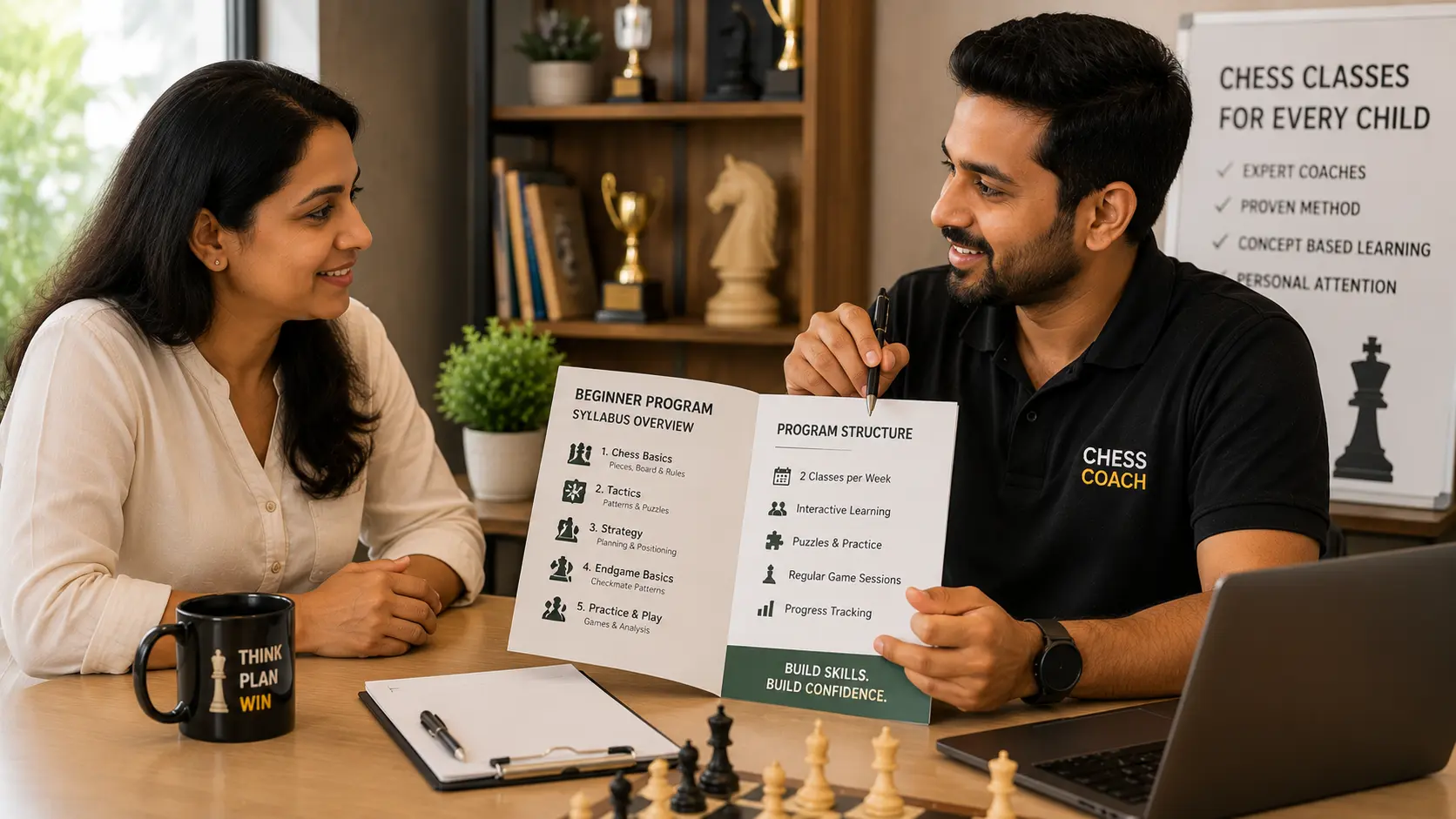
Why it matters: Randomly playing games during class without a syllabus leads to stagnant growth. Quality Chess Classes for Parents follow a step-by-step roadmap from piece movement to tactical mastery.
What parents should ask: "Can I see the module breakdown for my child's current skill level?"
Common mistake to avoid: Joining classes where students just play casual games with zero theoretical instruction.
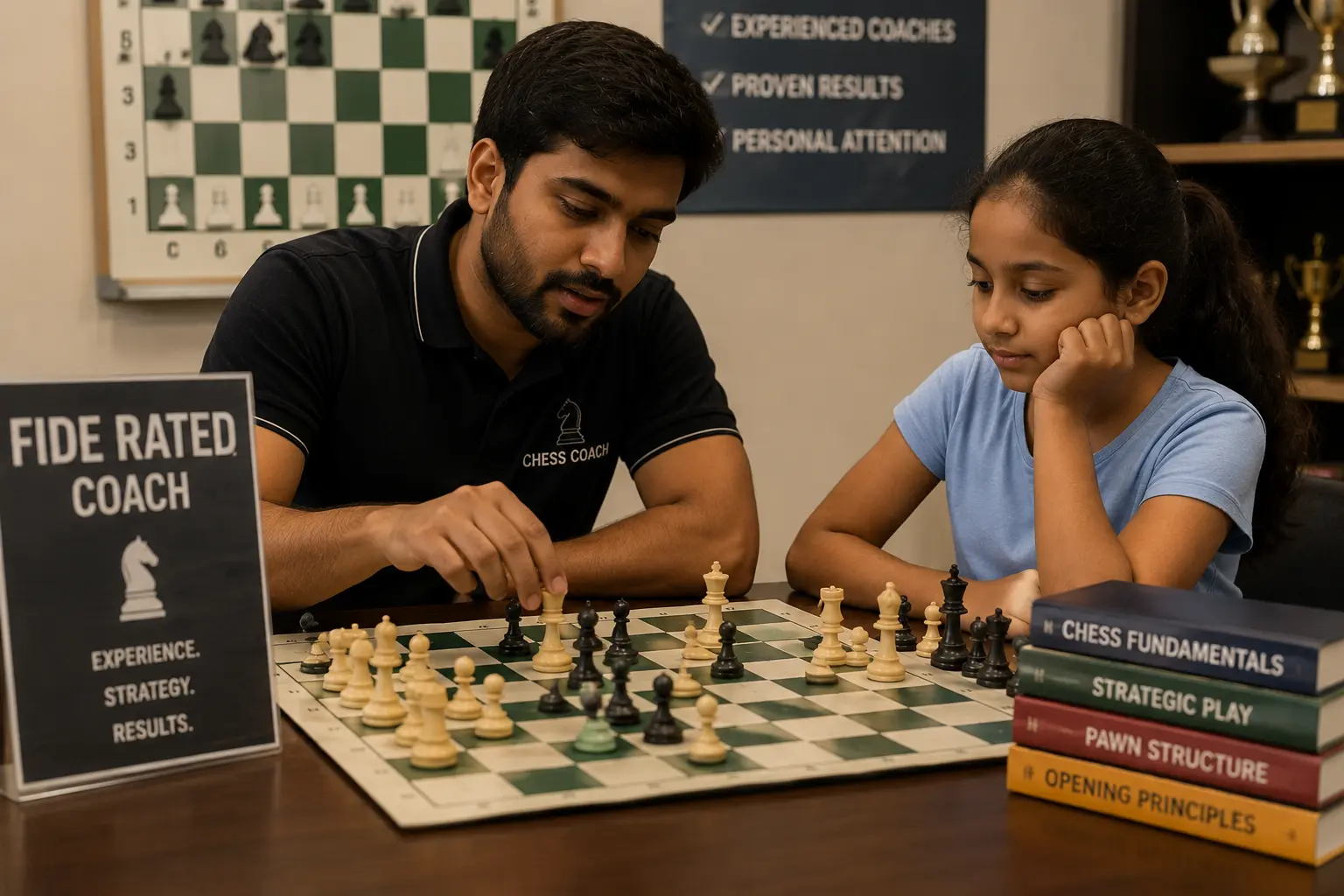
3. Student-to-Coach Ratio (Class Size)
Why it matters: In a batch of 20 kids, quiet children get left behind. Small group sizes ensure personal attention.
What parents should ask: "What is the maximum number of students per trainer in a single session?"
Coach's recommendation: For beginners, look for a maximum ratio of 1:6 or 1:8.
4. Regular Student Progress Reports
Why it matters: As a parent, you should never be in the dark about your child's improvement.
What parents should ask: "How often do you evaluate students and share performance feedback with parents?"
Common mistake to avoid: Assuming progress based solely on whether your child won or lost a casual weekend game.
5. Structured Practice Opportunities Outside Class
Why it matters: Attending class once a week is not enough. Children need guided homework, puzzle assignments, and a clear Chess Practice Routine.
What parents should ask: "Do you provide online practice portals or weekly tactical homework?"
Coach's recommendation: Ensure the academy offers access to monitored puzzle databases.
6. Safe and Encouraging Tournament Exposure
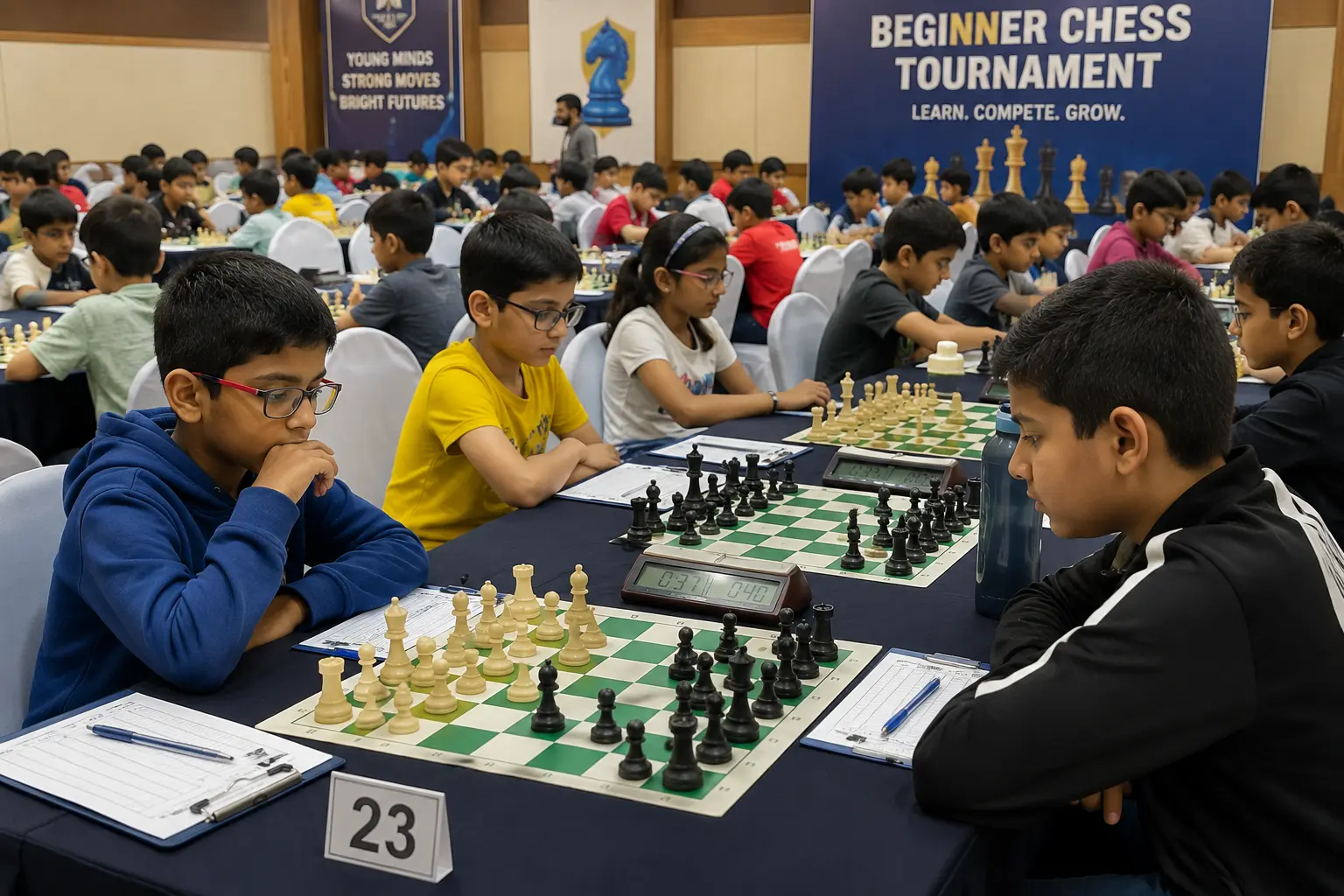
Why it matters: Tournaments teach sportsmanship and stress management. High-quality academies host internal events or facilitate access to Online Chess Tournaments.
What parents should ask: "Do you organize beginner-friendly, low-pressure competitions?"
Common mistake to avoid: Pushing a child into high-stakes rating tournaments before they are mentally ready.
7. Flexible Online vs Offline Options
Why it matters: Family schedules change. Having the flexibility to switch between physical classrooms and digital sessions prevents attendance drops.
What parents should ask: "If we miss an offline class due to travel, can we attend an online makeup session?"
8. Age-Appropriate Learning Methodologies
Why it matters: A 5-year-old learns through fun analogies and visual aids, whereas a 12-year-old requires deep calculation exercises.
What parents should ask: "How do you tailor your teaching style for different age brackets?"
9. Transparent Parent Communication Channels
Why it matters: You should feel comfortable reaching out to your child's instructor regarding academic stress or motivation slumps.
What parents should ask: "Is there a direct channel to speak with the lead coach?"
10. Free Trial Class Availability
Why it matters: You should never pay upfront without testing whether your child connects with the coach's teaching style.
What parents should ask: "Can we schedule an evaluation session before enrolling?"
Parent Guide to Chess Insight
A trial class is not just for the coach to assess your child; it is your chance to observe how the coach manages mistakes, keeps students engaged, and builds confidence.
Choosing Chess Coaching: Online vs Offline
When reviewing Chess Classes for Parents, one of the first major decisions you will make is selecting between digital learning and traditional physical academies. Both formats have distinct advantages when **Choosing Chess Coaching** for your child.
| Feature | Online Coaching | Offline Academy Coaching |
|---|---|---|
| Flexibility & Convenience | ✔ High (Study from home without commuting) | Limited (Requires strict travel schedules) |
| Interactive Digital Tools | ✔ Excellent (Engine analysis, instant puzzle feedback) | Moderate (Relies heavily on physical boards) |
| Social Interaction | Good (Virtual breakout rooms and games) | ✔ Superior (Face-to-face peer bonding and physical board feel) |
| Concentration Level | Requires parental oversight for younger kids | ✔ High (Structured physical environment reduces distraction) |
| Cost Efficiency | ✔ Highly cost-effective options available | Slightly higher due to facility overheads |
If you have a busy academic schedule or live in an area without high-rated physical academies, online classes offer world-class mentorship at home. If your child thrives on tactile experience and face-to-face peer interaction, an offline center in your city is an ideal starting point.
How to Identify High-Quality Kids Chess Programs
Not all Kids Chess Programs are created equal. High-quality academies stand out because they emphasize deep understanding rather than rapid, superficial memorization.
When researching Chess Classes for Parents, verify if the program incorporates the following key pillars:
- Level-Based Progression: Students should advance from Beginner to Intermediate and Advanced based on objective assessments, not just attendance.
- Blunder Prevention Training: Early lessons should explicitly cover Common Chess Mistakes Beginners Should Avoid before teaching complex opening theories.
- Psychological & Mindset Support: The curriculum should address rating anxiety and teach students How to Stay Motivated While Learning Chess during losing streaks.
- Personalized Feedback Loops: Coaches must review students' individual practice games rather than only demonstrating grandmaster matches on a board.
Parent Guide to Chess: Supporting Your Child at Home
Your involvement as a parent plays a huge role in your child's success. You do not need to know how to play chess yourself to be a fantastic support system. Following this practical Parent Guide to Chess will ensure your child stays motivated:
- Praise Effort, Not Wins: Instead of saying "Great job winning!", say "I loved how patiently you calculated your moves when you were behind."
- Create a Dedicated Practice Space: Set up a quiet corner free from digital distractions where your child can solve puzzles or play practice games.
- Avoid Over-Scholastic Pressure: Treat chess as an exciting journey of discovery rather than an extra academic burden.
- Help Them Maintain Consistency: Encourage 15 minutes of daily puzzle solving rather than cramming 2 hours right before class.
- Normalize Losing: Remind your child that every grandmaster has lost thousands of games. Losing is simply the brain discovering a lesson.
Common Mistakes Parents Make When Choosing Chess Coaching
Even the most dedicated parents can accidentally fall into common traps when selecting Chess Classes for Parents and young learners. Here are mistakes to avoid:
- Choosing Solely Based on Price: The cheapest coaching often means massive batch sizes with zero personal feedback, while the most expensive does not guarantee pedagogical quality.
- Expecting Instant Results: Cognitive growth takes time. Expecting a child to win local tournaments within two months creates unnecessary stress.
- Focusing Only on Online Ratings: An online ELO rating fluctuates wildly. Focus on whether your child is developing logical reasoning and emotional control.
- Skipping the Trial Session: Enrolling in a full-year package without observing how your child interacts with the coach is a risky shortcut.
Questions Every Parent Should Ask Before Enrollment
Use this convenient checklist when speaking to academy administrators or reviewing Chess Classes for Parents during your trial session:
Why Choose Brainiac Chess Academy?
At Brainiac Chess Academy, we understand that every child possesses a unique learning style. We do not believe in one-size-fits-all training. Our programs are designed to combine rigorous tactical instruction with a warm, encouraging environment.
Here is why families trust our academy when looking for top-tier Chess Classes for Parents and children:
- Expert, Certified Mentors: Our coaches are experienced tournament players trained in child psychology and age-appropriate instruction.
- Structured Step-by-Step Curriculum: From understanding piece values to advanced pawn structures, our syllabus ensures steady, measurable growth.
- Small Batch Guarantee: We keep our student-to-coach ratios strictly low so that no child is ever overlooked.
- Hybrid Learning Options: We offer premier offline learning at our center in Vashi, Navi Mumbai, alongside highly interactive online sessions for students worldwide.
- Comprehensive Progress Tracking: Parents receive regular updates, ensuring complete transparency regarding their child's intellectual journey.
Book Your Free Demo Class
Choosing the right academy is one of the best investments you can make in your child's overall intellectual and emotional development.
Brainiac Chess Academy provides structured coaching, experienced mentors, and personalized guidance to help every child enjoy and excel at chess.
📞 Contact Us: +91 9324829329
👉 Book Your Free Demo Right Now
Frequently Asked Questions
What should I look for in Chess Classes for Parents?
At what age should children start chess?
Are online chess classes effective for kids?
How often should my child practice chess at home?
Are tournaments mandatory for beginner students?
How long does it take for a child to show improvement?
Can beginners join Brainiac Chess Academy anytime?
What makes a good chess coach for young children?
Conclusion
Enrolling your child in chess is one of the most rewarding decisions you can make for their long-term intellectual and emotional growth. However, the key to unlocking those lifelong benefits lies in picking the right learning environment. By looking for certified coaches, structured curricula, small class sizes, and transparent communication, you set your child up for a fulfilling and joyful journey.
Remember that exploring Chess Classes for Parents is about finding a partner in your child's education—someone who nurtures their curiosity, builds their resilience, and celebrates their individual effort.
If you are ready to give your child the gift of strategy, confidence, and focus, Brainiac Chess Academy is here to welcome you. Book a free trial session with our master coaches today and watch your child discover the magic of chess!