How Chess Builds Discipline and Patience in Children
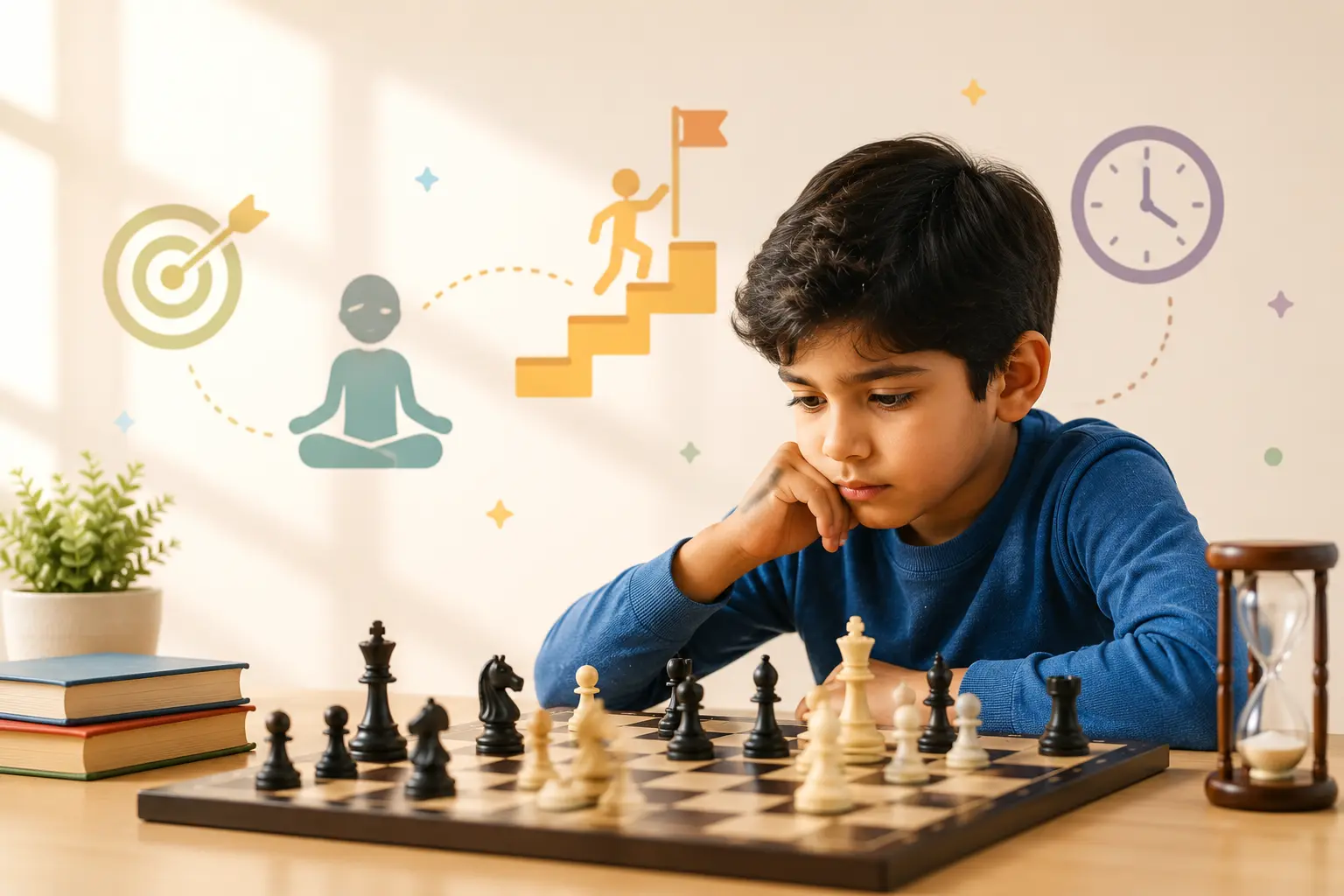
I will never forget an eight-year-old student named Aarav. When he first sat across from me in my academy, he couldn't sit still for more than two minutes. He would grab his pieces instantly, make a move without looking, and sigh loudly if the game didn't go his way immediately. His parents were at their wits' end, seeking a way to help him calm down. Fast forward six months, and Aarav was unrecognizable. He would sit silently, hands folded, carefully analyzing the board for five whole minutes before touching a piece. This transformation is the perfect example of how Chess Builds Discipline in young minds.
As a FIDE-rated chess coach and educator who has worked with hundreds of families, I can confidently tell you that while winning trophies is exciting, the true magic of the game lies in its educational benefits. Developing robust life skills matters far more than just learning how to checkmate an opponent.
In this comprehensive guide, we will explore exactly how Chess Builds Discipline. You will learn how the structured nature of the game shapes your child's character, improves their self-control, and provides a powerful foundation for lifelong success.
Why Discipline and Patience Are Essential Life Skills
In today's fast-paced, highly digital world, children are accustomed to instant gratification. A simple swipe on a screen brings immediate entertainment. Unfortunately, real-life challenges—like studying for an exam, mastering a musical instrument, or building healthy relationships—require something different entirely: delayed gratification.
This is precisely where the core of why Chess Builds Discipline becomes apparent. The game acts as an antidote to impulsivity. It demands self-control, forcing a child to stop, breathe, and think before taking action. It teaches responsibility; once you let go of a piece, you must own the consequences of that decision.
These foundational traits—focus, emotional resilience, and patience—do not just help a child win board games. They translate directly into better classroom behavior, more thoughtful family interactions, and stronger emotional health.
10 Ways Chess Builds Discipline in Children
The beauty of chess is that it does not lecture children about good behavior; it makes good behavior a prerequisite for playing the game successfully. Here are ten powerful ways Chess Builds Discipline, contributing to profound Chess Character Building.
1. Following Strict Rules
Explanation: Chess is governed by absolute rules. The knight only moves in an L-shape; the king can only move one square. There are no exceptions, no shortcuts, and no arguing with the board.
Real-life example: A child who normally tries to bend bedtime rules learns that in chess, an illegal move loses the game. They learn to operate within boundaries.
Parent takeaway: Chess Builds Discipline by normalizing rule-following in a fun, non-threatening environment.
Coach's Insight
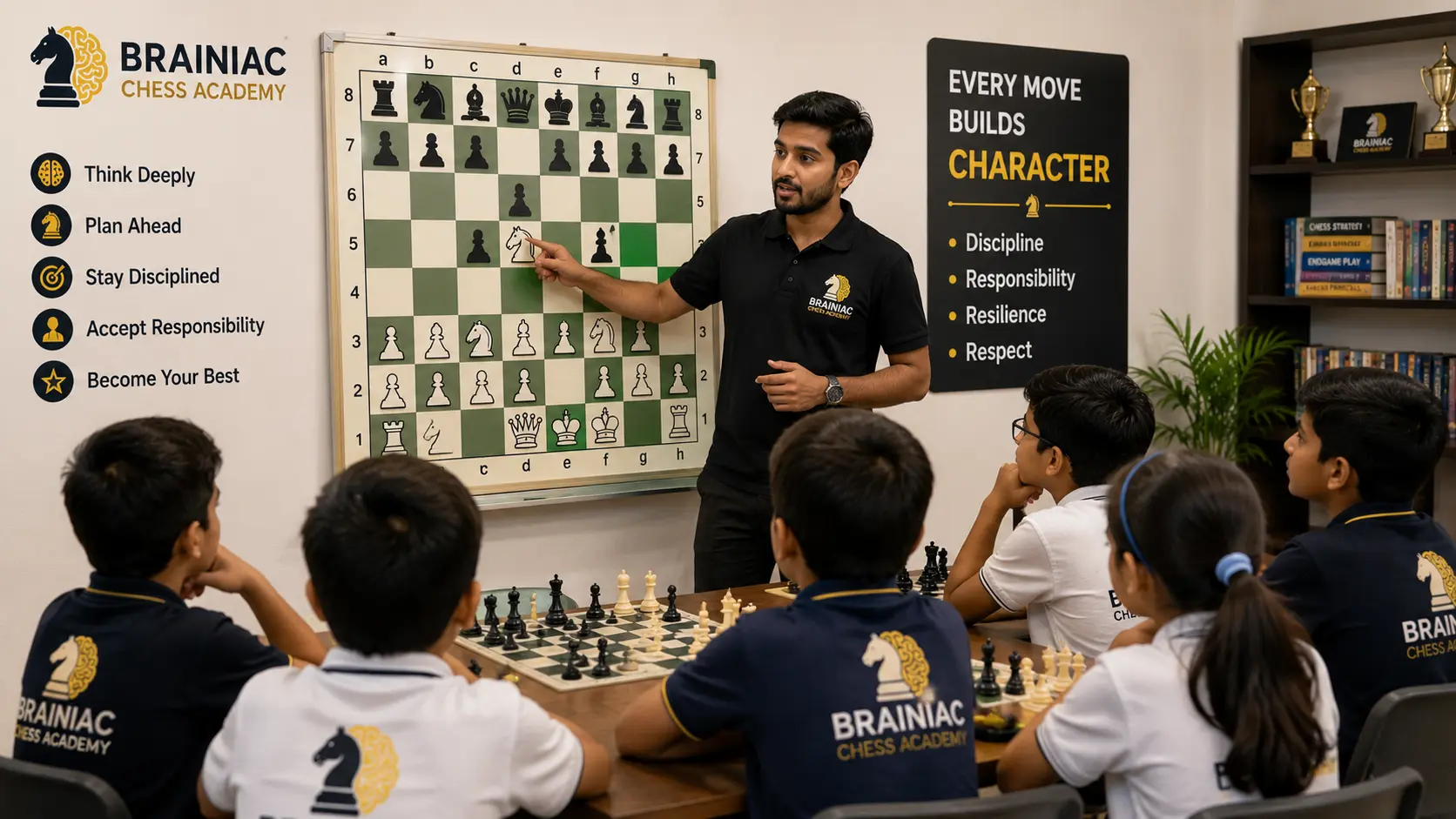
When teaching Beginner Chess Lessons, I often say, "The board is the boss." Submitting to the rules of the game is a child's first step toward structured discipline.
2. Thinking Before Acting
Explanation: The "touch-move" rule (if you touch a piece, you must move it) is a cornerstone of competitive chess. It forces children to keep their hands off the board until their brain has fully processed a plan.
Real-life example: A student wants to immediately capture a pawn, but hesitates, realizing their own queen would be trapped.
Parent takeaway: This directly translates to avoiding impulsive behavior at home, like speaking out of turn or reacting in anger.
3. Accepting Responsibility for Actions
Explanation: There is no luck in chess. There are no dice to roll or winds to blame. If you lose, it is because you made a mistake. Owning that mistake is how Chess Builds Discipline.
Real-life example: A child forgets to defend their king, loses, and realizes they alone controlled their pieces.
Parent takeaway: It eliminates the "blame game." Children learn that their choices directly dictate their outcomes.
4. Learning From Mistakes Gracefully
Explanation: Every grandmaster has lost thousands of games. Chess Character Building occurs when a child learns to sit back, review a lost game, and objectively figure out what went wrong.
Real-life example: After a tough loss, a child sets up the pieces to find the exact moment they blundered their rook.
Parent takeaway: It teaches children to view failure as data and feedback, rather than a reflection of their self-worth.
5. Respecting Opponents
Explanation: Essential Chess Values dictate that players must shake hands before and after every game, regardless of the outcome.
Real-life example: A child holds back tears after a frustrating defeat, extends their hand, and says, "Good game."
Parent takeaway: Chess Builds Discipline by mandating politeness and sportsmanship, even in moments of high emotional stress.
6. Managing Intense Emotions
Explanation: Chess can be incredibly tense. A player might feel joy, fear, anxiety, and relief all in a single 30-minute game. Learning to keep a "poker face" and stay calm is a vital skill.
Real-life example: A child realizes they are in a losing position but takes a deep breath and continues fighting instead of throwing a tantrum.
Parent takeaway: Children who master emotional control on the board handle academic and social pressures much better.
7. Staying Focused for Long Periods
Explanation: A standard game requires sustained attention. If a child looks away for two minutes, they might miss a critical threat.
Real-life example: A normally hyperactive seven-year-old sits entirely still for 45 minutes during a tournament match.
Parent takeaway: Because Chess Builds Discipline through focus, you will naturally notice improvements in their ability to complete homework without distraction.
8. Practicing Consistently
Explanation: You cannot cram for chess. Improvement requires a daily Chess Practice Routine, solving puzzles, and studying endgames.
Real-life example: A child wakes up 15 minutes early every day to solve five tactics puzzles before school.
Parent takeaway: It teaches the value of daily habits and shows that consistent, small efforts lead to massive long-term gains.
9. Setting and Pursuing Goals
Explanation: Whether the goal is to win a local medal, reach a certain online rating, or join Elite Chess Classes, chess gives children tangible targets.
Real-life example: A student works for three months specifically to qualify for their school's varsity team.
Parent takeaway: Chess Builds Discipline by showing children how to break a big dream down into daily, manageable steps.
10. Developing Long-Term Strategic Thinking
Explanation: Moving a pawn in the first minute of the game might dictate who wins an hour later. Chess requires foresight.
Real-life example: A child chooses not to capture a free knight because they calculate it will lead to them being checkmated three moves later.
Parent takeaway: It fundamentally wires a young brain to ask, "If I do this now, what happens next?"—the ultimate form of life discipline.
Coach's Insight
Every time a child pauses and pulls their hand back from a hasty move, I silently celebrate. That millisecond of hesitation is exactly where Chess Builds Discipline.
How Patience Through Chess Shapes Young Minds
We cannot discuss discipline without talking about patience. Patience Through Chess is not just about waiting your turn; it is about enduring the psychological tension of a complex problem.
When a child is faced with a difficult position on the board, their instinct is often to make a quick, random move just to relieve the mental pressure. Patience Through Chess teaches them to sit with that discomfort. They learn to calculate moves carefully, visualizing variations deep into the future without touching a single piece.
By constantly practicing this delayed action, children build incredible resilience. They learn that taking their time usually yields a much better result than rushing—a lesson that will serve them well in every exam, relationship, and career choice they ever face.
Chess Character Building: Values Every Child Learns
Parents frequently ask me what specific Chess Values translate directly to real life. To illustrate how Chess Character Building occurs, I have mapped out how board habits become life skills.
| Chess Habit | Life Skill Learned | Everyday Real-World Example |
|---|---|---|
| Planning Moves Ahead | Responsibility | Planning a week of homework instead of rushing on Sunday night. |
| Respecting the Rules | Discipline | Following classroom instructions without arguing with teachers. |
| Learning From Losses | Resilience | Reviewing mistakes on a failed math test to prepare for the next one. |
| Waiting Patiently | Emotional Control | Listening during family discussions without interrupting others. |
| Strategic Thinking | Better Decisions | Choosing to save allowance money for a big toy rather than buying candy now. |
These core Chess Values form the bedrock of a well-rounded, thoughtful individual.
Simple Ways Parents Can Reinforce Chess Values at Home
While Chess Builds Discipline during lessons and tournaments, parents play a massive role in cementing these habits. Here is how you can support Chess Character Building at home:
- Host Family Chess Nights: Create a distraction-free evening where you play friendly games. This shows that the family values the game.
- Provide Positive Encouragement: Praise the effort, not the outcome. Say, "I love how long you thought about that move," instead of, "I'm glad you won."
- Discuss Lessons After Games: Ask your child, "What did you learn from that match?" Helping them verbalize their thoughts reinforces the Chess Values they just practiced.
- Reward Effort Over Results: Celebrate when they complete a week of daily puzzles, rather than only celebrating when they bring home a trophy.
- Create a Weekly Chess Habit: Consistency is key. Dedicate a specific 20-minute window each day for them to practice.
Common Parenting Mistakes That Reduce the Benefits of Chess
Sometimes, despite the best intentions, parents can accidentally hinder how Chess Builds Discipline. Here are common pitfalls and how to avoid them.
The most common mistake is focusing only on winning. If a child feels they only receive love or praise when they win, they will become anxious, cheat, or quit entirely. Instead, focus on the process.
Another error is comparing children. Saying, "Look how well your sister plays," destroys confidence and breeds resentment. Let your child progress at their own unique pace.
Finally, avoid overloading practice. Forcing a six-year-old to study for three hours a day will cause burnout. Chess Builds Discipline best when it is enjoyable and appropriately paced. If you need a structured approach, read our guide on Teaching Chess at Home.
Signs Chess Is Positively Influencing Your Child
How do you know if Chess Builds Discipline effectively in your child? Look for these real-world indicators:
- Better patience: They stop interrupting you while you are speaking.
- Improved concentration: They sit and read a book or do homework for longer stretches without getting up.
- Greater confidence: They are more willing to try difficult tasks or raise their hand in school.
- Better decision-making: They start explaining the "why" behind their choices.
- Stronger emotional control: They recover from disappointments (like losing a video game or a bad grade) much faster and with fewer tears.
Why Choose Brainiac Chess Academy?
Understanding that Chess Builds Discipline is only the first step; finding the right environment to nurture those skills is the next. At Brainiac Chess Academy, we don't just teach children how to move pieces; we mold them into confident, strategic thinkers.
Our Expert Coaches provide Personalized Coaching tailored to your child's learning speed. Whether you are looking for local classes in Navi Mumbai or prefer our comprehensive Online Chess Academy for Beginners to Masters, we offer a safe, encouraging space.
We take pride in our Small Batch Sizes, ensuring every child gets individual attention. For those looking to compete, our Master Chess Classes include elite Tournament Preparation, guiding students from absolute beginners to advanced, disciplined champions, all while providing detailed Parent Progress Updates.
Book Your Free Demo Class
Help your child develop discipline, patience, confidence, and strong decision-making skills through structured chess coaching.
Brainiac Chess Academy offers engaging online and offline chess classes for children of all skill levels.
📞 Contact Us: +91 9324829329
👉 Book Your Free Demo Right Now
Frequently Asked Questions
Can chess teach discipline?
How does chess improve patience?
What life skills does chess teach?
Is chess good for young children?
Can chess improve behaviour?
How often should children practice?
Is online chess coaching effective?
At what age should children start chess?
Conclusion
The next time you watch your child sitting silently in front of a chessboard, hand hovering cautiously over a knight, recognize what is truly happening. They are not just playing a game; they are building the mental infrastructure that will support them for the rest of their lives. It is in these quiet moments of intense calculation that Chess Builds Discipline, resilience, and character.
I encourage every parent to view chess not merely as a competitive sport, but as a vital educational tool. Embrace the journey, celebrate the slow and steady progress, and watch as your child transforms into a thoughtful, patient, and highly disciplined individual.
If you are ready to give your child these incredible lifelong advantages, our expert team at Brainiac Chess Academy is ready to guide them every step of the way.