Online Chess Classes in Ahmedabad | Learn Chess Online

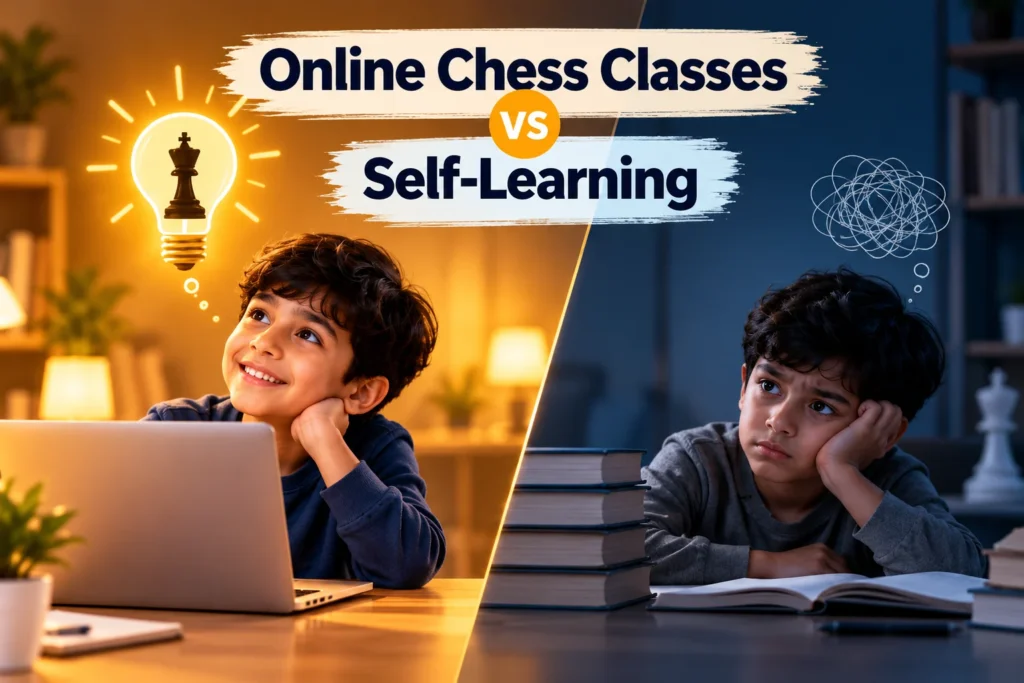
Parenting in a fast-paced hub like Ahmedabad comes with a unique set of daily decisions. Balancing early morning school runs, rigorous academic expectations, subject tuition classes, and sports activities creates a dense weekly calendar for young students. Driving across busy city sectors during evening traffic hours to drop children off at physical activity centers often drains both time and energy. As a result, enrolling children in online chess classes in Ahmedabad has emerged as a practical, highly effective way to build intellectual discipline right from the comfort of home.
Chess is widely recognized by educators as a premier cognitive sport that cultivates deep concentration, logical foresight, emotional control, and decision-making skills. However, simply knowing how pieces move across 64 squares is not enough for real intellectual growth. Children need structured guidance, systematic problem-solving routines, and constructive feedback from experienced mentors. Modern virtual coaching overcomes geographical limitations, connecting students directly with dedicated coaches while maintaining a calm home environment. This comprehensive guide helps parents evaluate how digital chess instruction works and how to choose a program that aligns with their child's routine.
Quick Answer
Yes, enrolling in online chess classes in Ahmedabad is an exceptional choice for students. It eliminates stressful evening traffic, offers flexible batch timings around school schedules, and connects young learners with qualified instructors through live interactive digital boards, personalized game reviews, tactical assignments, and structured progress tracking.
What Are Online Chess Classes in Ahmedabad?
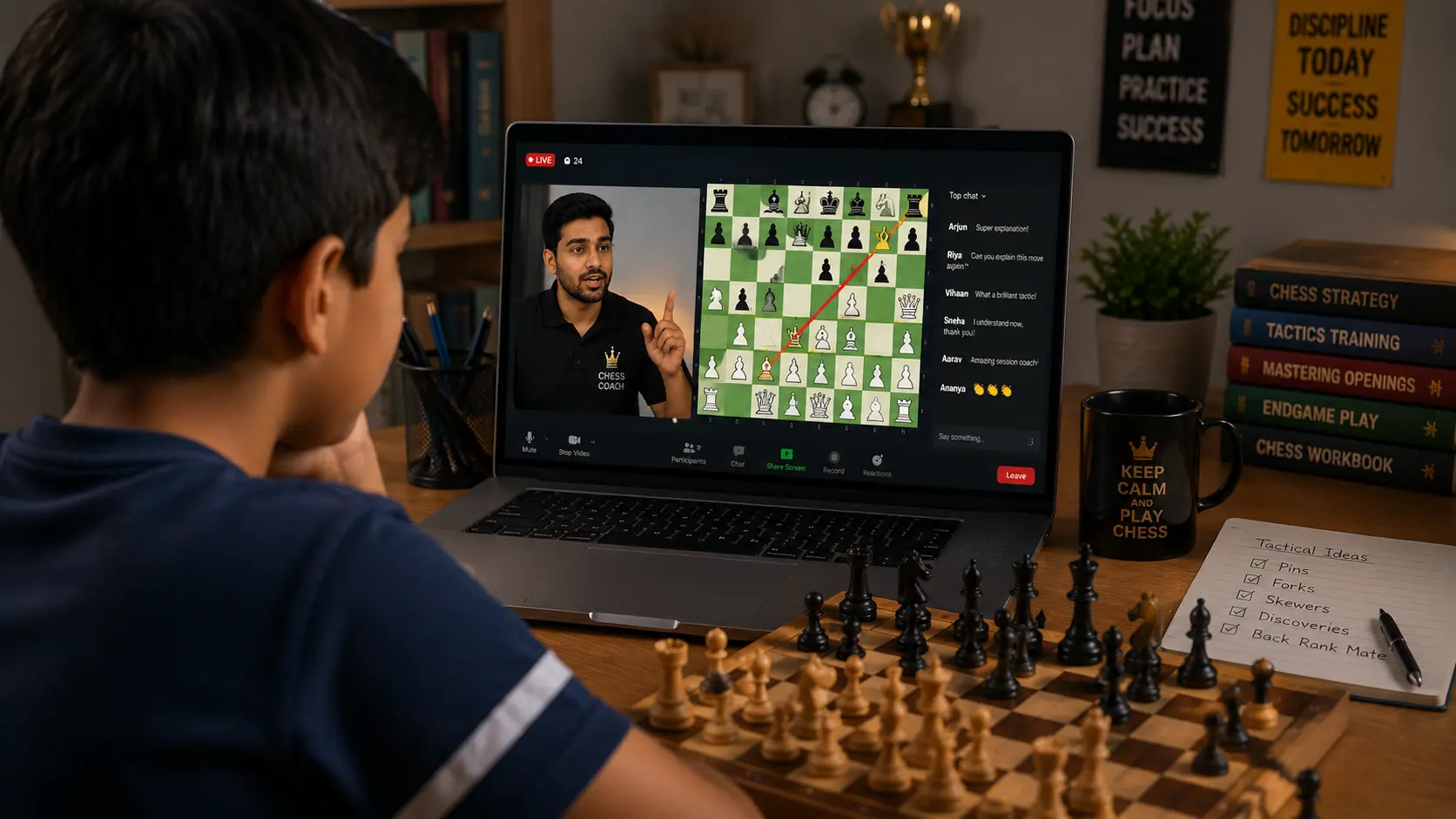
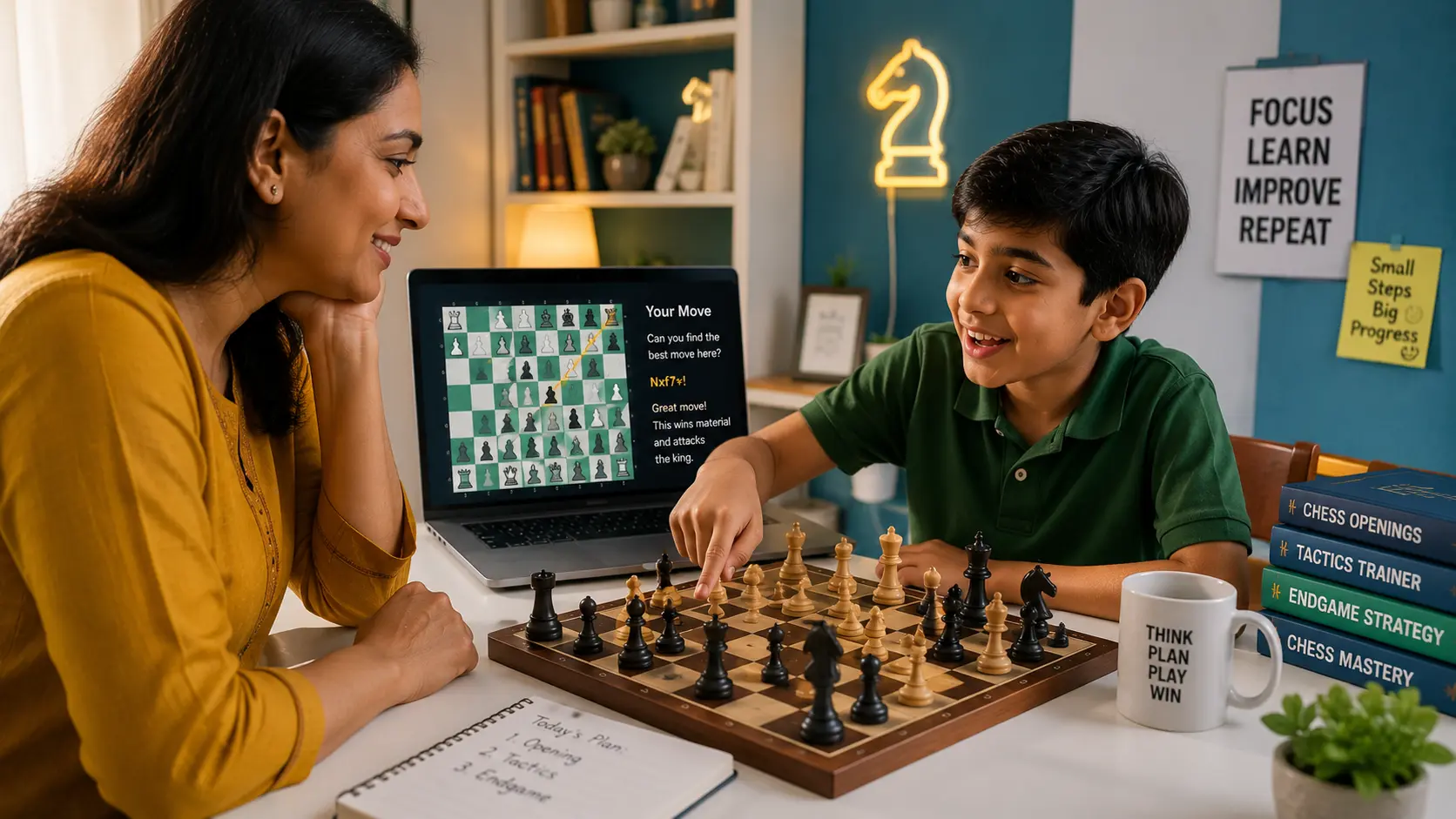
Modern digital chess training goes far beyond pre-recorded video tutorials or playing against computer bots. A high-quality online chess lesson is a live, interactive learning experience where students interact with expert mentors in real time. Instructors utilize interactive digital chessboards to present opening structures, middle-game tactics, and endgame patterns. They draw clear visual lines, highlight key squares, and walk students through complex calculations step-by-step.
During a live session, instruction remains highly interactive. Students solve tactical puzzles on their screens, explain their logical reasoning to the coach, and play supervised practice games against batch mates. Coaches monitor games live, pause play to address critical strategic errors, and guide students toward better tactical decisions. Outside of live class hours, students receive structured puzzle homework, digital game analysis reports, and periodic assessments. Understanding why online chess coaching is growing highlights how digital tools provide a complete ecosystem for steady intellectual development.
Why Are Online Chess Classes Useful for Families in Ahmedabad?
The transition toward virtual extracurricular activities among families in Ahmedabad stems from daily practicalities. After spending six to eight hours in school followed by core subject tuition, children often experience mental exhaustion. Adding long evening commutes through congested roads to reach physical coaching centers can diminish a child's enthusiasm for learning. Virtual learning eliminates travel stress entirely, allowing children to step into a structured learning environment straight from their study room.
Flexibility is another major advantage for busy households. Academic test schedules, seasonal holidays, and family commitments often conflict with fixed physical class routines. Online programs offer diverse batch schedules across weekday evenings and weekend mornings, making it easier to maintain consistency year-round. Furthermore, learning from home gives parents full visibility into class interactions, allowing them to observe their child's attention span, problem-solving habits, and responsiveness to mentor guidance firsthand.
Who Can Join Online Chess Coaching in Ahmedabad?
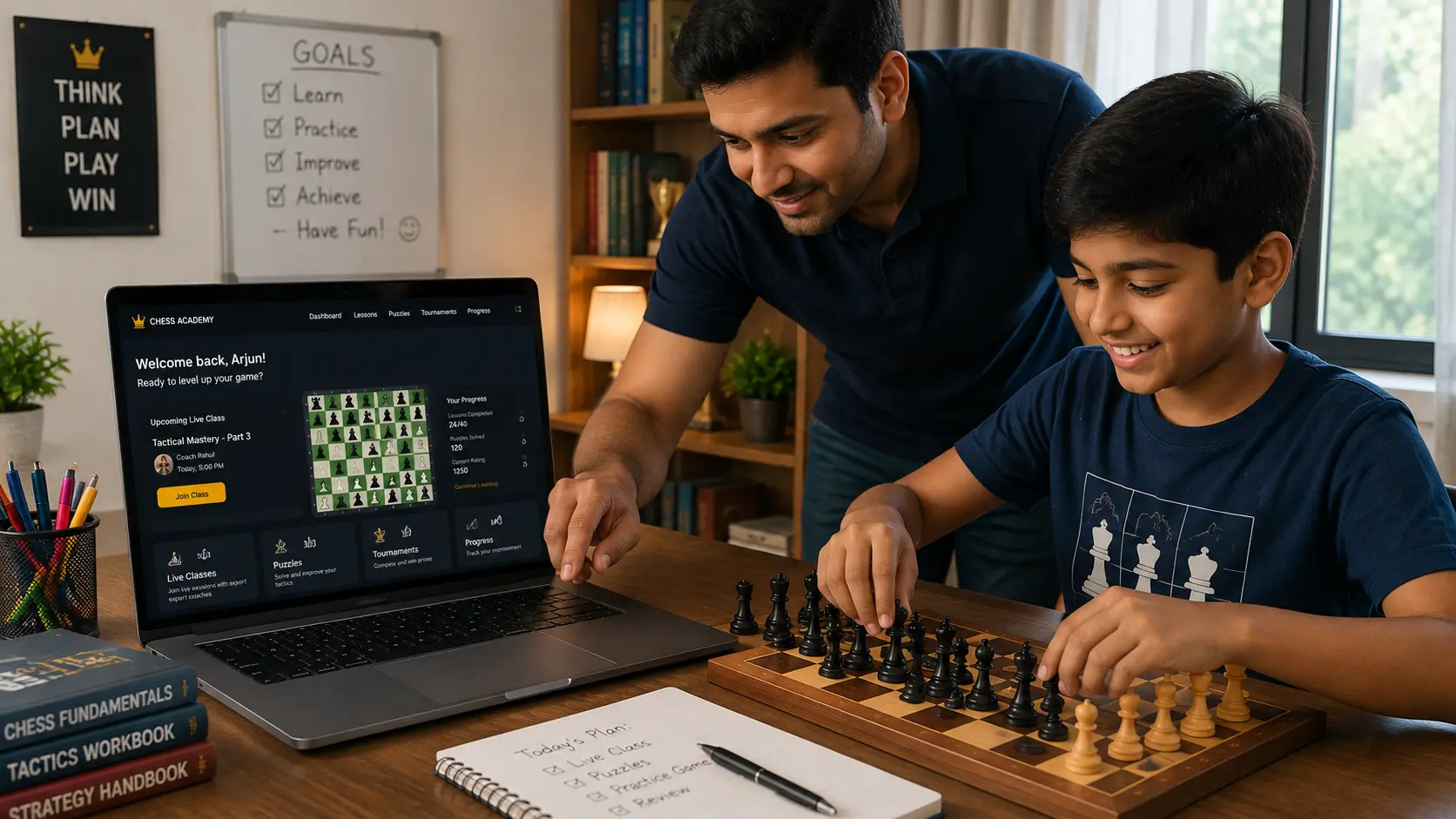
Online chess programs are highly adaptable and designed to cater to learners at every stage of strategic understanding. From young children building foundational focus to competitive players working on advanced opening repertoires, structured digital training adapts seamlessly to individual needs.
Chess Coaching for Beginners in Ahmedabad
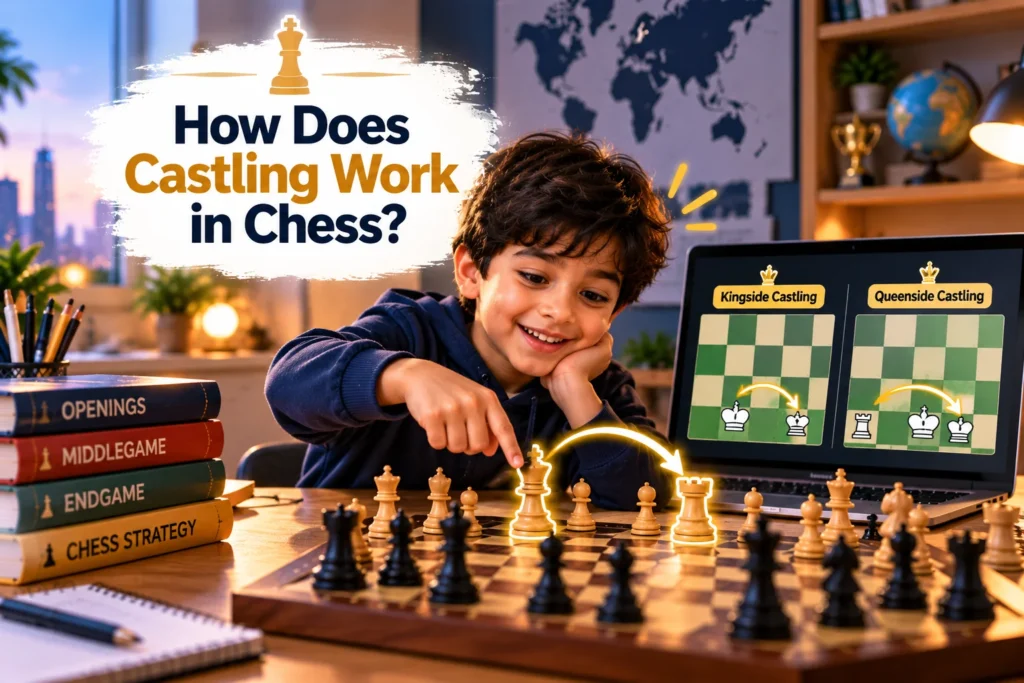
For complete beginners, early guidance is essential for building a disciplined mind. Beginners start by learning piece movements, board coordinates, special moves like castling and en passant, and basic checkmating sequences. Starting with formal coaching ensures young learners do not form careless habits early on. Instructors use visual board drills to build spatial awareness, helping children gain confidence before tackling multi-move combinations. Beginners often start by learning basic strategic setups such as the best chess openings for beginners to control central squares early in the game.
Kids and School Students
School-going children benefit immensely from the mental discipline that chess demands. Calculating consequences before touching a piece, evaluating risk, and managing time under clock pressure directly reinforce strong academic habits. Chess teaches students to pause, analyze options, and stay patient—skills that translate naturally into better problem-solving in school subjects like mathematics and science.
Intermediate Players
Once a student understands basic rules and tactical motifs, progress can stall without structured mentoring. Intermediate players frequently encounter positional plateaus, struggle with middle-game planning, or make preventable errors under pressure. Structured virtual coaching helps intermediate learners master pawn structures, tactical combinations, defensive maneuvers, and essential endgames. Regular coach-led game reviews help students spot recurring mistakes and refine their decision-making process.
Chess Classes for Kids in Ahmedabad: Tournament-Focused Players
Students aiming for competitive district, state, or rated tournaments require rigorous, specialized training. Competitive chess demands deep opening preparation, middle-game plans tailored to opponent styles, computer engine verification, and psychological preparation. Digital learning platforms grant serious players access to extensive game databases and experienced mentors regardless of location, giving them a distinct competitive edge.
Adults Learning Chess
Chess is equally rewarding for working professionals and adult learners. Many adults pick up chess to sharpen logical thinking, improve focus, or cultivate a fulfilling intellectual hobby after work. Online coaching offers adults a flexible, self-paced, and private environment where they can master the game without the pressure of a traditional classroom environment.
What Should Parents Look for in Online Chess Training in Ahmedabad?
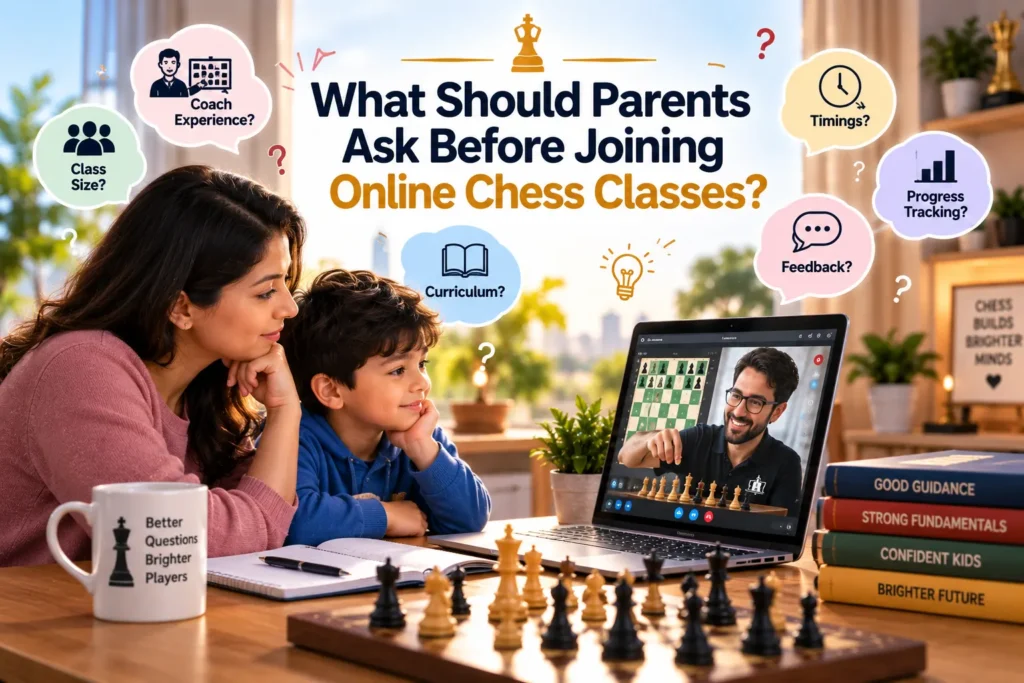
Selecting the right educational platform requires evaluating core teaching methodology rather than superficial marketing claims. To ensure your child receives structured, growth-oriented coaching, consider this essential checklist:
- Experienced and Patient Mentors: Playing chess well is different from teaching chess effectively. Look for mentors who understand child psychology, show patience, and explain complex concepts in clear, simple terms.
- Structured and Level-Based Syllabus: Avoid unstructured play sessions. A dependable academy uses a progressive syllabus that moves students systematically from fundamental mechanics to positional strategy. For a deeper breakdown of evaluation criteria, read our guide on how to choose the best chess academy for kids.
- Small Batch Sizes: Large group sessions often leave quieter students behind. Ensure batch sizes remain small (ideally 4 to 8 students) so the instructor can offer personal attention and feedback to every child.
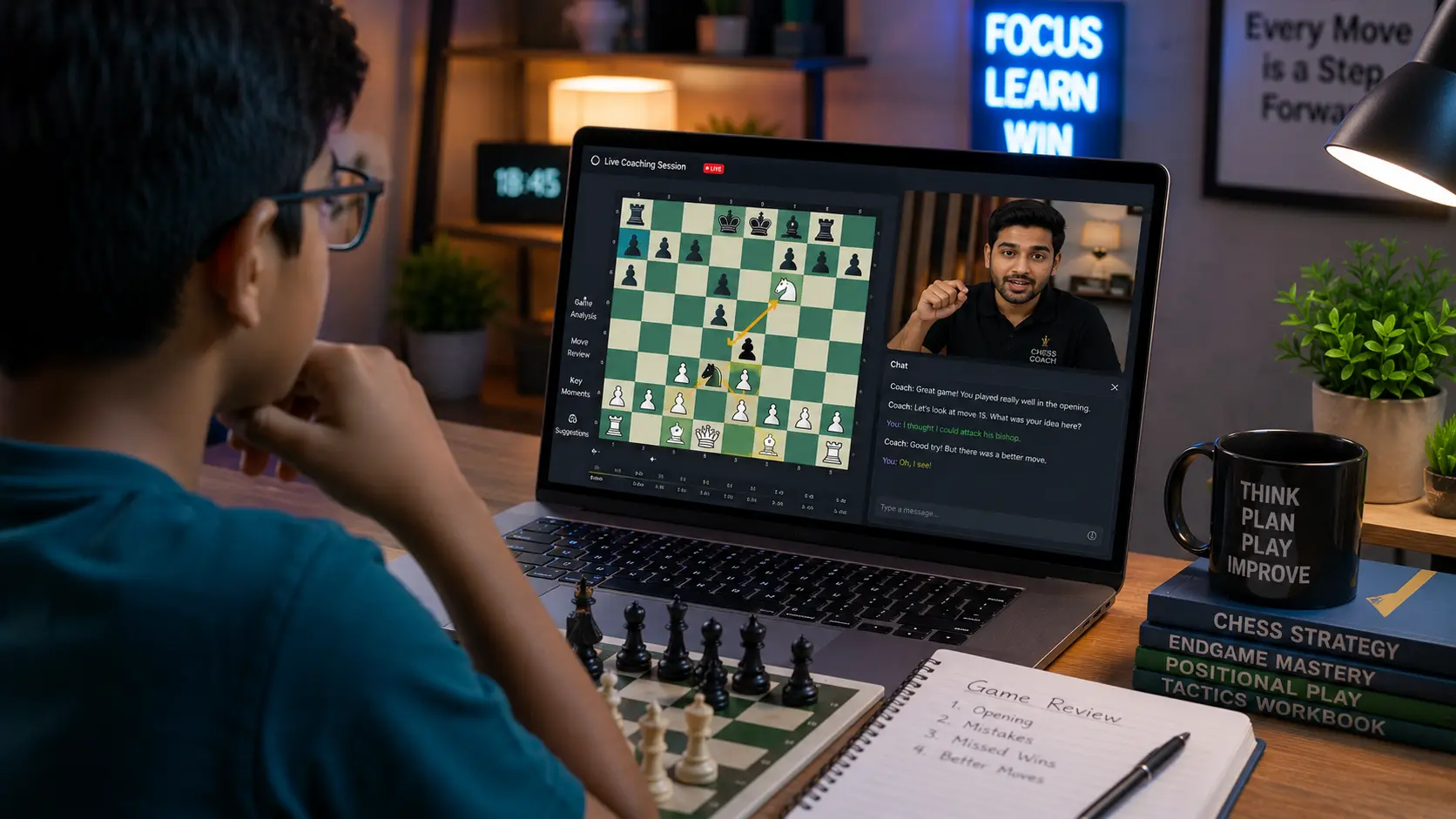
- Supervised Practice and Game Reviews: Learning concepts requires practical application. Quality programs feature supervised practice sessions, tactical assignments, and detailed reviews of student games.
- Focus on Sportsmanship and Resilience: Chess teaches children how to process victories with modesty and handle losses constructively. Learning to analyze defeats as valuable feedback builds emotional strength that serves children well in all areas of life.
Online Chess Classes vs Offline Chess Classes
To help you decide which learning environment best suits your family's daily routine, here is a clear comparison between traditional physical centers and modern digital coaching:
| Comparison Factor | Online Chess Classes | Offline Chess Classes |
|---|---|---|
| Travel & Convenience | Zero travel. Students learn comfortably from home. | Requires driving through city traffic to a center. |
| Scheduling Flexibility | High. Diverse weekday and weekend batch timings. | Fixed batch schedules with limited alternatives. |
| Coach Accessibility | Access specialist coaches regardless of location. | Restricted to instructors within commuting distance. |
| Learning Tools | Interactive digital boards, engine analysis, instant review. | Physical boards, manual demonstration boards, handouts. |
| Game Analysis | Automatic digital game recording and computer evaluation. | Requires manual scorebook notation and memory recall. |
| Social Interaction | Live video discussions and supervised peer games. | In-person physical interaction with classmates. |
| Parental Visibility | Parents can easily monitor sessions and progress. | Parents typically wait outside during class hours. |
The right choice depends on your child's personality, learning preferences, and your family's weekly schedule. Many parents find that the convenience, analytical depth, and flexibility of digital learning provide the most consistent long-term results.
Pros and Cons of Online Chess Classes
A balanced evaluation involves reviewing both the unique advantages and realistic limitations of virtual learning environments.
Pros
- Significant Time Savings: Eliminates travel hours, leaving more time for study, rest, and play.
- Access to Expert Mentors: Connects students with skilled coaches without geographic limits.
- Precise Digital Tools: Games are digitally recorded, allowing for precise move-by-move analysis.
- Comfortable Environment: Children learn in a familiar, quiet study space at home.
- Flexible Scheduling: Easier to adjust class times around school exams and holidays.
Cons
- Device & Internet Reliance: Requires a reliable computer and stable internet connection.
- Screen Time Management: Adds structured screen time that parents need to balance.
- Initial Guidance for Young Kids: Very young children (ages 4–5) may need help setting up software.
- Less Physical Contact: Lacks the physical over-the-board presence of a traditional club.
Avoid evaluating chess coaching purely based on hourly rates or class duration. A focused 45-minute interactive session with an attentive mentor who identifies calculation errors is far more beneficial than hours of unsupervised play. True coaching quality centers on refining decision-making habits that benefit a child for life.
How Can Children Improve Through Online Chess Training?
Joining a structured coaching program is only the beginning. Long-term strategic development relies on consistent practice habits and supportive parental encouragement. Here are proven ways to accelerate your child's progress:
- Maintain a Consistent Practice Schedule: Regular, short practice sessions are far more effective than long, infrequent study sessions. Establishing a daily routine helps children develop lasting discipline.
- Solve Tactical Puzzles Daily: Puzzles build visual pattern recognition. Encourage your child to solve tactical exercises regularly to spot tactical opportunities during games.
- Analyze Played Games: Reviewing completed games with a coach reveals blind spots and calculation errors. If you want to help your child climb competitive ranks, review our guide on how to improve your chess rating for practical guidance.
- Create a Quiet Learning Space: Set up a dedicated, quiet study desk equipped with proper lighting and a comfortable chair for class sessions.
- Praise Effort and Process: Focus on rewarding thoughtful calculation, patience, and good sportsmanship rather than focusing solely on winning or losing individual practice games.
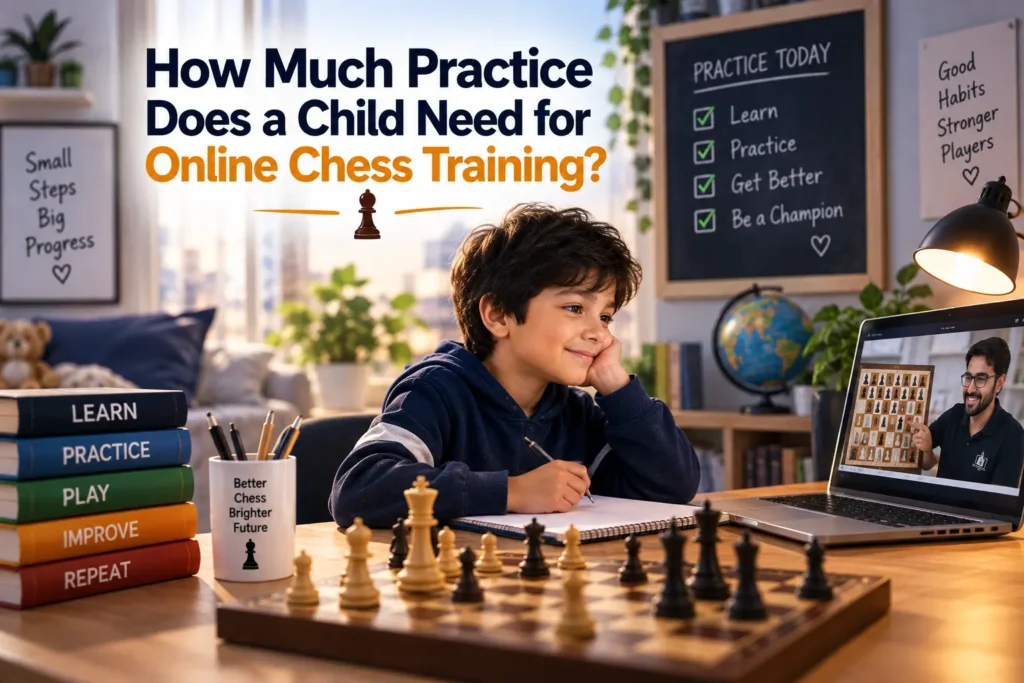
How Much Chess Practice Does a Child Need?
The ideal practice volume varies based on a child's age, skill level, and personal goals. Here is a practical daily guideline for home practice:
- Beginners (Ages 5–8): 15 to 30 minutes daily. Focus on basic piece movement drills, simple puzzles, and fun practice games.
- Intermediate Learners: 30 to 45 minutes daily. Focus on tactical puzzle sets, reviewing class notes, and playing 1 or 2 timed practice matches.
- Tournament-Focused Competitors: 45 to 60+ minutes daily. Focus on deep game analysis, opening repertoire study, calculation drills, and competitive play.
Consistency and focused attention matter far more than total time spent. Short, mindful study sessions yield significantly better results than playing dozens of fast, impulsive games without post-game analysis.
How to Choose the Right Online Chess Academy in Ahmedabad
Selecting the right learning partner is key to keeping your child motivated and engaged over time. Use this checklist when comparing online programs:
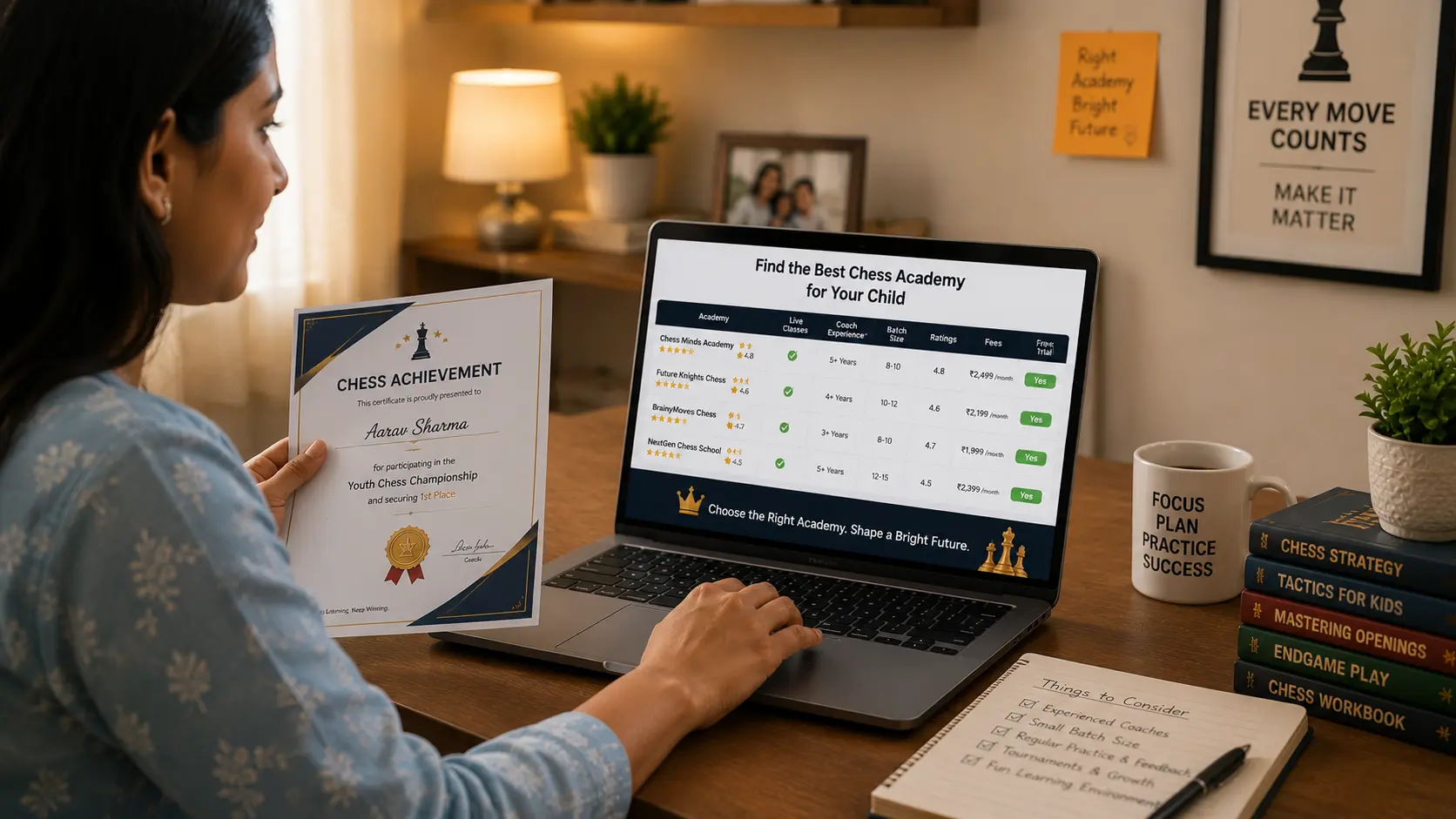
- Who conducts the classes? Verify the experience, coaching background, and communication style of the instructors.
- Is the curriculum structured across progressive levels? Ensure the academy clearly separates complete beginners from intermediate and competitive players.
- What is the maximum batch size? Choose academies that keep group sizes small so every student receives individual attention.
- How is progress tracked and reported? Confirm whether the academy provides regular skill evaluations and parent updates.
- Are practice matches organized regularly? Check if students have structured opportunities to play supervised practice games against peers.
- Is a trial or demo session offered? A trial class allows you to assess the coach's teaching style and see how comfortable your child feels before enrolling.
Why Choose Brainiac Chess Academy for Online Chess Coaching?
When seeking structured, expert guidance for your child, choosing an academy dedicated to holistic development makes all the difference. Brainiac Chess Academy delivers comprehensive online chess training designed to guide students systematically from fundamental rules to competitive mastery.
While physically based in Sector 7, Janata Market, Vashi, Navi Mumbai, Maharashtra, Brainiac Chess Academy runs a fully equipped digital learning program. This enables families seeking online chess classes in Ahmedabad and across various cities to access high-quality chess instruction without geographic boundaries. The academy offers structured programs tailored for beginners, intermediate players, and advanced tournament competitors.
With live interactive sessions, small batch sizes, systematic curriculum modules, and regular performance evaluations, Brainiac Chess Academy ensures that every student receives individual attention. Mentors focus not only on opening lines and tactical calculation, but also on building focus, critical thinking, and emotional resilience in young minds.
Frequently Asked Questions About Online Chess Classes in Ahmedabad
1. Are online chess classes good for children in Ahmedabad?
Yes, online chess classes are very effective for children. They offer direct access to experienced mentors without requiring long travel times across the city. Interactive digital boards, real-time feedback, and structured practice make virtual learning highly engaging for students.
2. What age can a child start online chess classes?
Most children can begin learning chess around 5 to 6 years of age. At this stage, young minds absorb piece rules and basic spatial concepts quickly. Visual digital tools and interactive boards help keep lessons fun and accessible for young beginners.
3. How do online chess classes work?
Classes take place live via video conferencing with an interactive digital board. Instructors demonstrate tactical concepts, guide calculation drills, and supervise practice games played between classmates, offering real-time feedback throughout the session.
4. Are online chess classes suitable for beginners?
Yes, online classes are excellent for beginners. Visual demonstrations on digital boards make piece movements, spatial rules, and checkmating concepts clear and easy to grasp step-by-step.
5. How often should children practice chess?
Consistency is key to steady progress. Short daily practice sessions of 15 to 30 minutes—focused on solving tactical puzzles or playing practice games—are much more effective than long, infrequent study sessions once a week.
6. Can online chess coaching help with tournament preparation?
Yes. Specialized online coaching includes opening preparation, middle-game planning, endgame calculation, and digital game analysis, helping students prepare effectively for local, state, and rated tournaments.
7. What should parents look for in an online chess academy?
Look for qualified instructors, small batch sizes, a structured curriculum, regular performance tracking, and open parent communication. A reliable academy emphasizes long-term cognitive growth rather than quick promises.
8. Can students from Ahmedabad join Brainiac Chess Academy online?
Yes. While Brainiac Chess Academy is physically located in Vashi, Navi Mumbai, its online chess coaching programs are open to students living in Ahmedabad and across India.
Book Your Free Demo Class
Looking for structured, expert-led chess coaching for your child? Brainiac Chess Academy offers live online chess classes designed to help students develop confidence, logic, and strategic thinking from home.
Physical Academy Location:
Sector 7, Janata Market, Vashi, Navi Mumbai, Maharashtra, India
Phone / WhatsApp: +91 93248 29329
Book Your Free Demo Right NowConclusion
Cultivating focus, logical thinking, and strategic resilience in your child does not require adding long travel hours to your family's daily schedule. Enrolling in online chess classes in Ahmedabad provides children with a structured, engaging platform to learn the royal game under expert mentorship right from home. Through interactive live sessions, small batch guidance, and regular practice, students develop mental discipline that supports both academic performance and personal growth. If you are ready to introduce your child to structured chess learning, book a free demo session with Brainiac Chess Academy today to take the first step.