Why Every Student Should Play Chess in School
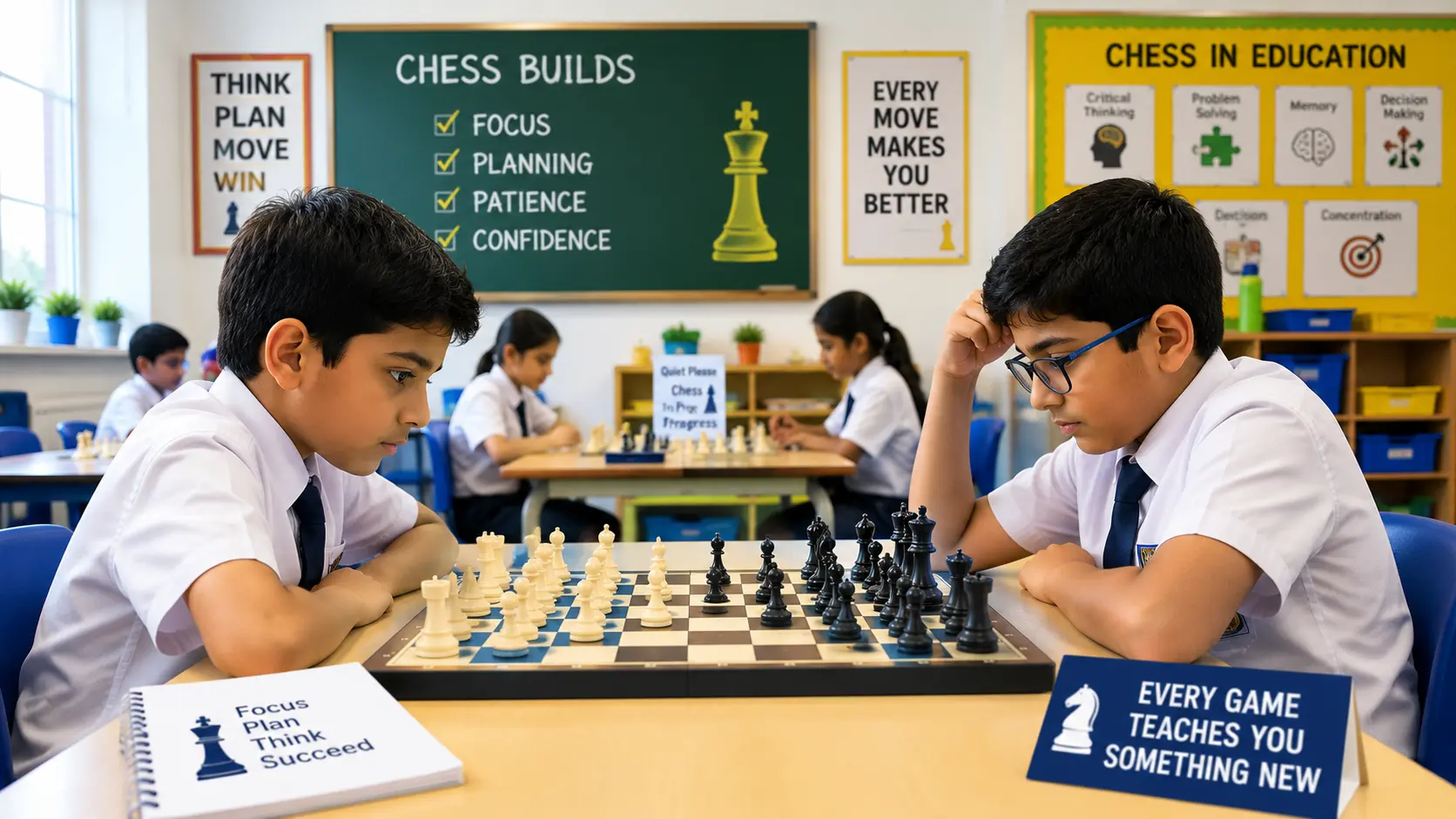
In modern education, rote memorization is no longer enough to prepare students for the complexities of the real world. Today’s children need tools that teach them how to think, not just what to think. This is exactly why the integration of Chess in Schools is rapidly transforming educational curriculums globally. The game of kings has evolved from a quiet pastime into a powerful educational intervention tool.
Academic success requires more than reading textbooks; it requires sustained focus, logical reasoning, and emotional resilience. Comprehensive Chess Education delivers all these elements in a format that children genuinely enjoy. By turning problem-solving into a game, students are eager to participate, completely unaware that they are simultaneously boosting their cognitive capacities.
In this extensive guide, we will explore the profound impact of Chess in Schools. Whether you are a parent looking to support your child’s learning, a teacher seeking innovative classroom tools, or a school administrator considering curriculum additions, you will discover how structured chess programs actively promote Student Brain Development and prepare children for lifelong success.
Why Chess in Schools Is Growing Around the World
The push for Chess in Schools is not a localized trend; it is a global educational movement. Recognizing the profound cognitive advantages of the game, institutions like the World Chess Federation (FIDE) have championed initiatives to bring chessboards into elementary and middle school classrooms worldwide.
Educators recommend chess because it bridges the gap between academic theory and practical application. While traditional subjects teach specific knowledge, a proper Chess Education teaches the underlying mechanics of *how* to learn. In countries like Armenia, chess has been a mandatory school subject for over a decade, resulting in measurable improvements in national academic standards.
Schools are adopting these programs because the infrastructure is inexpensive, the rules cross all language barriers, and the developmental returns are astronomical. It is an inclusive activity where students of all physical abilities can compete on an entirely level playing field.
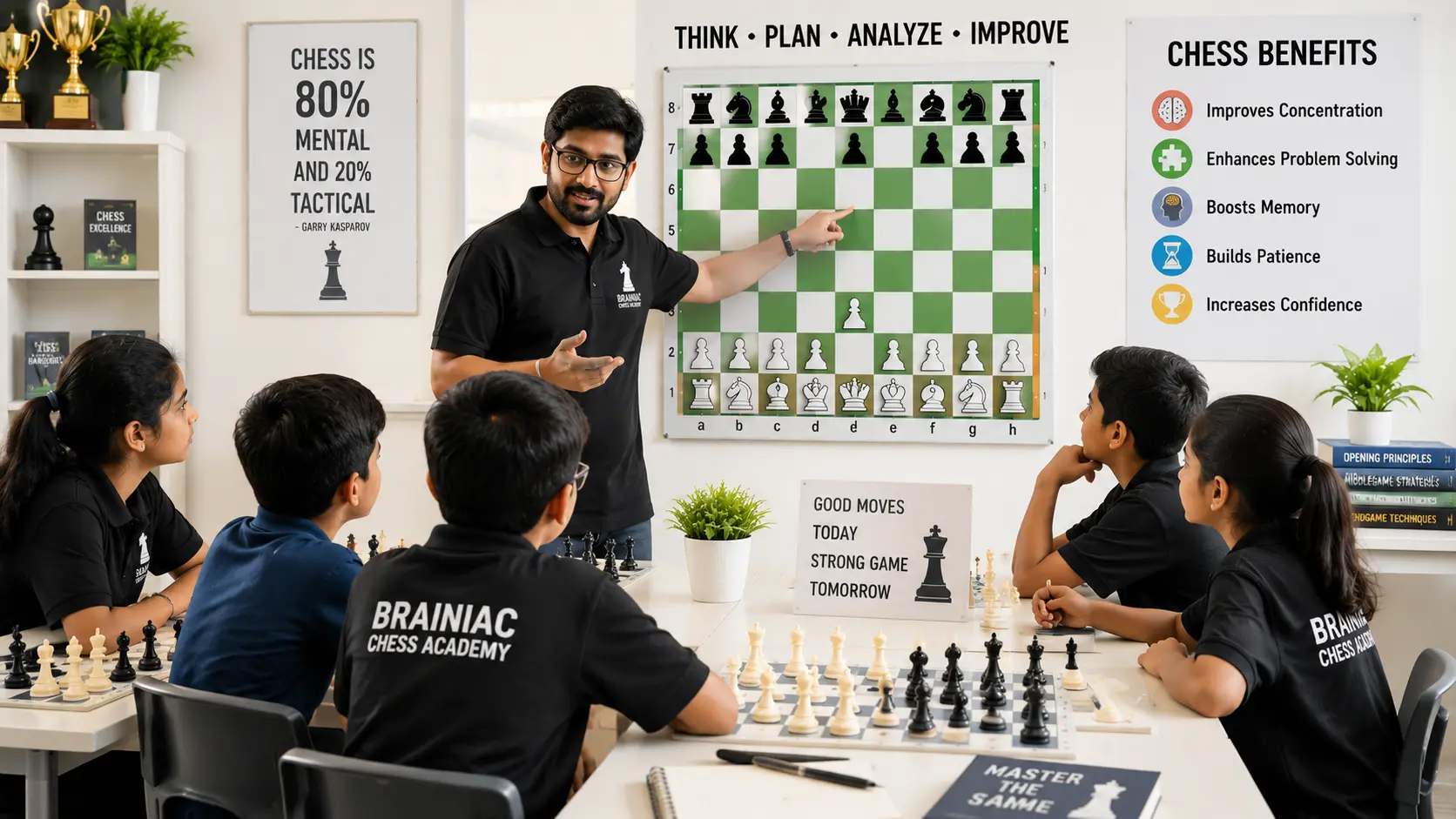
10 Benefits of School Chess for Students
Integrating Chess in Schools yields multifaceted advantages that extend far beyond the 64 squares. Let us explore ten distinct Benefits of School Chess that actively shape a child's academic and personal growth.
1. Improves Concentration
What it means: The ability to focus solely on a single task for an extended period without yielding to distractions.
Why it matters: In an era of smartphones and short attention spans, deep focus is a rare and highly valuable academic trait.
Practical classroom example: A student who struggles to sit through a 30-minute math lesson often finds themselves willingly sitting still for a 45-minute chess match.
How chess develops this skill: If a player loses focus for even one move, they can lose their Queen. Chess provides instant, logical feedback that punishes distraction and rewards intense concentration.
Teacher's Insight
"I've noticed that students who participate in our school chess club are much better at self-regulating their attention during silent reading periods."
2. Develops Critical Thinking
What it means: Analyzing a situation objectively and making reasoned judgments based on evidence.
Why it matters: Critical thinking is the foundation of scientific inquiry and reading comprehension.
Practical classroom example: When analyzing historical events, chess players are better at looking at multiple perspectives, much like evaluating a chess board from both white and black's point of view.
How chess develops this skill: Chess in Schools teaches children to question their first instinct. They learn to ask, "If I make this move, what will my opponent do?"
3. Enhances Problem-Solving Skills
What it means: Identifying a complex problem and generating viable solutions to overcome it.
Why it matters: Life and academia are filled with unexpected hurdles that require creative navigation.
Practical classroom example: Tackling a difficult, multi-step word problem in algebra.
How chess develops this skill: Every single chess game is a puzzle that changes with every turn. Students must constantly adapt their strategies to solve the immediate problem of their opponent's threats.
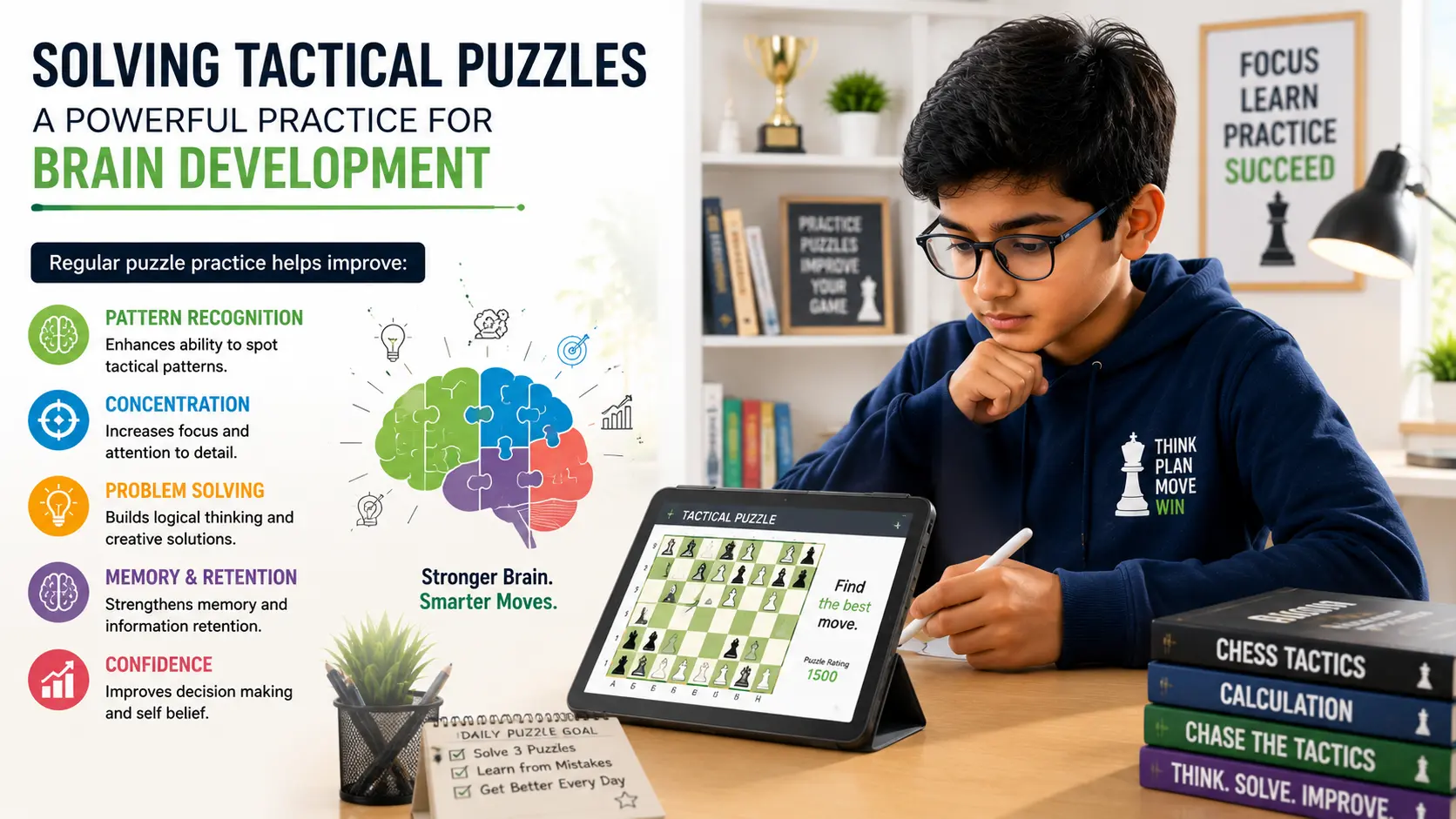
4. Builds Patience and Discipline
What it means: The capacity to delay immediate gratification in pursuit of a long-term goal.
Why it matters: Academic success requires hours of studying before seeing the result on a report card.
Practical classroom example: Completing a month-long science fair project without rushing the final steps.
How chess develops this skill: Chess Education strictly enforces rules like "touch-move" (if you touch a piece, you must move it). This forces discipline. Furthermore, building a winning attack often takes 20 carefully planned moves, teaching profound patience.
5. Improves Memory
What it means: The ability to store, retain, and recall information quickly and accurately.
Why it matters: Memorizing vocabulary, historical dates, and scientific formulas is a core part of the school experience.
Practical classroom example: A student recalling the specific steps required to balance a chemical equation during a test.
How chess develops this skill: Chess players memorize opening theories, recognize tactical patterns from past games, and must remember the rules of piece movement. This heavy reliance on visual memory significantly aids Student Brain Development.
Teacher's Insight
"Pattern recognition learned in chess directly translates to a student's ability to recognize grammatical patterns in language classes."
6. Boosts Mathematical Thinking
What it means: Understanding spatial relationships, geometry, and logical sequences.
Why it matters: Math is often a major stumbling block for students; making it tangible helps immensely.
Practical classroom example: Understanding coordinates on an X and Y axis in geometry class.
How chess develops this skill: The chessboard is a giant grid (files and ranks). Players calculate the numerical value of pieces (a Knight is worth 3, a Rook is worth 5) to decide if a trade is mathematically favorable.
7. Encourages Better Decision-Making
What it means: Weighing risks and rewards before taking action.
Why it matters: Teenagers are prone to impulsive behavior; teaching them to pause and think is vital for their safety and success.
Practical classroom example: Choosing to study for a final exam rather than playing video games the night before.
How chess develops this skill: Chess in Schools provides a safe environment to experience the consequences of bad decisions. A hasty, impulsive move leads to a lost game, teaching the child to evaluate choices more carefully next time.
8. Strengthens Creativity
What it means: Thinking outside the box and finding unconventional solutions.
Why it matters: True innovation in any field requires a highly creative mind.
Practical classroom example: Writing an engaging, original essay for an English assignment.
How chess develops this skill: While chess has strict rules, the combinations are infinite. Players often execute "sacrifices"—giving up a valuable piece to create a beautiful, unexpected checkmate pattern.
9. Develops Leadership Skills
What it means: Taking responsibility, guiding others, and managing resources effectively.
Why it matters: Schools aim to cultivate the next generation of leaders and managers.
Practical classroom example: Leading a group project and delegating tasks effectively among peers.
How chess develops this skill: The chess player is the general of their army. They must coordinate their pieces, protect their King, and take absolute responsibility for the outcome. There is no team to blame in a one-on-one chess match.
10. Builds Confidence
What it means: Believing in one's own intellect and abilities.
Why it matters: Confident students are more likely to raise their hands in class, ask questions, and tackle difficult subjects without fear.
Practical classroom example: Volunteering to solve a complex math problem on the chalkboard in front of the class.
How chess develops this skill: When a child realizes they can out-think an opponent—sometimes even an adult—through pure logic, their intellectual self-esteem skyrockets. This is one of the most heartwarming Benefits of School Chess.
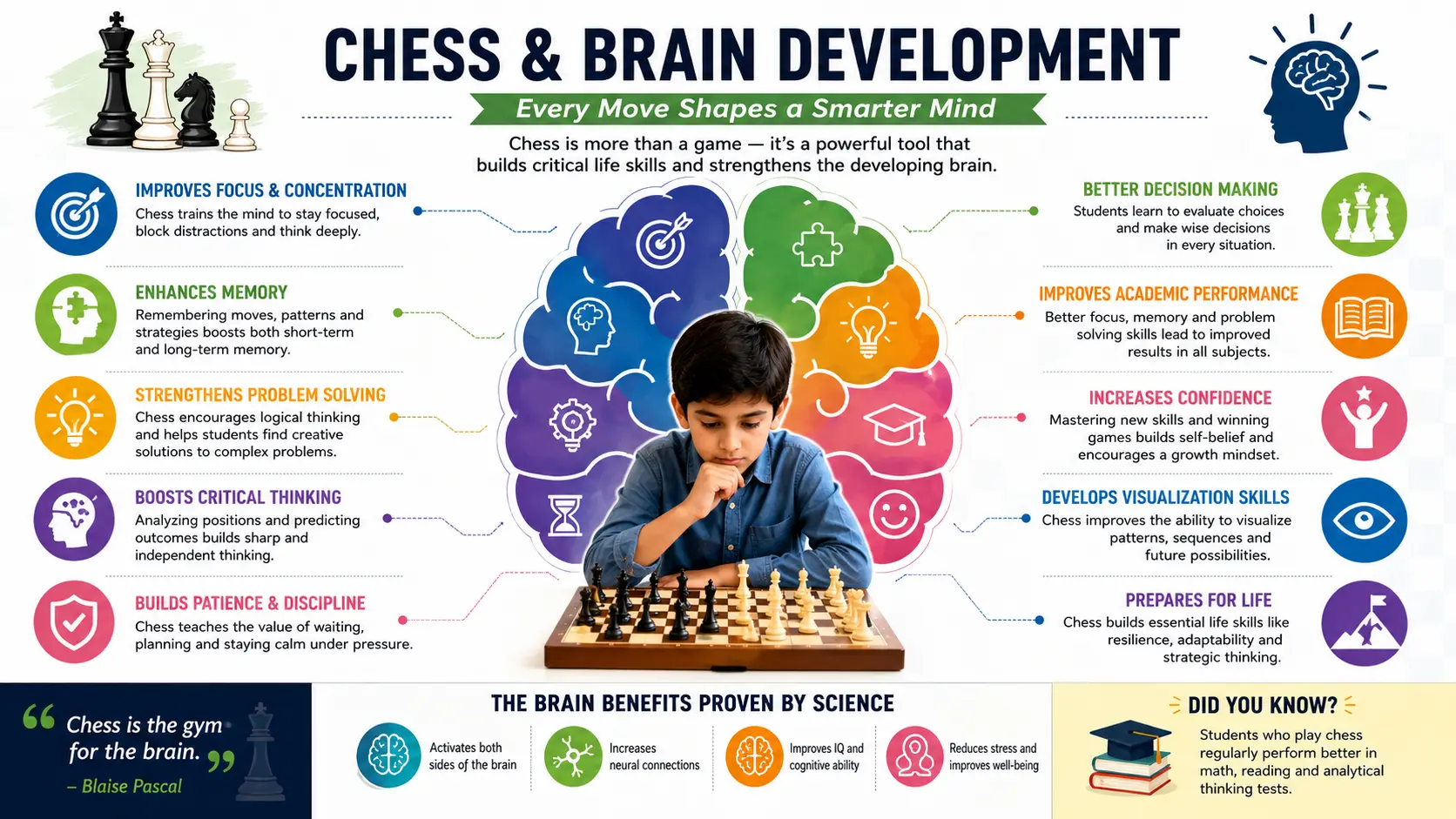
How Chess Education Improves Academic Performance
The correlation between Chess Education and higher grades is backed by numerous studies. Chess is essentially a gym for the mind. When students exercise their logical faculties on the board, those mental muscles are ready to tackle school curriculums.
In Mathematics, chess improves spatial reasoning and logical sequencing. In Science, it mirrors the scientific method: form a hypothesis (I think this move is good), test it through calculation, and analyze the results. Interestingly, chess also drastically improves Reading Comprehension. The intense focus required to read a complex text is identical to the focus required to calculate a deep chess variation.
Most importantly, Chess in Schools teaches independent learning. A chess player must analyze their own games to find mistakes, a skill that translates perfectly to a student reviewing their incorrect answers on an examination to prepare better for the next one.
The Role of Chess in Student Brain Development
From a neurological perspective, childhood and adolescence are critical periods for brain plasticity. Engaging in complex activities like chess stimulates profound Student Brain Development.
Playing chess engages both hemispheres of the brain. The left hemisphere is utilized for object recognition (identifying the pieces) and logical step-by-step calculation. The right hemisphere is engaged for pattern recognition and spatial visualization (imagining where the pieces will be three moves from now).
By forcing both sides of the brain to communicate rapidly, chess strengthens neural connections. This cognitive flexibility ensures that a child's brain is highly receptive to learning, analyzing, and storing new academic information efficiently.
Life Skills Students Learn Through Chess
While the academic benefits are massive, the character-building aspects of Chess in Schools are equally important. Chess prepares children for the emotional and practical realities of adult life.
| Life Skill | How Chess Teaches It |
|---|---|
| Time Management | Using a chess clock teaches students to allocate their limited time efficiently under pressure. |
| Emotional Control | Learning to stay calm and objective after making a terrible blunder. |
| Sportsmanship | Shaking hands before and after every game, learning to win with grace and lose with dignity. |
| Responsibility | Accepting that the loss was entirely due to one's own decisions, fostering extreme ownership. |
Common Myths About Chess in Schools
Despite its proven advantages, some schools and parents hesitate to implement a Chess Education program due to lingering misconceptions. Let's debunk the most common myths:
- Myth: Chess is only for gifted children.
Reality: Chess makes children gifted. You do not need a high IQ to start playing; playing chess actively improves problem-solving skills and intellectual capacity over time. - Myth: Chess is boring.
Reality: When taught by an engaging coach, chess is a thrilling, competitive battle of wits. Kids love the tactical traps and checkmating attacks. - Myth: Chess reduces study time.
Reality: The efficiency in studying gained through improved focus far outweighs the hour a week spent playing the game. - Myth: Only boys play chess.
Reality: Chess in Schools is entirely gender-neutral. Girls benefit equally from the game, and female participation in school chess clubs is growing exponentially worldwide.
How Parents Can Encourage Chess Learning at Home
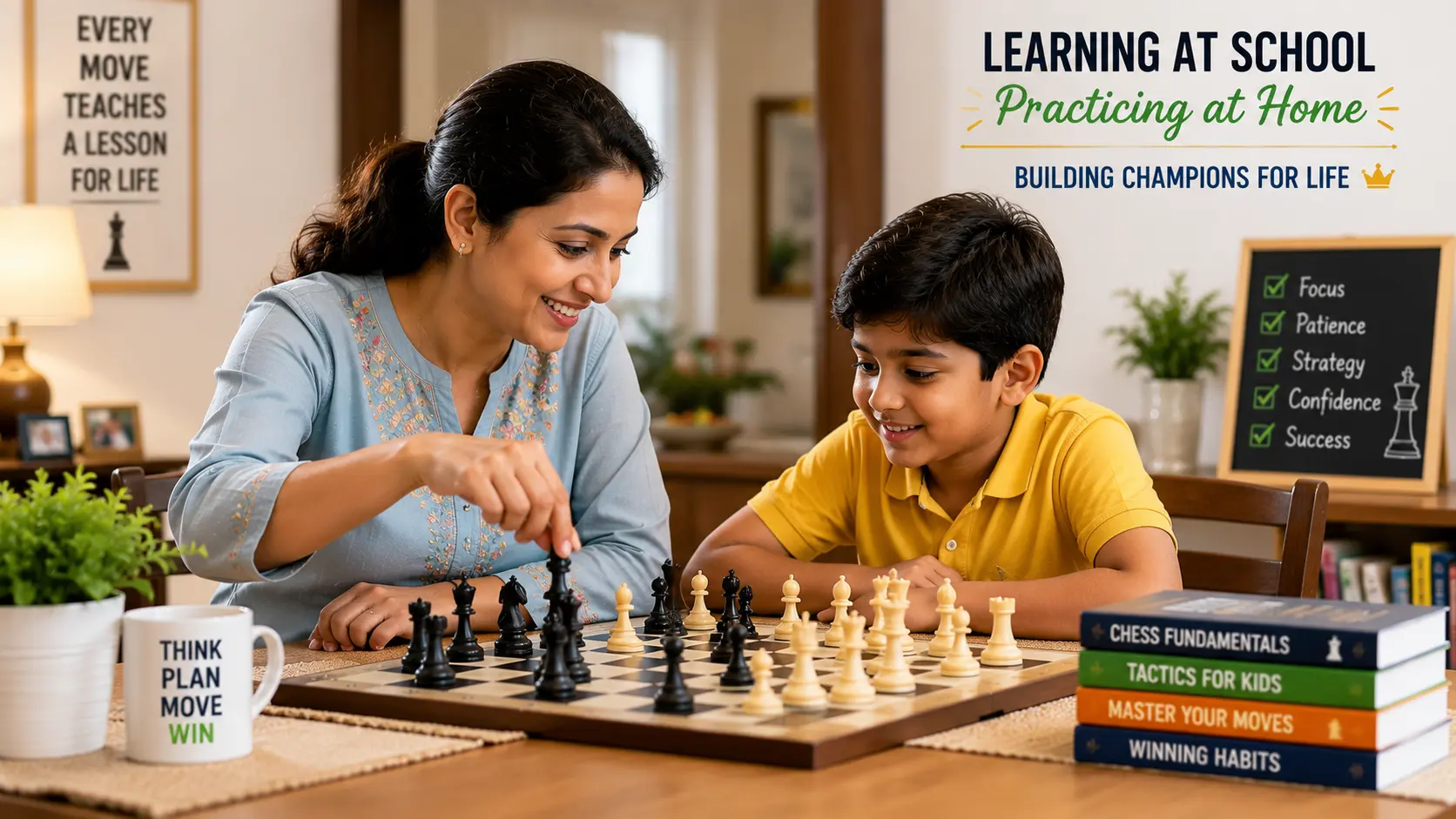
If your child's school does not yet have a formal program, or if you want to supplement their school learning, parents play a vital role in reinforcing Student Brain Development at home.
Start by playing together. Even if you don't know the rules, learning alongside your child shows them that learning is a lifelong process. Set a weekly schedule, perhaps dedicating Sunday mornings to solving a few chess puzzles together over breakfast.
Always celebrate their improvement, not just their victories. Praise them for thinking a long time before moving, or for noticing a tricky threat, even if they ultimately lost the game.
For parents looking for structured, professional guidance, enrolling your child in Online Chess Lessons – Learn Chess the Smart Way with Brainiac Chess is the perfect way to build strong foundational skills from the comfort of home.
Why Choose Brainiac Chess Academy?
If you recognize the incredible Benefits of School Chess and want your child to experience top-tier Chess Education, Brainiac Chess Academy is your ideal partner.
We provide Expert Coaches who specialize in child development and beginner-friendly pedagogies. We understand that teaching a 7-year-old is vastly different from teaching an adult. Our curriculum is highly interactive, ensuring that students remain engaged and excited about learning.
Whether you prefer Online Chess Coaching – Learn Chess Smarter with Brainiac Chess or in-person sessions at our center in Navi Mumbai, we maintain Small Batch Sizes to provide Personalized Coaching for every student. From mastering the basic rules to intense Tournament Preparation, we offer a Flexible Learning environment that fits seamlessly into your child's school schedule.
Book Your Free Demo Class
Help your child unlock stronger thinking, better concentration, and lifelong learning skills through structured chess coaching.
Brainiac Chess Academy offers expert online and offline coaching designed for beginners, school students, and tournament players.
📞 Call / WhatsApp: +91 9324829329
👉 Book Your Free Demo Right Now
Frequently Asked Questions
Why should schools teach chess?
Is chess good for academic performance?
Does chess improve IQ?
Can beginners learn chess easily?
At what age should children start?
Is online coaching effective?
Does chess improve memory?
Why is chess important for students?
Conclusion
The integration of the game into modern curriculums is far more than an extracurricular activity; it is a fundamental shift in how we prepare children for the future. By embracing Chess in Schools, we provide students with a mental gymnasium where they can safely build their logical reasoning, emotional control, and academic stamina.
Whether it is through improved math scores, a longer attention span during reading, or the sheer confidence gained from delivering a brilliant checkmate, the advantages of this ancient game are undeniable. We strongly encourage parents and educational institutions to view chess not merely as a game, but as an essential investment in a child's lifelong learning journey.