Online Chess Classes in Chennai | Expert Coaching

Parenting today involves balancing schoolwork, homework, tuitions, and extracurricular activities. For families living in bustling hubs across Tamil Nadu, finding a constructive activity that fits into a demanding daily routine can be challenging. Many parents recognize the mental benefits of strategic board games but struggle with the logistics of commuting. Navigating peak-hour traffic after school simply to drop a child off at a physical academy often leaves both parent and child exhausted. Because of this, enrollment in online chess classes in Chennai has become an increasingly practical way to offer high-quality instruction without adding stress to your family schedule.
Chess is widely recognized for improving focus, logical thinking, patience, and problem-solving abilities. However, the success of a child's learning journey depends heavily on how the game is introduced. While traditional physical centers require fixed attendance schedules, digital platforms allow children to learn from home under expert guidance. Whether your child is taking their very first steps on the 64 squares or seeking to transition from casual play to structured competitive training, understanding how virtual instruction functions helps you make an informed decision for your family's educational needs.
Quick Answer
Yes, online chess classes are an effective and flexible option for students in Chennai. They eliminate travel time, provide direct access to expert coaches, and offer interactive digital boards for live analysis. With structured guidance, small batch sizes, and consistent practice, online learning delivers equal or superior strategic development compared to traditional offline academies.
What Are Online Chess Classes in Chennai?
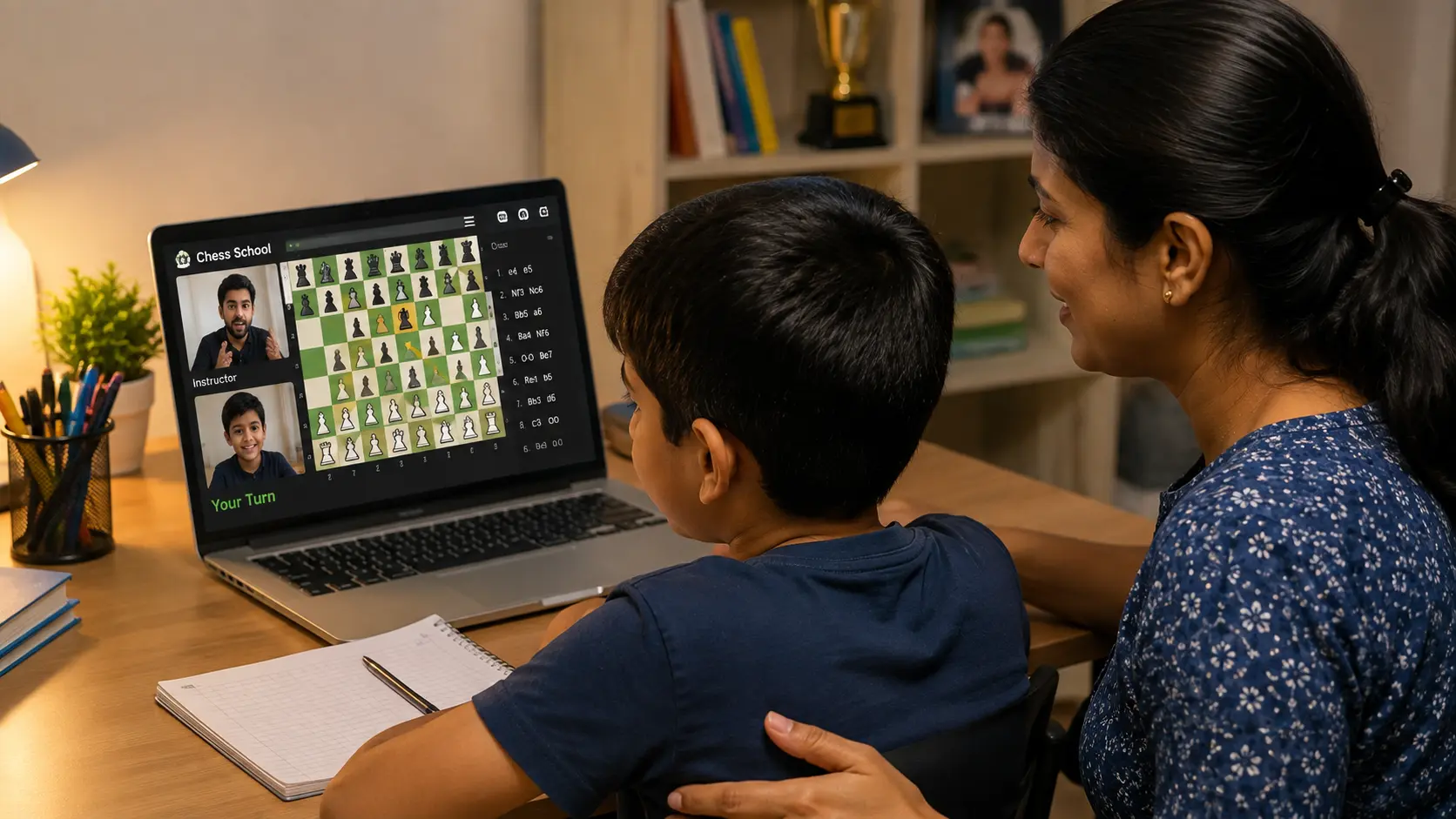
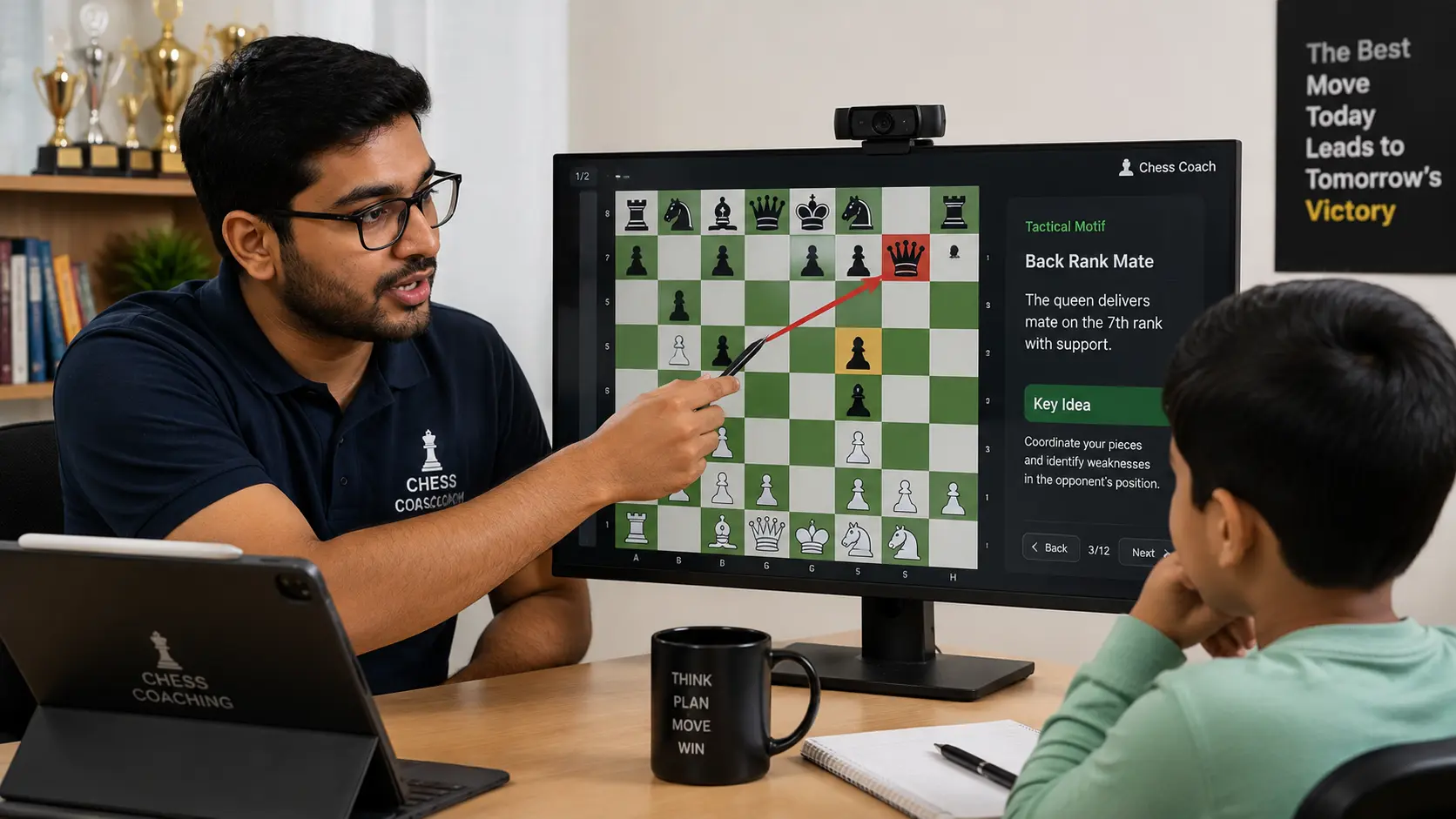
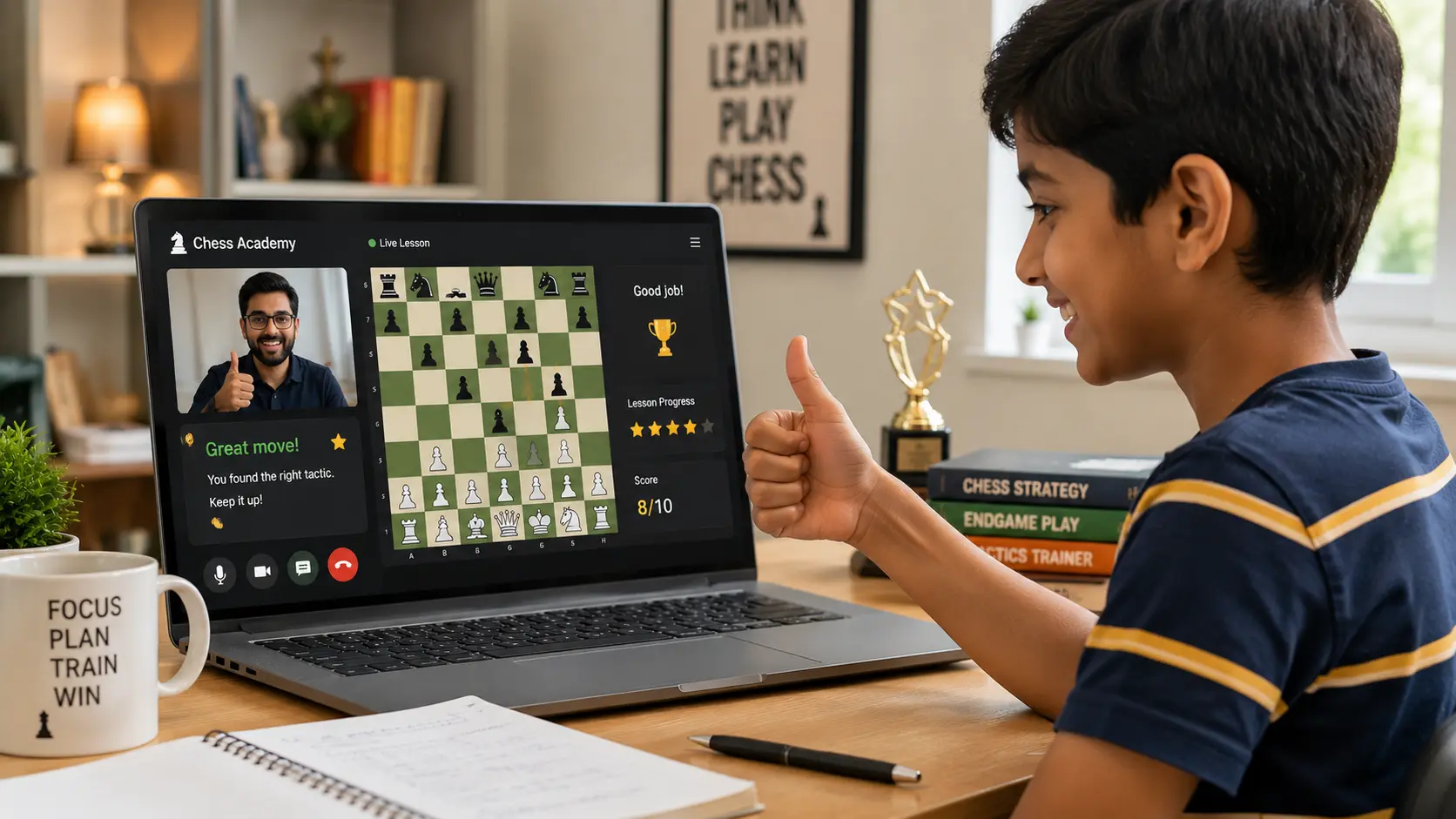
Modern interactive chess learning goes far beyond watching recorded videos or playing against simple computer algorithms. Virtual learning environments connect students directly with qualified instructors in real time. During a typical session, coaches utilize interactive digital boards that allow both teacher and student to move pieces, highlight key squares, draw tactical arrows, and analyze board positions simultaneously. This setup ensures that every child receives active, step-by-step guidance rather than remaining a passive observer.
A structured program blends live classroom instruction with practical execution. Classes generally start with a review of previous concepts, followed by direct teaching of new tactical themes, openings, or endgame strategies. After the theoretical presentation, students solve real-time puzzles and play structured practice games against batchmates under the direct supervision of the coach. Instructors observe these live games, pause when necessary to point out blunders, and explain better strategic alternatives. Outside of class, students receive assigned puzzle sets, customized homework, and progress evaluations, ensuring continuous skill building between weekly sessions.
Why Are Online Chess Classes Becoming Popular Among Chennai Families?
The transition toward digital learning among families in major urban centers is driven by practical lifestyle considerations. Navigating suburban traffic after school hours to reach training centers requires a significant time commitment. Eliminating the need to travel saves parents valuable hours each week—time that can be redirected toward academic studies, adequate rest, or family recreation. Learning from the comfort of home allows children to stay energized and fully focused on their lessons.
Another benefit is schedule flexibility. School hours, project deadlines, and exam schedules fluctuate throughout the academic year. Remote learning platforms often provide multiple batch timing options, including evening sessions and weekend slots. This allows families to maintain consistent training without interfering with school commitments or tuition schedules. Furthermore, home-based learning gives parents the opportunity to quietly observe how their child engages with the coach, offering full transparency into their educational development.
Who Can Benefit From Online Chess Coaching in Chennai?
Digital chess instruction is adaptable and can be tailored to suit learners at various ages and skill levels. Structured guidance helps students at every step of their journey, whether they are playing their first game or preparing for official tournaments.
Chess Coaching for Beginners in Chennai
For children who have never moved a piece, initial instruction sets the foundation for their overall understanding. Beginners learn piece movements, special rules like castling and en passant, basic board setup, and the core objective: checkmate. Starting with structured virtual coaching prevents children from picking up bad habits early on. Instructors guide new learners patiently through basic board vision, piece values, and basic checkmating patterns, ensuring they build confidence before moving on to complex strategies.
School-Age Children
School-going students often derive the greatest cognitive benefits from structured gameplay. Learning tactical concepts directly reinforces academic discipline. Concepts like calculating lines, evaluating consequences before making a move, and managing time on the clock transfer positively to academic exam preparation. Additionally, for young learners choosing between various analytical activities, exploring how strategic board games compare to tech skills like coding highlights how both build fundamental problem-solving capacities. You can read more about how chess compares to coding in developing critical thinking in our detailed article on Chess vs Coding: Problem-Solving Skills.
Intermediate Players
Once a player understands fundamental tactics and rules, their growth often hits a plateau. Intermediate students understand basic piece values but often struggle with mid-game strategy, tactical oversights, or improper piece coordination. Specialized virtual coaching introduces intermediate players to structured opening principles, positional planning, pawn structures, and essential endgame techniques. Regular game review by an experienced trainer helps intermediate players identify patterns in their mistakes and systematically eliminate weak points from their play style.
Students Preparing for Tournaments
Serious learners aiming to participate in competitive state or national-level competitions require rigorous, personalized instruction. Tournament preparation involves analyzing complex master games, building tailored opening lines, mastering clock management, and learning to handle pressure. Virtual coaching provides serious players with access to advanced databases, modern engine analysis, and specialized competitive instruction that might not be locally available in their immediate neighborhood.
Adults Learning Chess
Chess is not exclusively for school children; working professionals and adults also benefit greatly from learning the game. Adults often seek out chess to sharpen cognitive agility, improve long-term memory, or pick up an engaging mental hobby. Remote classes offer adults a comfortable, private, and flexible learning environment, allowing them to balance lessons around work schedules and family life without feeling out of place.
What Should Parents Look for in Online Chess Training in Chennai?
Choosing an educational platform for your child requires careful evaluation. To ensure your child receives quality instruction and steady developmental progress, consider this practical checklist:
- Qualified and Patient Instructors: A strong player is not automatically a good teacher. Look for instructors who understand child psychology, demonstrate patience, and know how to explain abstract positional concepts in simple, engaging terms.
- Structured and Age-Appropriate Curriculum: Avoid unstructured playing groups. A reliable program follows a clear syllabus, taking students systematically from beginner rules to intermediate concepts and advanced tournament tactics.
- Small Batch Sizes: Large group sessions often leave quieter children behind. Ensure the academy maintains limited student-to-teacher ratios (ideally 4 to 8 students per class) so the coach can evaluate every move individually.
- Regular Practice and Feedback: Learning requires real-time practice. Effective platforms organize internal practice sessions, assign tactical puzzles, and provide detailed monthly progress reports to parents.
- Focus on Emotional Growth: Win or lose, every game offers a learning opportunity. The ideal learning environment teaches children sportsmanship, emotional resilience, and how to analyze losses constructive without losing motivation. To better understand how structured play shapes personal character, explore our guide on how chess builds discipline and patience.
Online Chess Classes vs Offline Chess Classes
To help you decide which learning format best suits your family's daily routine, here is a clear comparison between traditional physical centers and modern virtual platforms:
| Feature / Criteria | Online Chess Classes | Offline Chess Classes |
|---|---|---|
| Convenience & Travel | Zero commute. Learn comfortably from home. | Requires travel through local traffic. |
| Scheduling Flexibility | High. Wide range of weekday/weekend slots. | Fixed center hours with limited batch options. |
| Coach Accessibility | Access expert coaches across regions. | Limited to instructors within physical driving distance. |
| Learning Tools | Interactive digital boards, puzzle engines, instant replay. | Physical boards, manual demonstration boards, paper worksheets. |
| Game Analysis | Instant digital recording and engine verification. | Requires manual notation and memory recall. |
| Social Interaction | Virtual interaction via video and supervised chat. | Direct, face-to-face physical interaction with peers. |
| Parental Visibility | Parents can easily sit in and monitor classes. | Parents usually wait outside the classroom. |
Pros and Cons of Online Chess Classes
Being fully informed means weighing both the advantages and potential drawbacks of virtual instruction before enrolling your child.
Pros
- Saves Time: Eliminates weekly travel, leaving extra time for rest and studies.
- Broader Access: Connects your child with experienced coaches, regardless of location.
- Digital Efficiency: Moves can be saved, reviewed, and re-analyzed instantly.
- Safe Environment: Learning occurs in the comfortable, familiar setting of home.
- Flexible Adjustments: Easier to adjust class timings around school exam schedules.
Cons
- Requires Stable Internet: Needs a dependable computer setup and internet connection.
- Screen Time Management: Adds structured screen time that parents need to balance.
- Initial Support for Young Kids: Very young children (ages 4–5) may need initial help with setup.
- Less Physical Socializing: Lacks the physical face-to-face environment of a local club.
How to Choose the Right Chess Academy for Your Child
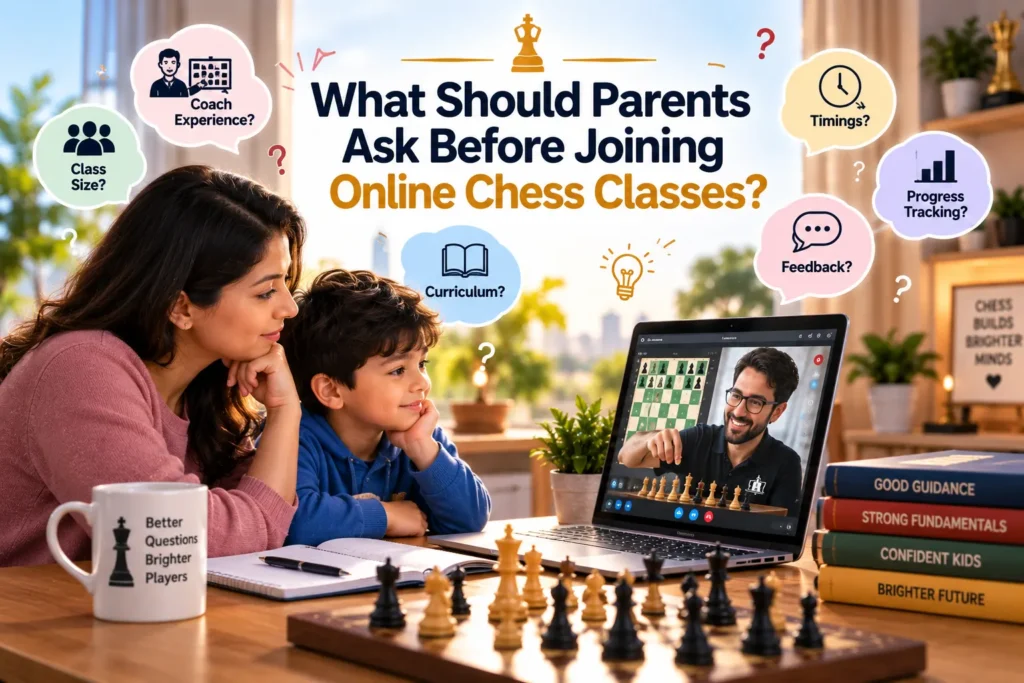
When selecting the right chess academy, asking targeted questions upfront saves time and ensures a smooth learning experience for your child. Here is a helpful evaluation checklist for parents:
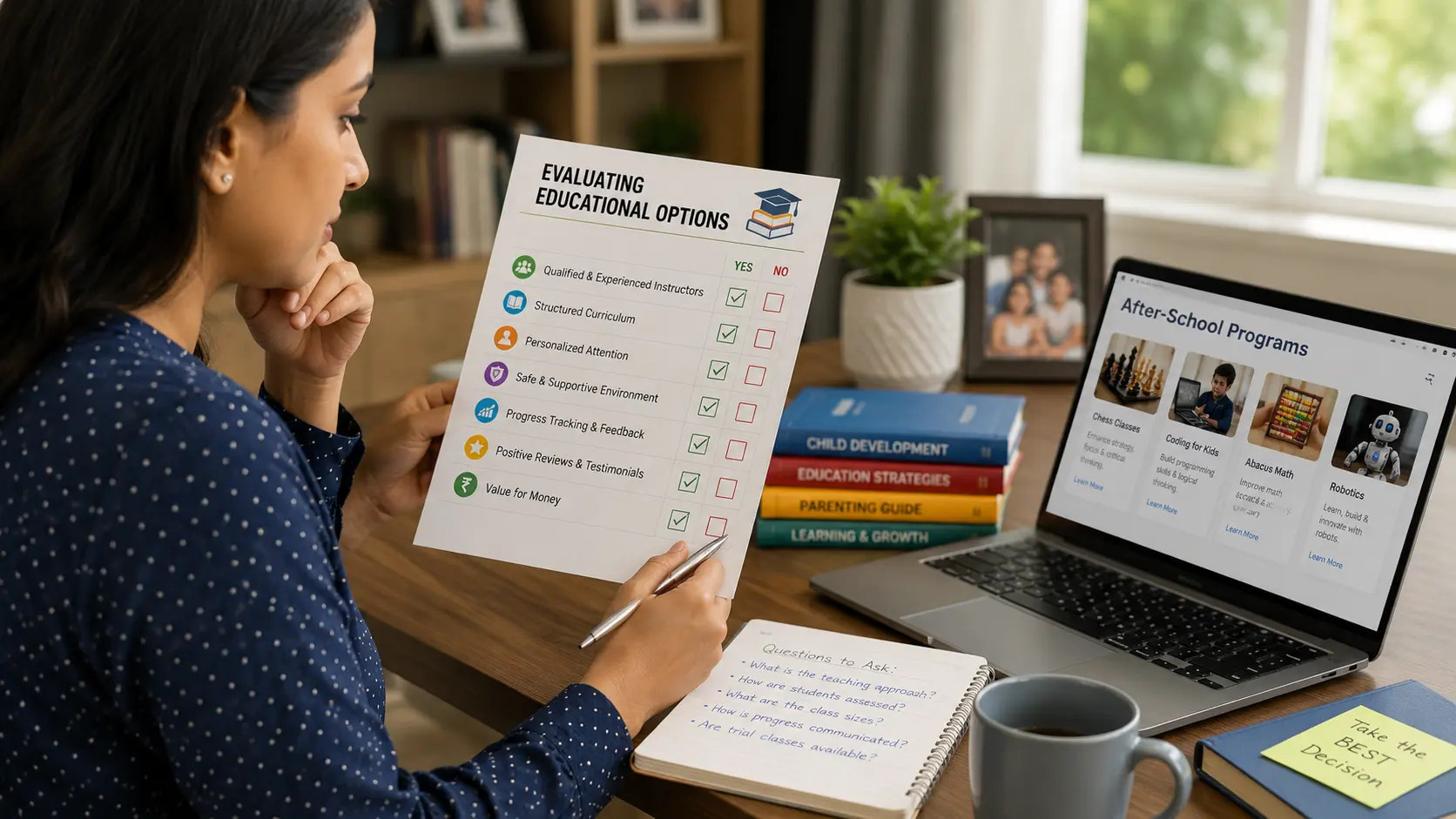
- Who will actually be coaching my child? Ask about the trainer’s background, teaching experience with young children, and personal coaching achievements.
- Is the program tailored for my child's current level? Confirm that the curriculum separates absolute beginners from intermediate or tournament players.
- What is the maximum number of students per batch? Ensure batch sizes are kept small so your child receives individual attention and feedback during every session.
- How is student progress measured? Inquire whether the academy provides periodic skill evaluations, personalized homework feedback, or monthly parent progress updates.
- Are there regular opportunities for practice games? Check if the academy hosts internal online tournaments or practice groups where students can apply what they learn in class.
- Does the academy offer a trial or demo class? A initial trial class lets you observe the teaching style and see how comfortable your child feels in the virtual classroom before making a long-term commitment. Helpful guidance on evaluating these options can be found in our guide for parents choosing chess classes.
Do not evaluate a chess program solely by the monthly fee or the total number of hours promised. A 45-minute structured session with an experienced coach who actively analyzes your child's moves delivers significantly more value than hours of unsupervised, passive play. Quality coaching focuses on developing sound decision-making habits, pattern recognition, and tactical awareness that stay with the student for life.
How Can Children Get Better Results From Online Chess Coaching?
Enrolling in a class is only the first step. Long-term improvement comes from consistent practice habits and a positive attitude toward learning. Here are practical ways parents can support their child's progress:
- Establish a Dedicated Practice Routine: Consistency is key. Practicing tactics or solving puzzles for just 15 to 20 minutes a day yields far better results than playing for hours once a week.
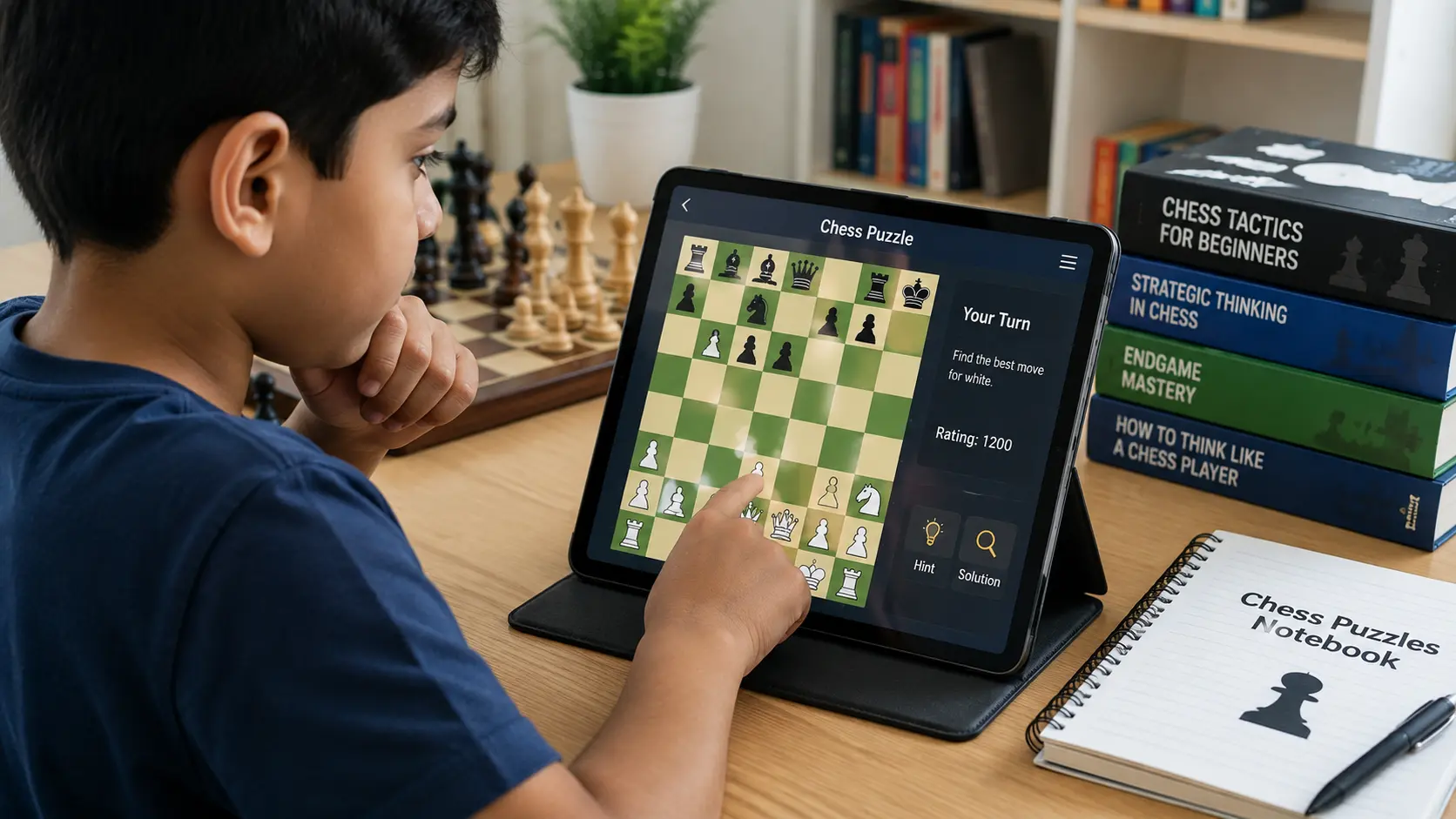
- Focus on Puzzle Solving: Puzzles build pattern recognition. Encouraging your child to solve tactical exercises daily sharpens their vision for forks, pins, and checkmating attacks.
- Review Mistakes Constructively: Children naturally dislike losing. Teach your child that lost games contain the best lessons. Reviewing losses alongside a coach helps identify calculation errors and prevents repeating the same mistakes.
- Provide a Quiet Learning Environment: Set up a distraction-free space during class hours. Minimizing background noise helps your child stay focused on tactical analysis.
- Encourage Patience and Motivation: Mastery takes time, and rating plateaus are a natural part of development. If your child experiences frustration during tough losses, read our advice on staying motivated while learning chess to help them stay positive and focused on improvement.
Why Brainiac Chess Academy Can Be a Practical Option
When searching for structured, high-quality instruction, finding a reliable institute with dedicated mentors is essential. Brainiac Chess Academy provides comprehensive online chess coaching designed to help students master the game step-by-step from home.
While physically located in Sector 7, Janata Market, Vashi, Navi Mumbai, Maharashtra, Brainiac Chess Academy operates a fully equipped digital training system. This allows students across various cities, including Chennai and other regions in India, to access structured virtual classes without geographic limitations. The academy offers structured learning tracks for all skill levels, ranging from absolute beginners to competitive tournament players.
Through interactive live classes, small batch sizes, systematic tactical modules, and regular performance evaluations, Brainiac Chess Academy ensures that every child receives individualized attention. Coaches focus not only on opening moves and tactical calculation, but also on fostering critical thinking, discipline, and emotional balance—skills that serve children well both on and off the chessboard.
Chess Learning Resources for Parents and Students
To support your child's ongoing learning journey, explore these educational guides and articles from our resource collection:
- Discover how strategic gameplay enhances mental development in our comparison on Chess vs Coding: Problem-Solving Skills.
- Learn how to evaluate academy credentials, formats, and instructors using our complete guide for parents choosing chess classes.
- Keep your young player engaged through plateaus with tips on staying motivated while learning chess.
- Explore how structured practice builds long-term focus in our article on how chess builds discipline and patience.
- For official guidelines on international ratings, game rules, and tournament regulations, consult FIDE, the International Chess Federation.
Frequently Asked Questions
1. Are online chess classes good for children in Chennai?
Yes, online classes are highly effective for children. They provide access to experienced coaches without the hassle of traveling through city traffic. With interactive digital boards, video communication, and regular practice games, online instruction offers structured and engaging chess learning right from home.
2. What age can a child start online chess classes?
Children can start learning chess around 5 to 6 years of age. At this stage, young minds absorb fundamental rules, piece movements, and simple tactical patterns quickly. Virtual classes for young beginners use interactive, visual tools to keep lessons fun and engaging.
3. How do online chess classes work?
Classes take place via live video platforms using interactive chess software. Instructors demonstrate tactical concepts on a shared digital board, set up exercises, and supervise live practice games between students. Homework, puzzles, and game reviews are managed digitally.
4. Are online chess classes effective for beginners?
Absolutedly. Beginners benefit greatly from clear visual demonstrations on digital boards. Step-by-step guidance allows new players to master piece movements, board rules, and initial tactics effectively before moving on to advanced strategies.
5. How often should children practice chess?
Consistency is key to improvement. Short daily practice sessions of 15 to 30 minutes—focused on solving puzzles or playing practice games—are far more effective than long, infrequent sessions once a week.
6. Can online chess coaching prepare students for tournaments?
Yes. Specialized online coaching includes advanced opening preparation, deep middle-game planning, endgame calculation, and digital analysis using modern software. Many students trained online successfully compete in local, state, and national tournaments.
7. What should parents look for in a chess academy?
Parents should look for qualified instructors, small batch sizes, a structured curriculum, regular performance tracking, and clear communication. A good academy focuses on steady personal development rather than fast-tracked results.
8. Can students from Chennai join Brainiac Chess Academy online?
Yes. Although Brainiac Chess Academy is based physically in Vashi, Navi Mumbai, its online chess coaching programs are fully accessible to students across Chennai and other locations in India.
Book Your Free Demo Class
Looking for structured, expert-led chess coaching for your child? Brainiac Chess Academy provides comprehensive online chess classes designed to help students build confidence, logic, and strategic thinking from home.
Physical Academy Address:
Sector 7, Janata Market, Vashi, Navi Mumbai, Maharashtra, India
Phone / WhatsApp: +91 93248 29329
Book Your Free Demo Right NowConclusion
Finding a high-quality educational activity that blends convenience, mental growth, and expert mentorship doesn't have to be complicated. Enrolling in online chess classes in Chennai offers children a practical, flexible way to develop essential problem-solving abilities, concentration, and emotional resilience without adding daily commuting stress to their routine. With interactive digital tools, tailored lesson plans, and real-time guidance from experienced instructors, young learners can systematically master the 64 squares from the comfort of their home. If you want to help your child start their journey toward strategic mastery, book a free demo session with Brainiac Chess Academy today and watch them develop skills that will benefit them for a lifetime.