












How International Students Can Learn Chess Online
Discover how children, expat families, and students living abroad can access structured, live chess coaching from home across any time zone.
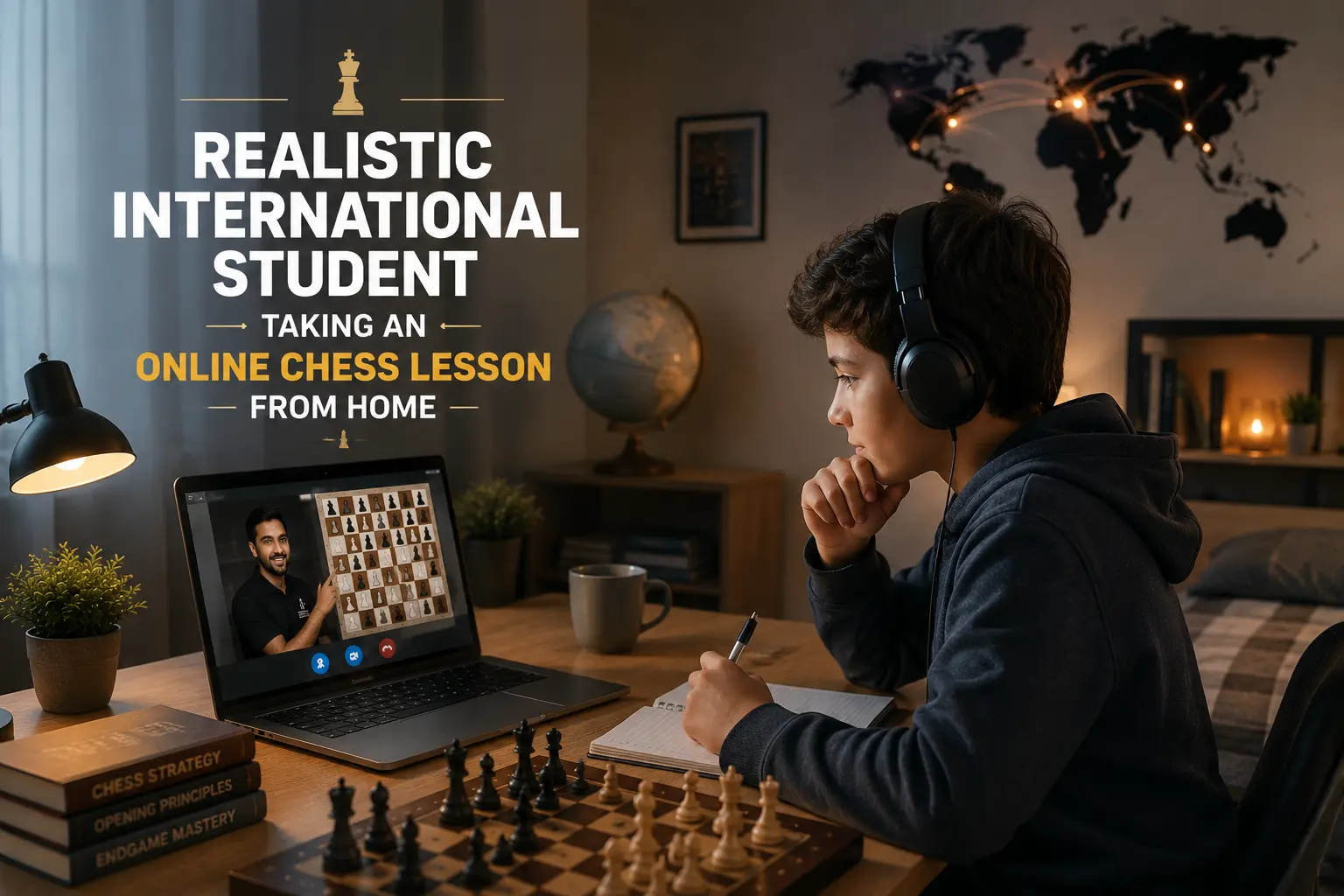
When a family transitions to a new country or moves into an international school environment, keeping a child's extracurricular routine intact can feel challenging. Families relocating across global hubs often encounter similar hurdles: finding a local chess club that matches their child’s learning pace, schedule, and preferred style of instruction. Local options may involve long waiting lists, rigid weekend hours, or travel times that complicate family schedules.
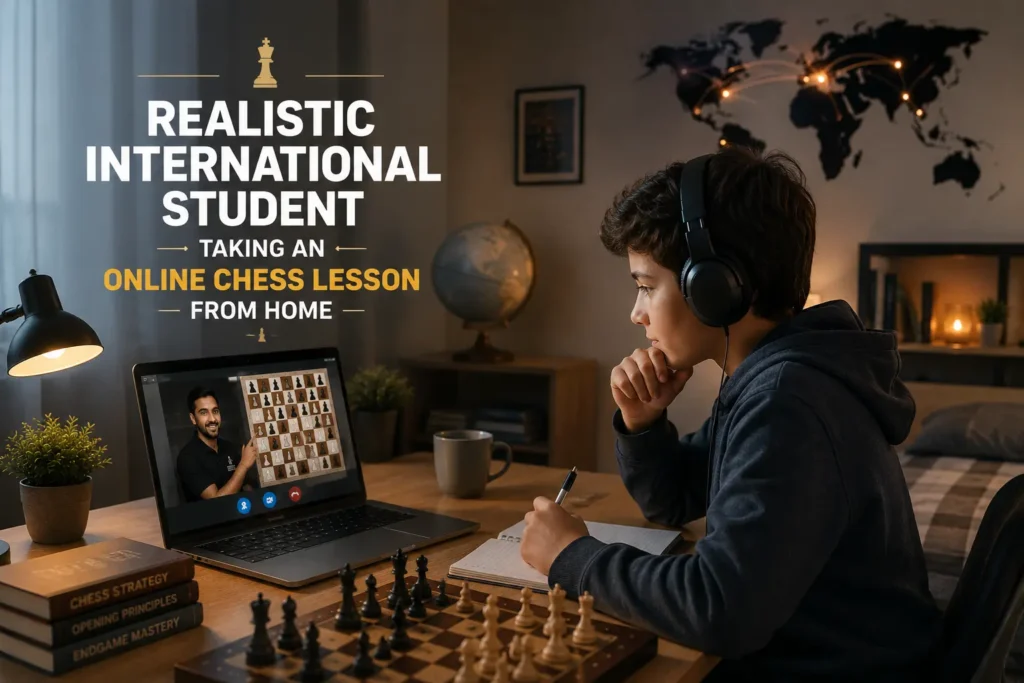
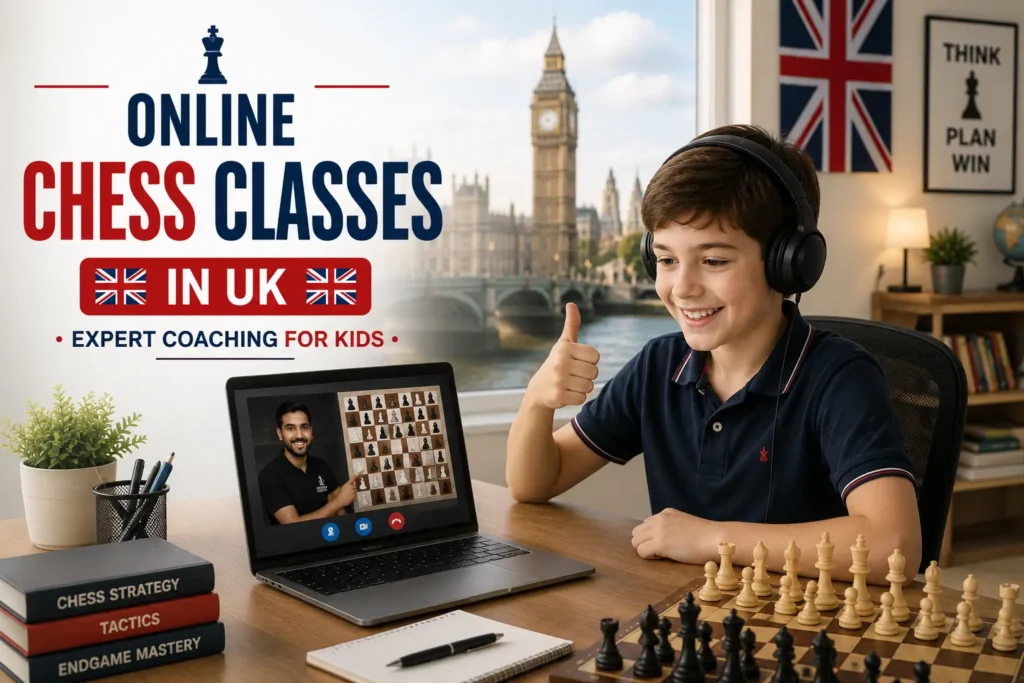
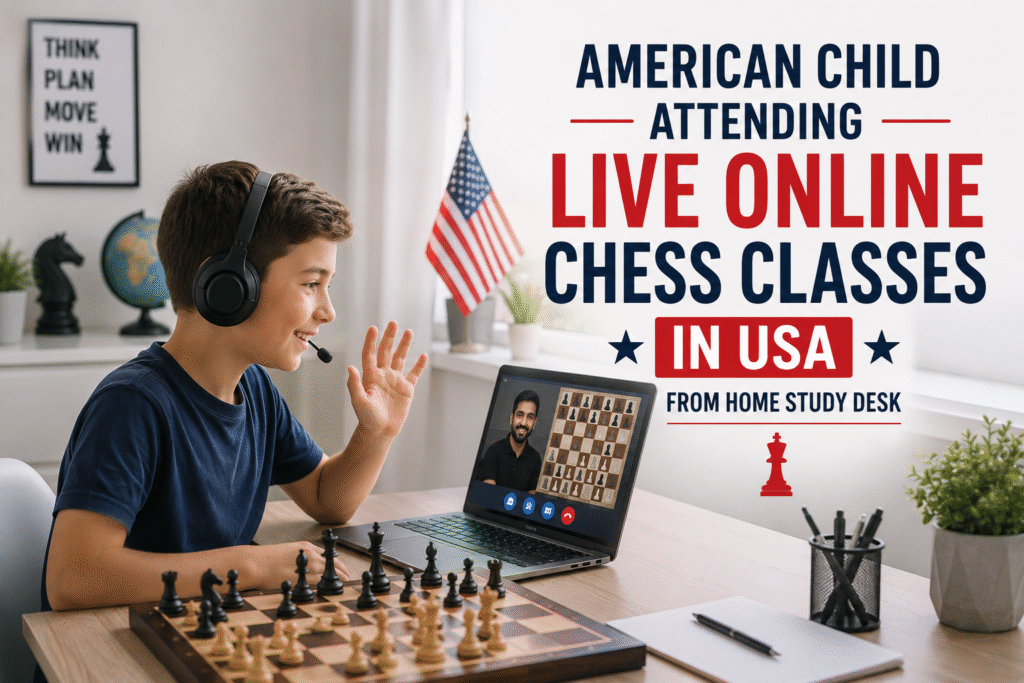
Fortunately, location no longer dictates the quality of mentorship a child receives. Families looking for practical ways to learn chess online internationally can now connect directly with expert mentors using interactive digital classrooms. Whether a student is a beginner taking their first steps on the board or an intermediate player preparing for rating events, structured virtual programs deliver high-caliber guidance directly to your home.
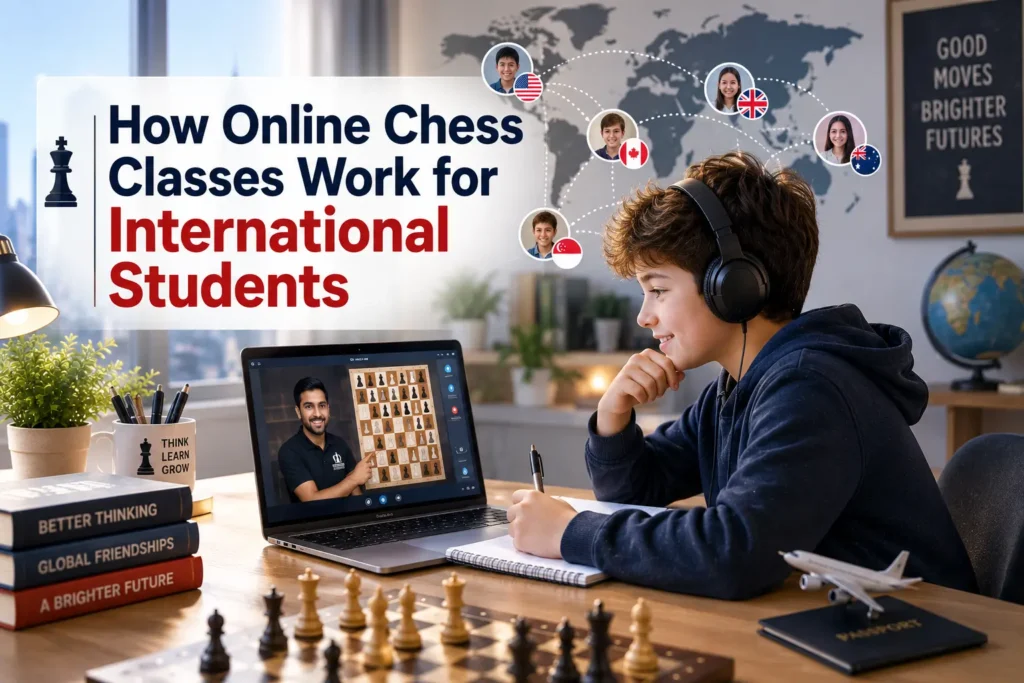
International students can learn chess online effectively through live interactive classes, shared digital chessboards, real-time game analysis, and structured curriculums. Modern digital coaching allows students in any time zone to connect with dedicated mentors, practice systematically between sessions, and maintain steady progress without geographical constraints.
Why More International Students Are Learning Chess Online
The global shift toward interactive digital education has expanded how strategic games are taught. For families living abroad, virtual training removes geographic limitations. Instead of depending entirely on nearby neighborhood clubs, parents can select structured training programs tailored precisely to their child's skill level and learning speed.
Digital chess instruction easily accommodates active international school schedules. When families travel or relocate, traditional sports routines often pause. Virtual chess training travels with the student, allowing a child to take lessons from a desk in Singapore, continue practice during a holiday in Europe, and review tactical positions upon returning home.
How International Chess Coaching Works
Understanding the structure of online learning helps parents evaluate what to expect during virtual sessions. High-quality virtual coaching relies on three main components:
Live Interactive Lessons
Classes take place inside secure virtual rooms where coach and student communicate directly. Live interaction allows coaches to observe engagement, ask real-time questions, and adapt explanations immediately.
Shared Digital Chessboards
Coaches utilize interactive board software where every move reflects instantly on the student’s screen. Students actively manipulate pieces, draw arrows to explain ideas, and solve puzzles during class.
Personalized Game Analysis
Coaches review games played on global platforms such as Chess.com or Lichess. By evaluating actual game logs, mentors identify recurring tactical oversights and design customized drills.
What Should International Students Learn First?
A structured learning pathway ensures beginners build lasting confidence. Structured programs, such as online chess coaching at Brainiac Chess Academy, guide students through clear educational stages:
Foundational Rules
Mastering piece movement, board setup, legal captures, castling, and basic checkmate concepts eliminates early confusion.
Tactics & Patterns
Recognizing forks, pins, skewers, and discovered attacks sharpens calculation skills and tactical awareness.
Opening & Endgame
Learning central control and king safety, followed by fundamental pawn and rook endgames, creates complete players.
Prioritize consistency over long, infrequent study blocks. A schedule featuring 1–2 structured weekly lessons, combined with 10–15 minutes of daily tactical puzzle practice, maintains sharp calculation habits without causing learning fatigue.
Managing Chess Lessons Across Global Time Zones
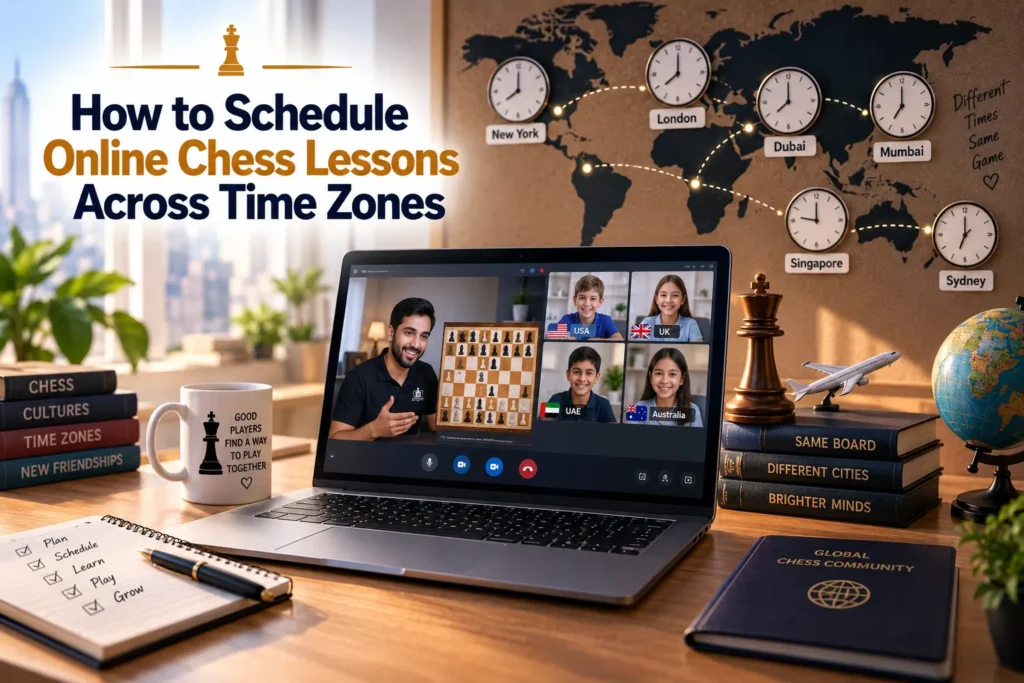
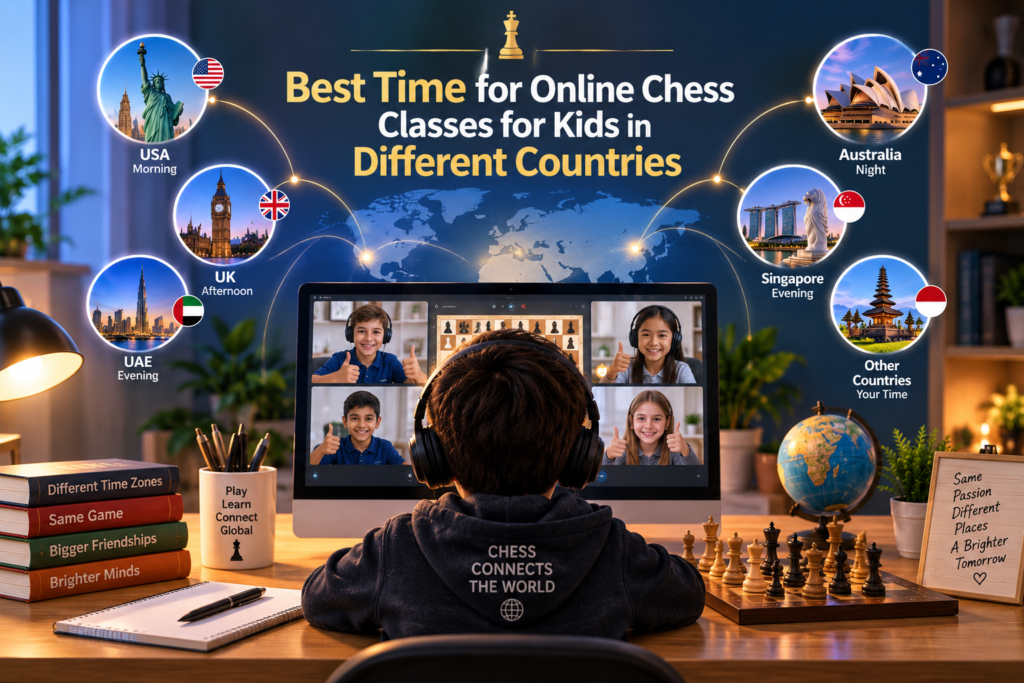
A primary consideration for international families is balancing schedule differences. Online academies coordinate class times to fit after-school hours and weekends across various regions, ensuring steady attendance regardless of local time differences.
| Region / City | Representative Time Zone | Sample Student Slot | Primary Focus |
|---|---|---|---|
| Dubai / Middle East | GST (UTC+4) | 4:30 PM (After School) | Tactics & Homework Review |
| London / UK | BST / GMT (UTC+0/+1) | 10:00 AM (Weekend) | Endgame Strategy & Analysis |
| Singapore / East Asia | SGT (UTC+8) | 6:00 PM (Evening) | Opening Principles & Sparring |
| New York / US East Coast | EDT (UTC-4) | 8:30 AM (Weekend Morning) | Foundational Rules & Puzzles |
How Online Chess Training Supports Cognitive Skills
Beyond board strategy, learning chess online helps children develop structured thinking routines. When evaluating cognitive enrichment choices, parents often compare board games with digital technical disciplines. As discussed in our article on chess vs coding, both areas build problem-solving habits, but chess offers immediate feedback through head-to-head decision making.
Regular practice encourages children to pause, consider multiple options before moving, and evaluate consequences carefully. For parents focused on habits, our guide on building discipline through chess outlines practical routines that encourage self-control and focus.
Evaluating International Online Chess Coaching
Choosing the right educational setup involves considering both advantages and practical requirements:
Pros
- Flexible scheduling tailored to busy international school routines.
- Access to experienced coaches regardless of local club availability.
- Digital recording of played games for immediate review.
- Eliminates commuting time for busy parents.
- Allows uninterrupted coaching during international travel or moves.
Practical Considerations
- Requires a reliable internet connection and device setup.
- Younger beginners (ages 5–6) may need initial help joining calls.
- Adds to weekly screen time, requiring balanced management.
- Lacks physical hand contact with wooden board pieces during class.
Parent Checklist: Selecting an Online Chess Program
- Structured, age-appropriate syllabus
- Experienced coaches skilled with kids
- Small class sizes for individual attention
- Flexible time-zone scheduling options
- Introductory demo session available
- Regular progress feedback for parents
- Interactive live analysis of games
- Clear pathways for beginner to advanced levels
About Brainiac Chess Academy
For international families seeking structured guidance, selecting an academy with a proven training framework is essential. Based in India with physical operations centered at Sector 7, Janata Market, Vashi, Navi Mumbai, Maharashtra, Brainiac Chess Academy delivers virtual chess coaching to students around the globe.
The academy emphasizes conceptual understanding, tactical precision, and encouraging mentorship. By adapting class schedules to match various international time zones, Brainiac Chess Academy helps young learners living abroad build strong strategic foundations from home. To learn more about selecting suitable classes for your child, review our guidance for parents choosing chess classes or explore strategies on helping children stay motivated in chess.
Explore Related Learning Guides
Expand your child's chess education with these helpful resources from our library:
Frequently Asked Questions
A computer or tablet with a webcam, a stable internet connection, and a standard web browser are all that is required. A physical chessboard at home is also helpful for independent practice.
Children as young as 5 or 6 years old can begin learning online. Classes for young beginners focus on interactive games, basic piece movements, and short, engaging exercises.
Academies coordinate directly with parents to offer class slots that align comfortably with local school hours and weekend schedules in different countries.
One-on-one coaching provides personalized pacing and individual attention, while small group batches encourage social interaction and peer learning. Both formats are effective depending on the child's learning style.
Coaches review digital game records from platforms like Chess.com or Lichess during class, walking students through critical decisions and suggesting tactical improvements.
Yes. Online coaching teaches tournament rules, clock management, opening preparation, and tactical calculation that apply directly to over-the-board competitions.
Flexible programs allow families to notify coaches in advance to reschedule sessions or adjust timing around travel and relocation schedules.
Book Your Free Demo Right Now
Experience how live online chess coaching can benefit your child. Connect with our team, explore our interactive digital setup, and evaluate our teaching approach with an introductory session.